



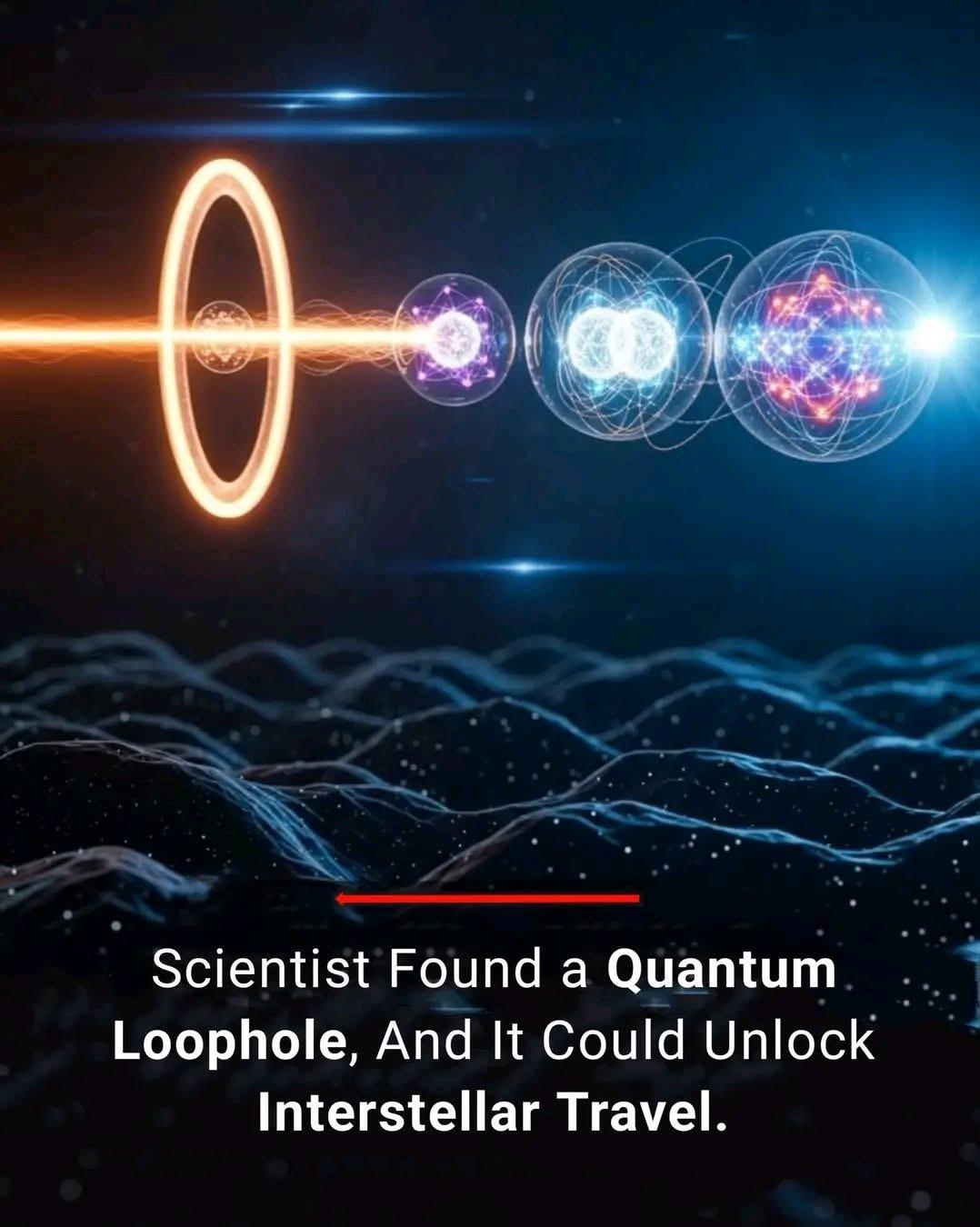
Scientists may have just taken a giant leap toward interstellar navigation.
How? By bending, but not breaking, the rules of quantum physics.
In two groundbreaking studies, researchers developed new methods for dramatically improving atomic clocks, which are already accurate to within a second every 10 million years.
These clocks are essential for GPS, scientific research, and, potentially, future space travel. But until now, their precision has been limited by quantum “noise” and Heisenberg’s Uncertainty Principle, which restricts how precisely certain atomic properties can be measured.
The breakthroughs come from MIT and the University of Sydney. At MIT, physicists entangled ytterbium atoms with high-frequency laser light, doubling the precision of an ultra-stable optical atomic clock. Meanwhile, Australian researchers developed a technique that allows simultaneous measurement of both position and momentum—but only for tiny changes—effectively sidestepping quantum limits without violating them. This could revolutionize quantum sensing and allow for even more accurate timekeeping. Such advancements may someday support autonomous spacecraft navigation or unlock deeper understanding of dark matter, making these clocks not just tools of measurement, but keys to exploring the universe.
Source: Wells, S. (2025, November 6). Scientists Just Discovered a Quantum Physics Loophole—And It Could Finally Unlock Interstellar Travel. Popular Mechanics.
#QuantumComputing #quantumentanglement #quantumloop #Astronomy #quantumphysics #scrolllink
How? By bending, but not breaking, the rules of quantum physics.
In two groundbreaking studies, researchers developed new methods for dramatically improving atomic clocks, which are already accurate to within a second every 10 million years.
These clocks are essential for GPS, scientific research, and, potentially, future space travel. But until now, their precision has been limited by quantum “noise” and Heisenberg’s Uncertainty Principle, which restricts how precisely certain atomic properties can be measured.
The breakthroughs come from MIT and the University of Sydney. At MIT, physicists entangled ytterbium atoms with high-frequency laser light, doubling the precision of an ultra-stable optical atomic clock. Meanwhile, Australian researchers developed a technique that allows simultaneous measurement of both position and momentum—but only for tiny changes—effectively sidestepping quantum limits without violating them. This could revolutionize quantum sensing and allow for even more accurate timekeeping. Such advancements may someday support autonomous spacecraft navigation or unlock deeper understanding of dark matter, making these clocks not just tools of measurement, but keys to exploring the universe.
Source: Wells, S. (2025, November 6). Scientists Just Discovered a Quantum Physics Loophole—And It Could Finally Unlock Interstellar Travel. Popular Mechanics.
#QuantumComputing #quantumentanglement #quantumloop #Astronomy #quantumphysics #scrolllink
Scientists may have just taken a giant leap toward interstellar navigation.
How? By bending, but not breaking, the rules of quantum physics.
In two groundbreaking studies, researchers developed new methods for dramatically improving atomic clocks, which are already accurate to within a second every 10 million years.
These clocks are essential for GPS, scientific research, and, potentially, future space travel. But until now, their precision has been limited by quantum “noise” and Heisenberg’s Uncertainty Principle, which restricts how precisely certain atomic properties can be measured.
The breakthroughs come from MIT and the University of Sydney. At MIT, physicists entangled ytterbium atoms with high-frequency laser light, doubling the precision of an ultra-stable optical atomic clock. Meanwhile, Australian researchers developed a technique that allows simultaneous measurement of both position and momentum—but only for tiny changes—effectively sidestepping quantum limits without violating them. This could revolutionize quantum sensing and allow for even more accurate timekeeping. Such advancements may someday support autonomous spacecraft navigation or unlock deeper understanding of dark matter, making these clocks not just tools of measurement, but keys to exploring the universe.
Source: Wells, S. (2025, November 6). Scientists Just Discovered a Quantum Physics Loophole—And It Could Finally Unlock Interstellar Travel. Popular Mechanics.
#QuantumComputing #quantumentanglement #quantumloop #Astronomy #quantumphysics #scrolllink





 English
 Arabic
 French
 Spanish
 Portuguese
 Deutsch
 Turkish
 Dutch
Dutch
 Hindi
Hindi
 Italiano
 Russian
 Romaian
 Greek
Greek