• Jio , Airtel और Vodafone Idea दिसंबर 2025 से अपनी टैरिफ योजनाओं में ₹ (लगभग) 10-12% की बढ़ोतरी करने जा रहे हैं।”

    #jio #Airtel #Vidafone #Idea #scrolllink
    📢 Jio , Airtel और Vodafone Idea दिसंबर 2025 से अपनी टैरिफ योजनाओं में ₹ (लगभग) 10-12% की बढ़ोतरी करने जा रहे हैं।” #jio #Airtel #Vidafone #Idea #scrolllink
    Angry
    1
    0 Комментарии 0 Поделились 265 Просмотры 0 предпросмотр
  • WHY GROKIPEDIA IS MAKING THE MEDIA MELTDOWN - AND WHY THAT’S A GOOD THING

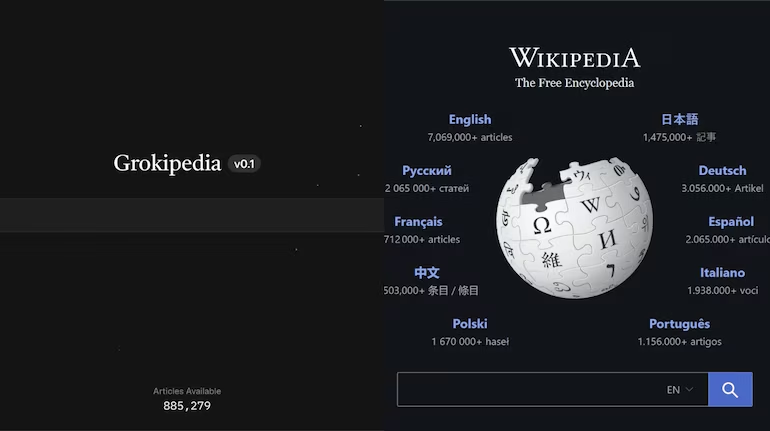
    The legacy media is melting down over a digital encyclopedia. Not a government scandal. Not a war. A website. It’s called Grokipedia, Elon's AI-powered alternative to Wikipedia, and it has already done the unthinkable: challenged the establishment’s control over online “truth.”

    Launched in beta as version 0.1, Grokipedia already has more than 885,000 entries, and that’s just the start. Musk says version 1.0 is coming soon and promises it will be “ten times better”. Better than what? According to Musk: better than Wikipedia itself. And if you look at how both sites handle controversial topics, he might be right.

    Wikipedia is run by volunteers, but let’s not kid ourselves, ideological gatekeeping is baked into its DNA. From politics to culture to science, pages are shaped by editors who lean overwhelmingly left. Anyone who’s ever tried to update a conservative viewpoint knows what happens: instant reversion, flags, bans, and “consensus.”

    It’s not “the wisdom of the crowd.” It’s the orthodoxy of a very specific crowd.

    Grokipedia’s arrival struck a nerve because it breaks that consensus. It doesn’t just rewrite articles, it reframes narratives. The BLM entry? It notes the movement’s scale, but also includes the violence, property damage, and 25 deaths linked to the 2020 riots. Wikipedia barely mentions that.

    The Tucker Carlson page? It calls out the systemic media bias he exposed, citing actual reporting, something Wikipedia refuses to do without filtering it through their editorial “neutrality” filter.

    Even the entry on Elon Musk pulls no punches. It praises his impact, while noting the relentless attacks from left-leaning media. Shocking, right?

    This isn’t about articles, it’s about power. Wikipedia has held a near-monopoly over online reference knowledge since 2001. Now, an AI-driven, open-access rival shows up and suddenly every blue-check pundit is in DEFCON 1 mode.

    The panic isn’t about errors. It’s about losing control over the narrative. Grokipedia lets people see different angles, uncensored, and that alone makes it dangerous to the establishment.

    Truth Doesn’t Need a Gatekeeper

    Grokipedia isn’t perfect. No source is. But it offers something we haven’t had in a long time: real competition in the knowledge economy. And that’s exactly why it’s driving Wikipedia’s defenders, and their media allies, absolutely mad.

    If your version of “truth” can’t stand up to a free marketplace of ideas, maybe it was never the truth to begin with.

    #wikipedia #mayopedia #Grokipedia #scrolllink
    WHY GROKIPEDIA IS MAKING THE MEDIA MELTDOWN - AND WHY THAT’S A GOOD THING The legacy media is melting down over a digital encyclopedia. Not a government scandal. Not a war. A website. It’s called Grokipedia, Elon's AI-powered alternative to Wikipedia, and it has already done the unthinkable: challenged the establishment’s control over online “truth.” Launched in beta as version 0.1, Grokipedia already has more than 885,000 entries, and that’s just the start. Musk says version 1.0 is coming soon and promises it will be “ten times better”. Better than what? According to Musk: better than Wikipedia itself. And if you look at how both sites handle controversial topics, he might be right. Wikipedia is run by volunteers, but let’s not kid ourselves, ideological gatekeeping is baked into its DNA. From politics to culture to science, pages are shaped by editors who lean overwhelmingly left. Anyone who’s ever tried to update a conservative viewpoint knows what happens: instant reversion, flags, bans, and “consensus.” It’s not “the wisdom of the crowd.” It’s the orthodoxy of a very specific crowd. Grokipedia’s arrival struck a nerve because it breaks that consensus. It doesn’t just rewrite articles, it reframes narratives. The BLM entry? It notes the movement’s scale, but also includes the violence, property damage, and 25 deaths linked to the 2020 riots. Wikipedia barely mentions that. The Tucker Carlson page? It calls out the systemic media bias he exposed, citing actual reporting, something Wikipedia refuses to do without filtering it through their editorial “neutrality” filter. Even the entry on Elon Musk pulls no punches. It praises his impact, while noting the relentless attacks from left-leaning media. Shocking, right? This isn’t about articles, it’s about power. Wikipedia has held a near-monopoly over online reference knowledge since 2001. Now, an AI-driven, open-access rival shows up and suddenly every blue-check pundit is in DEFCON 1 mode. The panic isn’t about errors. It’s about losing control over the narrative. Grokipedia lets people see different angles, uncensored, and that alone makes it dangerous to the establishment. Truth Doesn’t Need a Gatekeeper Grokipedia isn’t perfect. No source is. But it offers something we haven’t had in a long time: real competition in the knowledge economy. And that’s exactly why it’s driving Wikipedia’s defenders, and their media allies, absolutely mad. If your version of “truth” can’t stand up to a free marketplace of ideas, maybe it was never the truth to begin with. #wikipedia #mayopedia #Grokipedia #scrolllink
    0 Комментарии 0 Поделились 1Кб Просмотры 0 предпросмотр
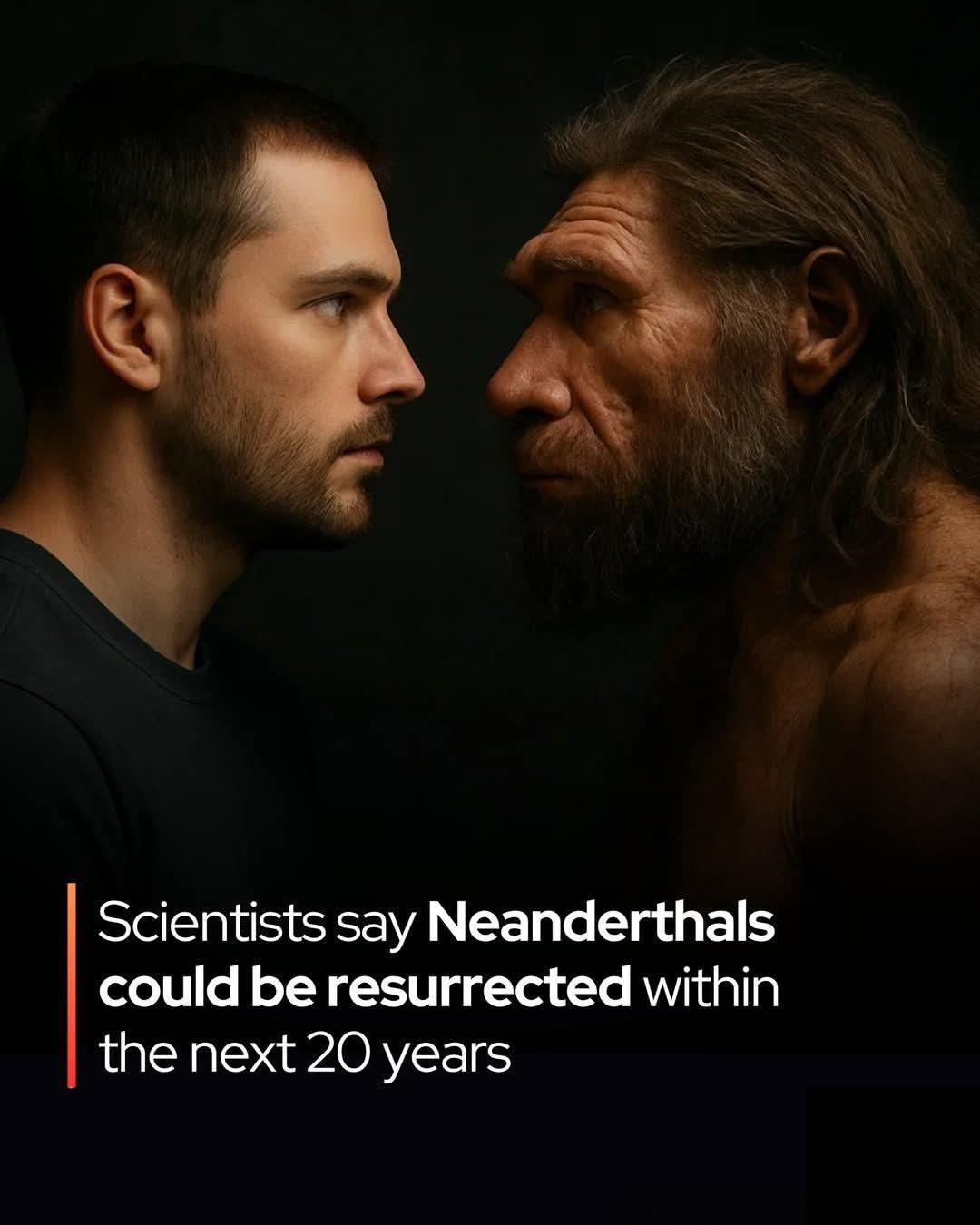
  • Experts say we could soon resurrect Neanderthals.

    But should we bring another human species onto earth?

    The idea of resurrecting Neanderthals—once confined to science fiction—may soon be within reach. Since sequencing the Neanderthal genome in 2010, researchers have made leaps in gene editing, with tools like CRISPR now capable of modifying DNA at astonishing precision.

    Some scientists, including Harvard geneticist George Church, have even proposed creating a Neanderthal genome using human stem cells and implanting it in a surrogate. Theoretically, a “Neanderthal-like” embryo could be engineered from scratch.

    But as scientific possibility inches closer, so do serious concerns about whether it should ever be attempted.

    Experts warn that resurrecting a Neanderthal raises profound ethical and biological red flags. Human and Neanderthal pregnancies may be incompatible, and even if successful, the resulting individual would face a life of extreme isolation—without community, culture, or peers. The idea of a lone Neanderthal living in modern society, or worse, confined as a scientific specimen, is deeply troubling to many anthropologists and bioethicists.

    “That is one of the most unethical things I can possibly think of,” said anthropologist Jennifer Raff. As the science advances, the moral dilemmas intensify—forcing society to confront not just what’s possible, but what’s right.

    #science #anthropology #neanderthal #human #scrolllink
    ⚠️ Experts say we could soon resurrect Neanderthals. But should we bring another human species onto earth? The idea of resurrecting Neanderthals—once confined to science fiction—may soon be within reach. Since sequencing the Neanderthal genome in 2010, researchers have made leaps in gene editing, with tools like CRISPR now capable of modifying DNA at astonishing precision. Some scientists, including Harvard geneticist George Church, have even proposed creating a Neanderthal genome using human stem cells and implanting it in a surrogate. Theoretically, a “Neanderthal-like” embryo could be engineered from scratch. But as scientific possibility inches closer, so do serious concerns about whether it should ever be attempted. Experts warn that resurrecting a Neanderthal raises profound ethical and biological red flags. Human and Neanderthal pregnancies may be incompatible, and even if successful, the resulting individual would face a life of extreme isolation—without community, culture, or peers. The idea of a lone Neanderthal living in modern society, or worse, confined as a scientific specimen, is deeply troubling to many anthropologists and bioethicists. “That is one of the most unethical things I can possibly think of,” said anthropologist Jennifer Raff. As the science advances, the moral dilemmas intensify—forcing society to confront not just what’s possible, but what’s right. #science #anthropology #neanderthal #human #scrolllink
    Like
    1
    1 Комментарии 0 Поделились 695 Просмотры 0 предпросмотр
  • Rani Ki Vav at Patan, Gujarat also known as Queen's Stepwell
    Rani Ki Vav, Patan
    Queen's Stepwell, A UNESCO World Heritage Site

    Patan is a district in the state of Gujarat, located at 125kms distance from Ahmedabad. Patan was once the capital of the state in historic times located on the banks of the (lost) Saraswati River. Nestled in the hustle and bustle of the city Patan, lies an “Architectural Wonder” – Rani Ki Vav. It is also known as “Rani Ni Vav” in Gujarati local dialect. This is a 7 storeyed Magnificent Stepwell, which is built using scientific principles for storing water.

    Back in 11th century, Udaymati, Queen of the King Bhimadev I from Solanki(Chalukya) Dynasty, expressed her desire to build a stepwell. This stepwell, she ordered to build is in the memory of her beloved husband.

    Rani ki Vav is one of the UNESCO World Heritage sites in India.
    The new ₹100 rupee currency note has a picture of this stepwell.

    Let’s have a visual tour of Stepwell
    As you walk towards this site, it doesn’t appeal very much. Just a compound wall and some—Well Kept—landscaping work is done around it. The more you approach it, the more it starts appealing. When you reach the main entrance, the Jaw-Dropping view absorbs you in it. Perspective steps going deep down towards the well-shaft are accompanied by intricately carved idols of gods and goddesses. Each idol is as magnificent as if they are living things. The far end is of this stepwell—which is a well-shaft—is not even clearly visible from the first step.

    Constructional Aspects

    Rani ki Vav was constructed as a religious as well as a functional structure. The expanse of this stepwell is roughly 1610 sq.m. and 70m length from the base of Toran—Sacred Gateway—to the inner edge of well-shaft. Its 23m in width and 28m in depth. Rani Ki Vav is constructed like an inverted temple highlighting the sanctity of water. It is built on the East-West axis, “Step-Corridor” being in the east and “Well” on the west.

    Ceremonial Entrance (Toran Dwaar)
    The first architectural object you see as you step down, is the remains of a pillar base. This evidently confirms the presence of Toran Dwaar – A Ceremonial Entrance. In 19th century, a survey was conducted for Rani Ki Vav. James Burgess and Henry Cousens were two archeologists who had mentioned about these pillars in the survey.

    The Toran was comprised of 2 freely standing pillars, which were connected by an ornate arch at their upper sections. Towards the west side from this entrance, downward leading steps make a way to the edge of the well.

    Ceremonial Entrance (Toran Dwaar)Ceremonial Entrance (Toran Dwaar)
    Architecture and Decorative Work
    Rani ki vav is a seven storeyed and inverted temple like structure. It has 4 pavilions downwards from east to west and then lastly a Well Shaft. Below is a picture taken from first pavellion. You can see other 3 Pavilions as well. Rani ki Vav is a Maru-Gurjara style architecture. A style of “temple architecure” which is originated from the Gujarat & Rajasthan in historic times.

    All the 7 levels were open for public and tourists were able to go down to the well. Then there was a powerful earthquake in Bhuj which rocked the state of Gujarat in 2001. After this earchquake, out of 7 levels, only 4 levels are left open for public to ensure the safety & security.

    There is a great diversity of themes:
    Divine Figures: Devi or Goddess, Brahma, Vishnu, Shiva, Ganesha in their respective incarnations and form

    Sacred & Mythical Representation Figures: Dikpalas, Sacred flora and fauna, Apsara, Nagkanya, Vasus and scenes from epics
    Reflection of Contemporary Society
    Buddha, Kalki and Mahishasurmardini sculptureFrom left Buddha, Kalki and Mahishasurmardini Sculpture
    Mahishasurmardini is one of the forms of a goddess “Durga” who is killing a demon called Mahishasur.

    MahishasurmardiniMahishasurmardini
    Sculptures in Rani ki Vav are displayed in a pattern, where main deities are displayed in niches. These main deities are flanked by semi divine figures like Apsaras, Nagkanya, Dikpalas and Yogini.&
    Sheshshayi Vishnu Sculpture

    During medieval times in Gujarat, there was a tradition of installing “A Sheshshayi Vishnu” sculpture inside the Stepwell, Kunda or Temples. Which you can see in Modhera Sun Temple as well. Sheshshayi Vishnu is represented in 3 successive niches in 3 levels on the rear wall of the Well Shaft. One between the first and second pavillion on the niche of the north wall.

    In addition to this, out of 24 forms of the lord Vishnu, following forms are present in Rani ki Vav:

    Keshava, Narayana, Govinda, Vishnu, Trivikrama, Vamana, Sridhara, Padmanabha, Damodar, Samkarsana, Aniruddha, Purusottama, Narsimha, Hari. Moreover 10 famous incarnations are also represented. But among those 10 incarnations; Varah, Narsimha, Vaman, Parshuram, Ram, Balram, Buddha and Kalki (future incarnation at the end of Kaliyug) are clearly identified in Rani ki Vav. Buddha is shown as an incarnation of the lord Vishnu here.

    A Bhairav—fierce form of the lord Shiv—is represented in a dancing pose here. If you take a closer look down on his right side, the dog is snatching a piece from the decapitated corpse. Licking the blood oozing from the freshly cut head that Bhairava is holding in his hand.

    Vishnu On Left and Bhairav on rightVishnu On the Left and Bhairav on the Right
    Brahma, Mahesh & Vishnu With Their Consort
    When you reach near the well (at 4th pavillion) you can see the panel of “Brahma, Mahesh & Vishnu with Their Consort”. The Top left side of front wall is decorated with the idols of Tridev(Ttriple deity of Supreme Divinity in Hinduism). Their Vahan is also present near each of them, Swan, Bull and Garuda respectively.

    Front wall sculptures from bottom levelFront wall sculptures at base level
    Brahma Mahesh and Vishnu with their consortsBrahma Mahesh & Vishnu With Their Consort

    On the Top-Right side of the front wall, you can see Ganesh with his Consort and then Maha-Lakshmi and Kuber idols are also present. These three are considered as Gods of Luck.

    Other Sculptures in Rani ki Vav

    Dikpals (Guardians of Eight Directions) also appear on the walls of Rani ki Vav.

    8 Vasus are present on the walls with human body and Cow head in folded hands (Namaskar position).

    Nav graha are represented in a complete set, over Sheshshayi Vishnu on the Well Shaft. Sun (Surya), Moon (Chandra), Mercury (Budha also known as Grahpati), Venus (Shukra), Mars (Mangal), Jupiter (Brihaspati), Saturn (Shani), Rahu and Ketu constitute Nine Planets called Nav Graha.
    Dikpal - Guardian of directionDikpal – Guardian of A Direction

    A Marble sculpture of 48cm height was recovered while de-silting in 1987-88. This sculpture has an inscription in devnagari(indian script) “Maharajani Shri Udayamati”. Due to time constraints, we did not get a chance to see this sculpture. Hence, have no idea where it is kept (May be in museum).

    Rani Ki Vav is built using burnt bricks, lime mortar, and locally available “Dhrangadhra” stone. Larger blocks of stones were joined by Rosewood Dowels and placed on the ground, forming the floor of the steps and terraces.

    Interlocking system with woodInterlocking System With Wood

    A small glass plate was attached at several places where cracks are visible. These cracks were developed after Bhuj’s Earthquake. Upon asking about the purpose of these glass plates, our guide told us they are attached to keep the track of changes in such sections. When the stress on such sections will be increased, these glass plates will break and give an indication for safety.

    #thehinduheritage #CulturalHeritage
    #thehindugodsandgoddesses #scrolllink #bharat

    Rani Ki Vav at Patan, Gujarat also known as Queen's Stepwell Rani Ki Vav, Patan Queen's Stepwell, A UNESCO World Heritage Site Patan is a district in the state of Gujarat, located at 125kms distance from Ahmedabad. Patan was once the capital of the state in historic times located on the banks of the (lost) Saraswati River. Nestled in the hustle and bustle of the city Patan, lies an “Architectural Wonder” – Rani Ki Vav. It is also known as “Rani Ni Vav” in Gujarati local dialect. This is a 7 storeyed Magnificent Stepwell, which is built using scientific principles for storing water. Back in 11th century, Udaymati, Queen of the King Bhimadev I from Solanki(Chalukya) Dynasty, expressed her desire to build a stepwell. This stepwell, she ordered to build is in the memory of her beloved husband. Rani ki Vav is one of the UNESCO World Heritage sites in India. The new ₹100 rupee currency note has a picture of this stepwell. Let’s have a visual tour of Stepwell As you walk towards this site, it doesn’t appeal very much. Just a compound wall and some—Well Kept—landscaping work is done around it. The more you approach it, the more it starts appealing. When you reach the main entrance, the Jaw-Dropping view absorbs you in it. Perspective steps going deep down towards the well-shaft are accompanied by intricately carved idols of gods and goddesses. Each idol is as magnificent as if they are living things. The far end is of this stepwell—which is a well-shaft—is not even clearly visible from the first step. Constructional Aspects Rani ki Vav was constructed as a religious as well as a functional structure. The expanse of this stepwell is roughly 1610 sq.m. and 70m length from the base of Toran—Sacred Gateway—to the inner edge of well-shaft. Its 23m in width and 28m in depth. Rani Ki Vav is constructed like an inverted temple highlighting the sanctity of water. It is built on the East-West axis, “Step-Corridor” being in the east and “Well” on the west. Ceremonial Entrance (Toran Dwaar) The first architectural object you see as you step down, is the remains of a pillar base. This evidently confirms the presence of Toran Dwaar – A Ceremonial Entrance. In 19th century, a survey was conducted for Rani Ki Vav. James Burgess and Henry Cousens were two archeologists who had mentioned about these pillars in the survey. The Toran was comprised of 2 freely standing pillars, which were connected by an ornate arch at their upper sections. Towards the west side from this entrance, downward leading steps make a way to the edge of the well. Ceremonial Entrance (Toran Dwaar)Ceremonial Entrance (Toran Dwaar) Architecture and Decorative Work Rani ki vav is a seven storeyed and inverted temple like structure. It has 4 pavilions downwards from east to west and then lastly a Well Shaft. Below is a picture taken from first pavellion. You can see other 3 Pavilions as well. Rani ki Vav is a Maru-Gurjara style architecture. A style of “temple architecure” which is originated from the Gujarat & Rajasthan in historic times. All the 7 levels were open for public and tourists were able to go down to the well. Then there was a powerful earthquake in Bhuj which rocked the state of Gujarat in 2001. After this earchquake, out of 7 levels, only 4 levels are left open for public to ensure the safety & security. There is a great diversity of themes: Divine Figures: Devi or Goddess, Brahma, Vishnu, Shiva, Ganesha in their respective incarnations and form Sacred & Mythical Representation Figures: Dikpalas, Sacred flora and fauna, Apsara, Nagkanya, Vasus and scenes from epics Reflection of Contemporary Society Buddha, Kalki and Mahishasurmardini sculptureFrom left Buddha, Kalki and Mahishasurmardini Sculpture Mahishasurmardini is one of the forms of a goddess “Durga” who is killing a demon called Mahishasur. MahishasurmardiniMahishasurmardini Sculptures in Rani ki Vav are displayed in a pattern, where main deities are displayed in niches. These main deities are flanked by semi divine figures like Apsaras, Nagkanya, Dikpalas and Yogini.& Sheshshayi Vishnu Sculpture During medieval times in Gujarat, there was a tradition of installing “A Sheshshayi Vishnu” sculpture inside the Stepwell, Kunda or Temples. Which you can see in Modhera Sun Temple as well. Sheshshayi Vishnu is represented in 3 successive niches in 3 levels on the rear wall of the Well Shaft. One between the first and second pavillion on the niche of the north wall. In addition to this, out of 24 forms of the lord Vishnu, following forms are present in Rani ki Vav: Keshava, Narayana, Govinda, Vishnu, Trivikrama, Vamana, Sridhara, Padmanabha, Damodar, Samkarsana, Aniruddha, Purusottama, Narsimha, Hari. Moreover 10 famous incarnations are also represented. But among those 10 incarnations; Varah, Narsimha, Vaman, Parshuram, Ram, Balram, Buddha and Kalki (future incarnation at the end of Kaliyug) are clearly identified in Rani ki Vav. Buddha is shown as an incarnation of the lord Vishnu here. A Bhairav—fierce form of the lord Shiv—is represented in a dancing pose here. If you take a closer look down on his right side, the dog is snatching a piece from the decapitated corpse. Licking the blood oozing from the freshly cut head that Bhairava is holding in his hand. Vishnu On Left and Bhairav on rightVishnu On the Left and Bhairav on the Right Brahma, Mahesh & Vishnu With Their Consort When you reach near the well (at 4th pavillion) you can see the panel of “Brahma, Mahesh & Vishnu with Their Consort”. The Top left side of front wall is decorated with the idols of Tridev(Ttriple deity of Supreme Divinity in Hinduism). Their Vahan is also present near each of them, Swan, Bull and Garuda respectively. Front wall sculptures from bottom levelFront wall sculptures at base level Brahma Mahesh and Vishnu with their consortsBrahma Mahesh & Vishnu With Their Consort On the Top-Right side of the front wall, you can see Ganesh with his Consort and then Maha-Lakshmi and Kuber idols are also present. These three are considered as Gods of Luck. Other Sculptures in Rani ki Vav Dikpals (Guardians of Eight Directions) also appear on the walls of Rani ki Vav. 8 Vasus are present on the walls with human body and Cow head in folded hands (Namaskar position). Nav graha are represented in a complete set, over Sheshshayi Vishnu on the Well Shaft. Sun (Surya), Moon (Chandra), Mercury (Budha also known as Grahpati), Venus (Shukra), Mars (Mangal), Jupiter (Brihaspati), Saturn (Shani), Rahu and Ketu constitute Nine Planets called Nav Graha. Dikpal - Guardian of directionDikpal – Guardian of A Direction A Marble sculpture of 48cm height was recovered while de-silting in 1987-88. This sculpture has an inscription in devnagari(indian script) “Maharajani Shri Udayamati”. Due to time constraints, we did not get a chance to see this sculpture. Hence, have no idea where it is kept (May be in museum). Rani Ki Vav is built using burnt bricks, lime mortar, and locally available “Dhrangadhra” stone. Larger blocks of stones were joined by Rosewood Dowels and placed on the ground, forming the floor of the steps and terraces. Interlocking system with woodInterlocking System With Wood A small glass plate was attached at several places where cracks are visible. These cracks were developed after Bhuj’s Earthquake. Upon asking about the purpose of these glass plates, our guide told us they are attached to keep the track of changes in such sections. When the stress on such sections will be increased, these glass plates will break and give an indication for safety. #thehinduheritage #CulturalHeritage #thehindugodsandgoddesses #scrolllink #bharat

    Like
    Love
    5
    0 Комментарии 0 Поделились 2Кб Просмотры 0 предпросмотр
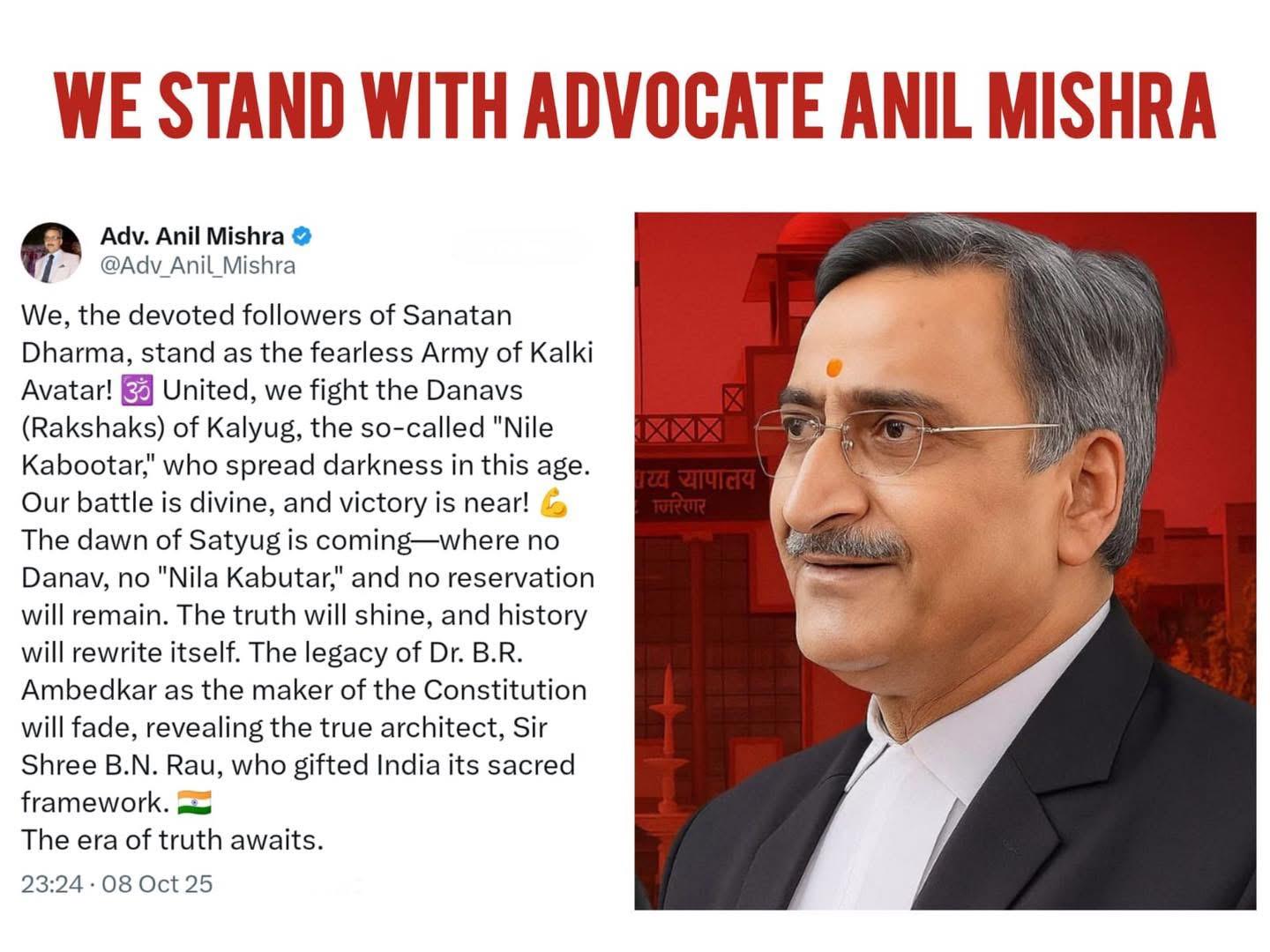
  • We stand with Advocate Anil Mishra, a fearless Sanatani voice challenging an entrenched anti-Hindu ecosystem that has long manipulated the system for ideological and political ends. This is not merely a legal battle, it is an ideological struggle for the very soul of the nation. The era of selective justice and performative victimhood must end. No individual or ideology, regardless of perceived historical stature, should be above scrutiny or shielded from fact-based accountability.

    Advocate Anil Mishra courageously exposes the workings of a political-ideological machinery that distorts history and constitutional interpretation for vote-bank politics and elevates certain ideas and figures above the law. This deliberate inequity has emboldened anti-Hindu forces, including Ambedkarite extremists like the Bhim Army and others, to justify violence under the guise of constitutional defense. Mishra Ji's arguments are a necessary corrective to this "Neela Kabutar" agenda, challenging the entrenched privileges of those who manipulate power and ideology to their advantage.

    We call upon all Hindus to stand united with Advocate Mishra, the brave Hindu lion, in his unwavering pursuit of truth, justice and equality under the law. His fight is not only for the defense of facts and history but also for restoring integrity and fairness to our national discourse. Supporting him is essential to confront the forces of Adharma and to uphold the principles of a just and equitable society. That's it.

    #scrolllink #AnilMishra #Advocate #hindu #Sanatani #bheemate #neeleKabutar #neelchatte #neelekitanu
    We stand with Advocate Anil Mishra, a fearless Sanatani voice challenging an entrenched anti-Hindu ecosystem that has long manipulated the system for ideological and political ends. This is not merely a legal battle, it is an ideological struggle for the very soul of the nation. The era of selective justice and performative victimhood must end. No individual or ideology, regardless of perceived historical stature, should be above scrutiny or shielded from fact-based accountability. Advocate Anil Mishra courageously exposes the workings of a political-ideological machinery that distorts history and constitutional interpretation for vote-bank politics and elevates certain ideas and figures above the law. This deliberate inequity has emboldened anti-Hindu forces, including Ambedkarite extremists like the Bhim Army and others, to justify violence under the guise of constitutional defense. Mishra Ji's arguments are a necessary corrective to this "Neela Kabutar" agenda, challenging the entrenched privileges of those who manipulate power and ideology to their advantage. We call upon all Hindus to stand united with Advocate Mishra, the brave Hindu lion, in his unwavering pursuit of truth, justice and equality under the law. His fight is not only for the defense of facts and history but also for restoring integrity and fairness to our national discourse. Supporting him is essential to confront the forces of Adharma and to uphold the principles of a just and equitable society. That's it. #scrolllink #AnilMishra #Advocate #hindu #Sanatani #bheemate #neeleKabutar #neelchatte #neelekitanu
    Love
    1
    0 Комментарии 0 Поделились 2Кб Просмотры 0 предпросмотр
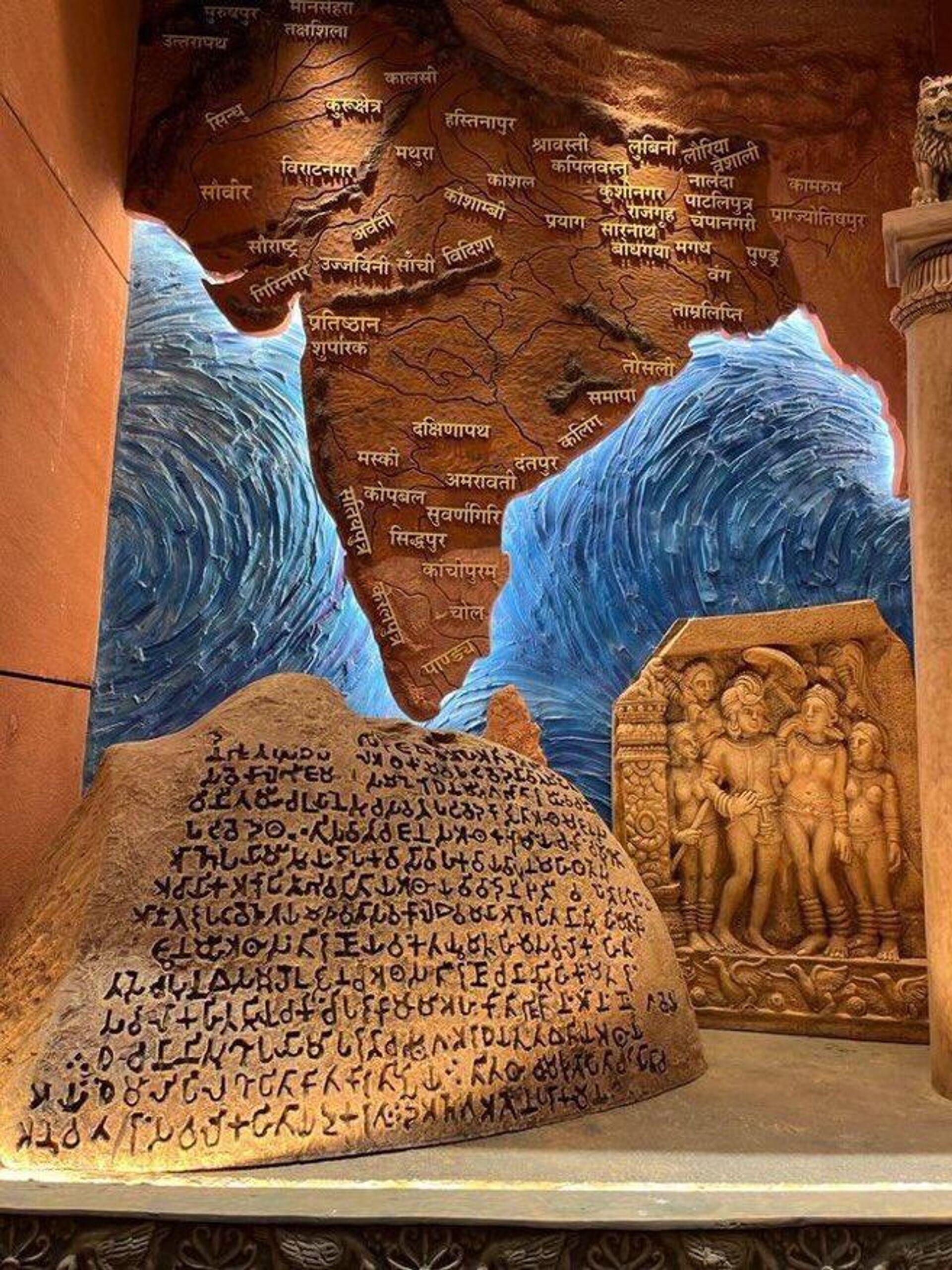
  • The idea of Akhand Bharat holds great importance as it reflects the vision of unity, cultural harmony, and shared heritage across the Indian subcontinent. It symbolizes the belief that the regions which once shared common history, traditions, and spiritual values can stand together in peace and cooperation. Akhand Bharat is not just about geographical boundaries, but about strengthening bonds of brotherhood, respect, and mutual growth among people who have deep cultural and historical ties. Its importance lies in reminding us of our collective identity, rich civilization, and the need to overcome divisions for a stronger, more united future rooted in harmony and prosperity.' -Life Unfold.

    #akhandBharat #scrolllink #rashtra #love #matribhumi #BharatMata
    The idea of Akhand Bharat holds great importance as it reflects the vision of unity, cultural harmony, and shared heritage across the Indian subcontinent. It symbolizes the belief that the regions which once shared common history, traditions, and spiritual values can stand together in peace and cooperation. Akhand Bharat is not just about geographical boundaries, but about strengthening bonds of brotherhood, respect, and mutual growth among people who have deep cultural and historical ties. Its importance lies in reminding us of our collective identity, rich civilization, and the need to overcome divisions for a stronger, more united future rooted in harmony and prosperity.' -Life Unfold. #akhandBharat #scrolllink #rashtra #love #matribhumi #BharatMata
    Like
    Love
    4
    0 Комментарии 0 Поделились 1Кб Просмотры 0 предпросмотр
  • A seven days residential course on "Patanjali Yoga" is currently ongoing from 23-29th September 2019 at Satara, Maharastra under His Holiness Mahasiddha Ishaputra's guidance. The course is conducted by the International Kaulantak Siddha Vidhya Peeth under the tradition of "Siddha Dharma"
    The second day of the course was all about the explanation of "Patanjali Yoga", its origin, history and its parents yoga along with its sister yoga. This shivir is historic in itself because His Holiness revealed some secrets of Patanjali Maharishi like his real name, guru etc which are unknown to the public.
    The take away of the second day was the story revealed by Mahasiddha Ishaputra on how Maharishi Patanjali embraced yoga amon many disciplines? What exactly induced him to choose yoga before tantra etc.
    Along with Patanjali yoga, "durdhara yoga", "vimala yoga", "pashupat yoga" were also revealed by His Holiness Mahasiddha Ishaputra.
    His Holiness Ishaputra also induced the participants on "Jala Yoga" and "Yoga Krida". In Jala Yoga, His Holiness along with the participants performed the jala yoga as shown in pictures. The practice of walking on a pipe is a form of yoga krida which is performed for the perfection of balance. It is also an integral part of Patanjali Yoga which many people have no idea about.
    We still are waiting for the update on the third day happenings. We shall update you all as soon as we receive it. Please stay connected.
    Namo Aadesh
    Om sam siddhaya namah
    Om gurumandalaya namah
    Om Priya Ishaputraya namah

    #KaulantakPeeth #HimalayanSiddhas #BhagwatiKurukulla #PatajaliYoga #Iksvp #MahaSiddhaIshaputra #Course #KurukullaTemple #SiddhaDharma
    A seven days residential course on "Patanjali Yoga" is currently ongoing from 23-29th September 2019 at Satara, Maharastra under His Holiness Mahasiddha Ishaputra's guidance. The course is conducted by the International Kaulantak Siddha Vidhya Peeth under the tradition of "Siddha Dharma" The second day of the course was all about the explanation of "Patanjali Yoga", its origin, history and its parents yoga along with its sister yoga. This shivir is historic in itself because His Holiness revealed some secrets of Patanjali Maharishi like his real name, guru etc which are unknown to the public. The take away of the second day was the story revealed by Mahasiddha Ishaputra on how Maharishi Patanjali embraced yoga amon many disciplines? What exactly induced him to choose yoga before tantra etc. Along with Patanjali yoga, "durdhara yoga", "vimala yoga", "pashupat yoga" were also revealed by His Holiness Mahasiddha Ishaputra. His Holiness Ishaputra also induced the participants on "Jala Yoga" and "Yoga Krida". In Jala Yoga, His Holiness along with the participants performed the jala yoga as shown in pictures. The practice of walking on a pipe is a form of yoga krida which is performed for the perfection of balance. It is also an integral part of Patanjali Yoga which many people have no idea about. We still are waiting for the update on the third day happenings. We shall update you all as soon as we receive it. Please stay connected. Namo Aadesh Om sam siddhaya namah Om gurumandalaya namah Om Priya Ishaputraya namah #KaulantakPeeth #HimalayanSiddhas #BhagwatiKurukulla #PatajaliYoga #Iksvp #MahaSiddhaIshaputra #Course #KurukullaTemple #SiddhaDharma
    Love
    Haha
    4
    0 Комментарии 0 Поделились 2Кб Просмотры 0 предпросмотр
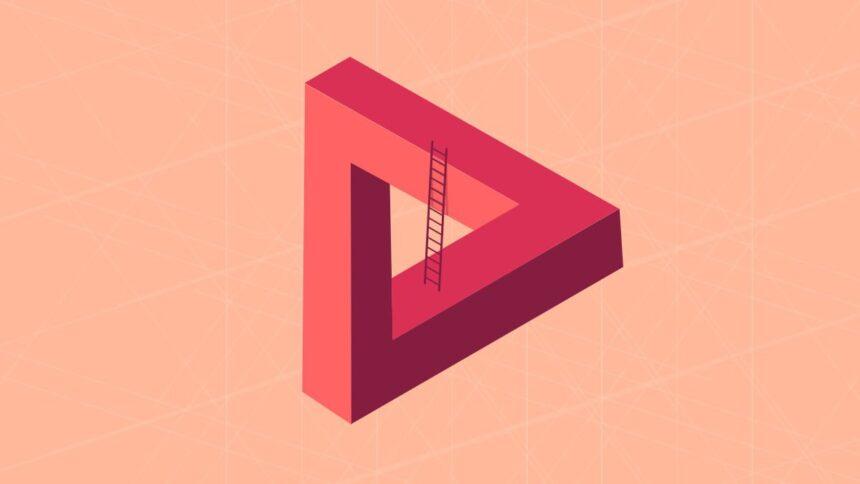
  • A paradox is a statement or situation that seems to go against itself but may still be true. It often looks confusing because it combines two opposite ideas that both make sense in different ways. For example, the saying “less is more” sounds strange, but it means that simplicity can often be more powerful than complexity. Paradoxes are common in science, philosophy, and daily life, and they challenge the way we think. They make us question reality, search for deeper meanings, and understand that not everything in life is as simple as it first appears.’ -Life Unfold.

    #paradox #strange #philosophy #scrolllink #mind #brain #understanding
    A paradox is a statement or situation that seems to go against itself but may still be true. It often looks confusing because it combines two opposite ideas that both make sense in different ways. For example, the saying “less is more” sounds strange, but it means that simplicity can often be more powerful than complexity. Paradoxes are common in science, philosophy, and daily life, and they challenge the way we think. They make us question reality, search for deeper meanings, and understand that not everything in life is as simple as it first appears.’ -Life Unfold. #paradox #strange #philosophy #scrolllink #mind #brain #understanding
    Love
    1
    0 Комментарии 0 Поделились 1Кб Просмотры 0 предпросмотр