


• Physicists at CERN’s Large Hadron Collider have observed what may be one of the strangest quantum events ever recorded — a new tetraquark particle that appeared to exist in two separate detector locations simultaneously. The discovery hints at a bridge between quantum mechanics and classical physics, shaking the foundations of modern science.

    Unlike protons and neutrons, which are made of three quarks, tetraquarks contain four, forming exotic states of matter rarely seen in nature. During experiments, researchers noticed something unprecedented: the same tetraquark seemed to register 1.4 meters apart at the exact same moment — suggesting quantum superposition on a much larger scale than previously thought possible.

    This finding challenges the long-held idea that superposition only applies to microscopic particles. If confirmed, it could revolutionize how we understand space, time, and causality — even paving the way for quantum computers that operate at room temperature and unhackable communication systems based on entangled states.

    The particle itself existed for only 10⁻²³ seconds, but in that brief instant, it may have rewritten the rules of reality. CERN’s follow-up experiments aim to verify whether this was a measurement anomaly or the first glimpse of a quantum-classical overlap — a discovery Einstein himself once thought impossible.

    #CERN #QuantumPhysics #Tetraquark #Superposition #QuantumMechanics #Scrolllink
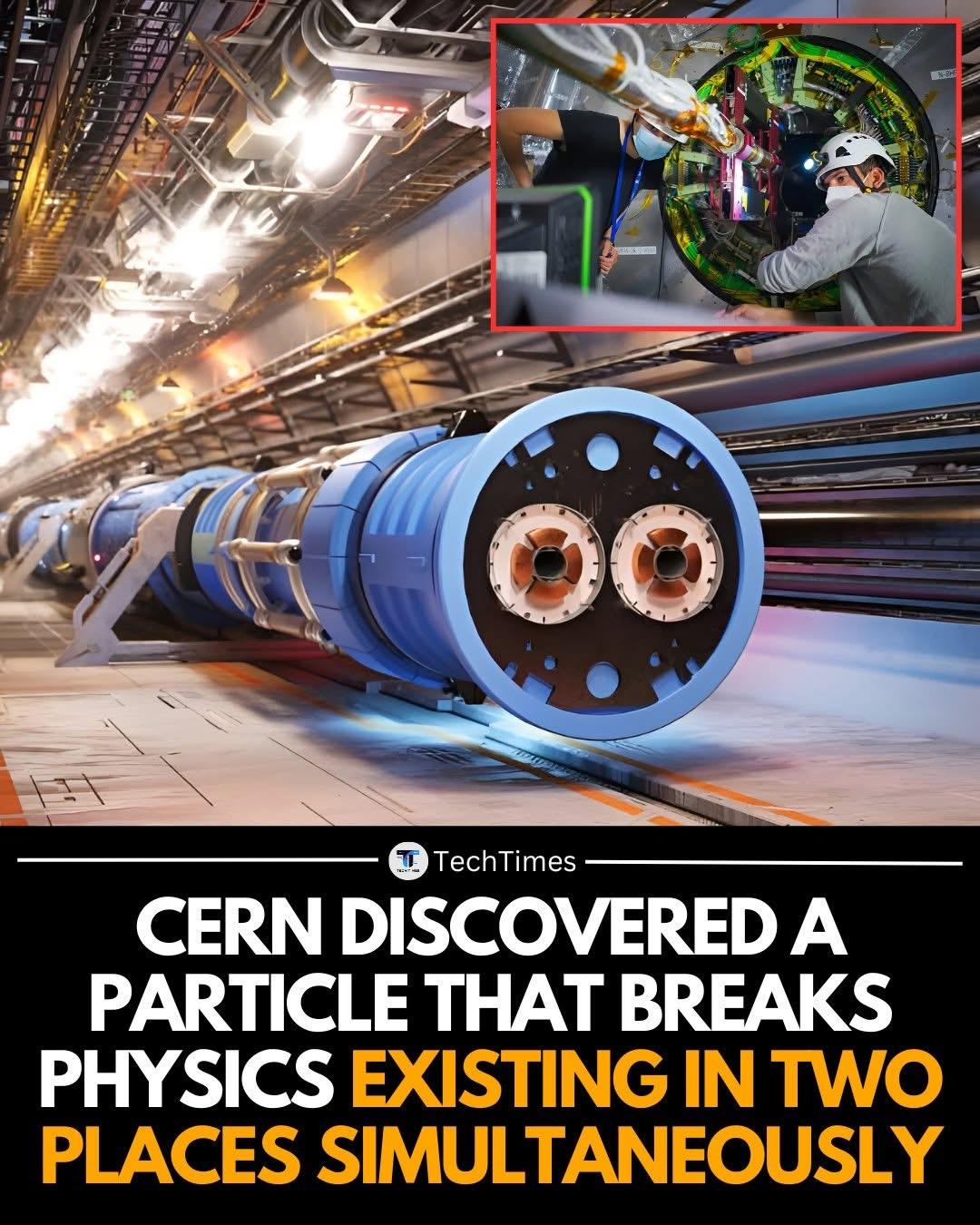
    Physicists at CERN’s Large Hadron Collider have observed what may be one of the strangest quantum events ever recorded — a new tetraquark particle that appeared to exist in two separate detector locations simultaneously. The discovery hints at a bridge between quantum mechanics and classical physics, shaking the foundations of modern science. Unlike protons and neutrons, which are made of three quarks, tetraquarks contain four, forming exotic states of matter rarely seen in nature. During experiments, researchers noticed something unprecedented: the same tetraquark seemed to register 1.4 meters apart at the exact same moment — suggesting quantum superposition on a much larger scale than previously thought possible. This finding challenges the long-held idea that superposition only applies to microscopic particles. If confirmed, it could revolutionize how we understand space, time, and causality — even paving the way for quantum computers that operate at room temperature and unhackable communication systems based on entangled states. The particle itself existed for only 10⁻²³ seconds, but in that brief instant, it may have rewritten the rules of reality. CERN’s follow-up experiments aim to verify whether this was a measurement anomaly or the first glimpse of a quantum-classical overlap — a discovery Einstein himself once thought impossible. #CERN #QuantumPhysics #Tetraquark #Superposition #QuantumMechanics #Scrolllink

    Like
    Love
    3
    0 Comments 0 Shares 1K Views 0 Reviews
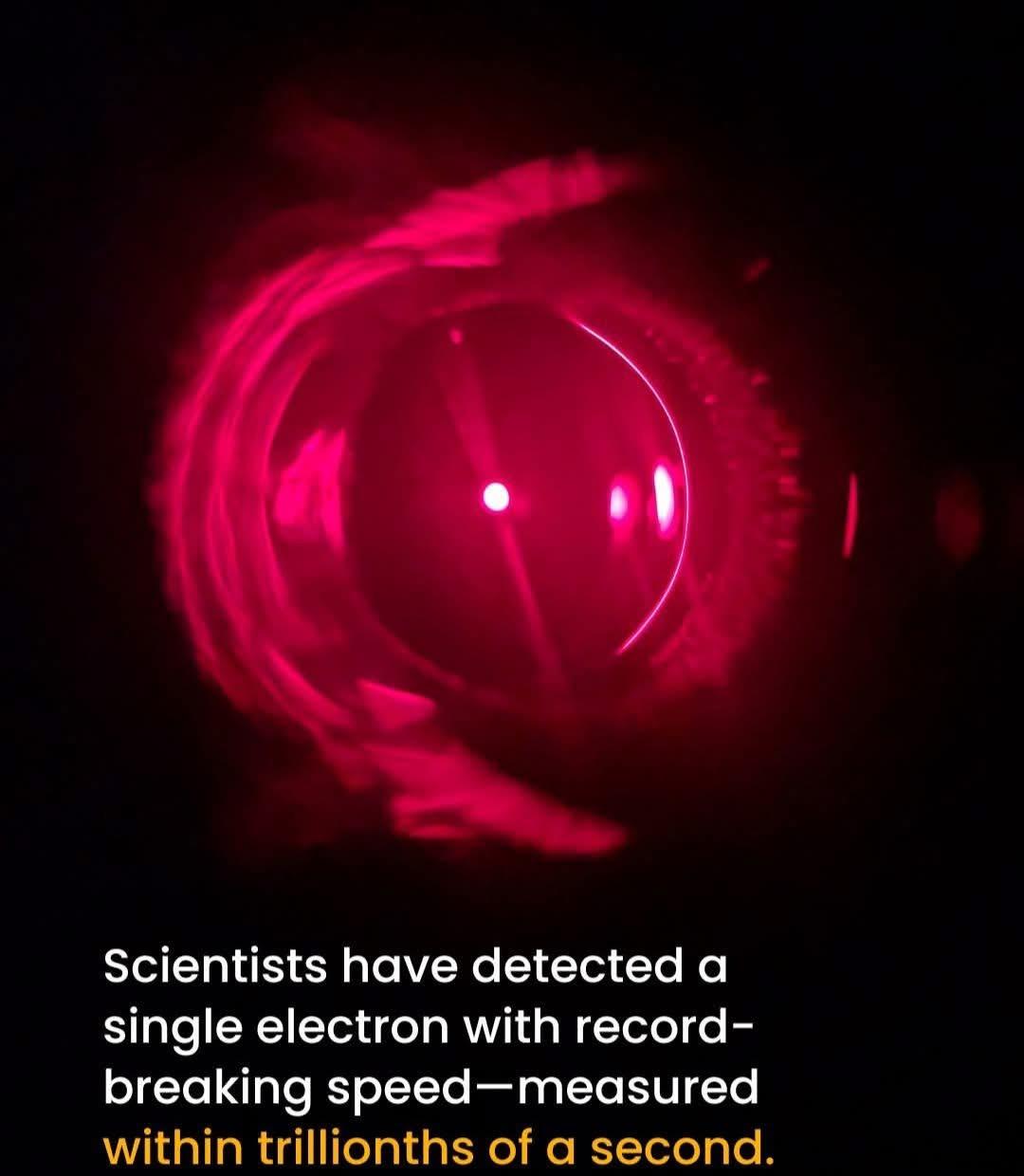
  • In a landmark experiment, researchers have achieved the fastest-ever detection of a single electron, capturing its presence within 6 trillionths of a second in a gallium arsenide semiconductor.

    By injecting two electrons from separate sites and monitoring their near-instantaneous electric repulsion as they approached, scientists at the UK’s National Physical Laboratory used one electron’s deflection to pinpoint the other. This exceptional temporal resolution is roughly 100 times quicker than previous methods, moving us closer to building devices that manipulate single electrons at the speed of quantum interactions.


    Conventional electronics rely on vast flows of many electrons, but controlling single-electron events in real time could make devices much faster, smaller, and more energy-efficient—while also directly tapping the quantum nature of electrons. The approach depends on exquisitely controlled electron pumps and sensors, hinting at the possibility of future quantum technologies as compact as a microchip. T


    he achievement provides an essential building block for advances in quantum communication and computing, and could even allow improvement in the fundamental definitions of electric current by employing quantum standards.


    What makes this finding unique is its ability to probe the fleeting, ultrafast interactions that underlie all electrical currents—a regime where quantum behavior dominates. Researchers now hope to use this capability to unlock deeper insights into the quantum world, accelerating progress toward devices and measurements unimaginable just a decade ago.


    RESEARCH PAPER


    Masaya Kataoka et al, "Single-electron detection on a picosecond timescale", Physical Review Letters (2025)

    — in New York, NY, United States.

    #science #scrolllink
    🔬 In a landmark experiment, researchers have achieved the fastest-ever detection of a single electron, capturing its presence within 6 trillionths of a second in a gallium arsenide semiconductor. By injecting two electrons from separate sites and monitoring their near-instantaneous electric repulsion as they approached, scientists at the UK’s National Physical Laboratory used one electron’s deflection to pinpoint the other. This exceptional temporal resolution is roughly 100 times quicker than previous methods, moving us closer to building devices that manipulate single electrons at the speed of quantum interactions. Conventional electronics rely on vast flows of many electrons, but controlling single-electron events in real time could make devices much faster, smaller, and more energy-efficient—while also directly tapping the quantum nature of electrons. The approach depends on exquisitely controlled electron pumps and sensors, hinting at the possibility of future quantum technologies as compact as a microchip. T he achievement provides an essential building block for advances in quantum communication and computing, and could even allow improvement in the fundamental definitions of electric current by employing quantum standards. What makes this finding unique is its ability to probe the fleeting, ultrafast interactions that underlie all electrical currents—a regime where quantum behavior dominates. Researchers now hope to use this capability to unlock deeper insights into the quantum world, accelerating progress toward devices and measurements unimaginable just a decade ago. 📄 RESEARCH PAPER 📌 Masaya Kataoka et al, "Single-electron detection on a picosecond timescale", Physical Review Letters (2025) — in New York, NY, United States. #science #scrolllink
    0 Comments 0 Shares 1K Views 0 Reviews
  • The 5 Most Insane #Planets In The #Universe
    5 Insane #SpaceEvents you will miss!
    The 5 Most Insane #Planets In The #Universe 5 Insane #SpaceEvents you will miss!
    Love
    1
    0 Comments 0 Shares 1K Views 0 Reviews
  • Which one has the biggest ring system? Chariklo vs Uranus vs Saturn vs J1407b
    #Shorts #Space #Planet #Scariest #events #Earth #Astronomy #Science
    Which one has the biggest ring system? Chariklo vs Uranus vs Saturn vs J1407b #Shorts #Space #Planet #Scariest #events #Earth #Astronomy #Science
    Love
    1
    0 Comments 0 Shares 1K Views 0 Reviews
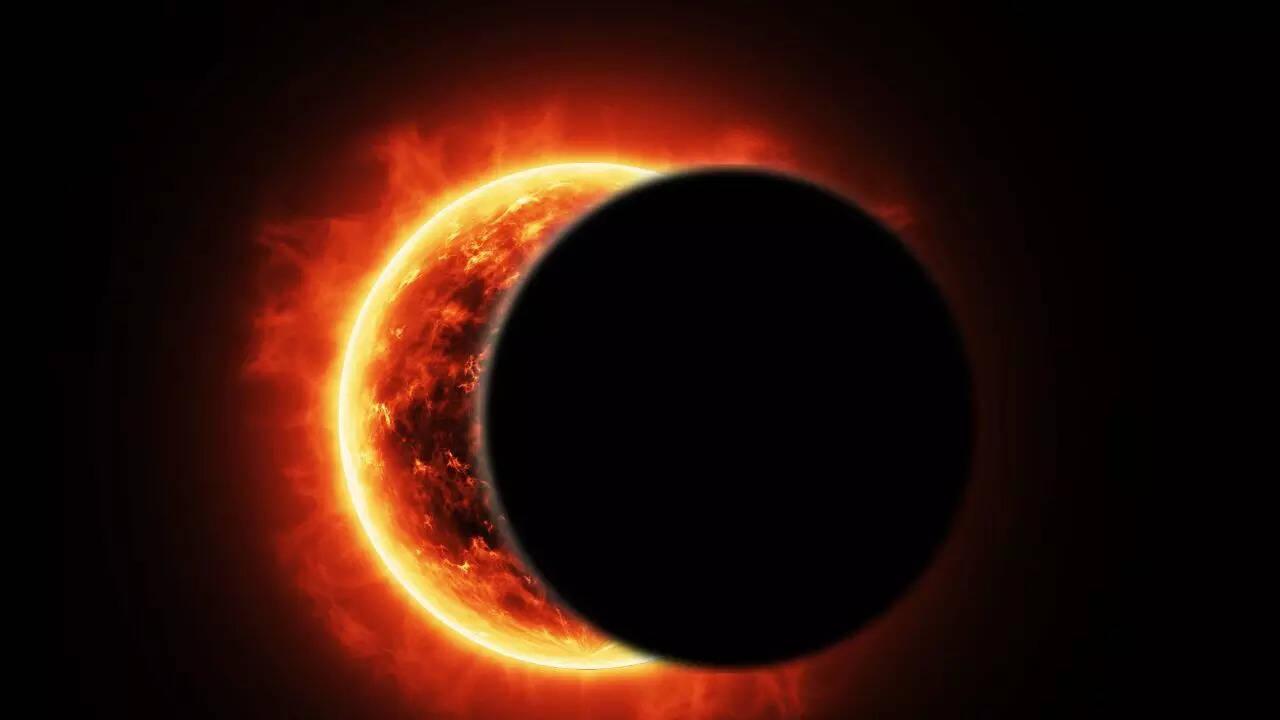
  • A solar eclipse happens when the Moon comes between the Earth and the Sun, blocking the Sun’s light either partly or completely. During a total solar eclipse, the day suddenly becomes dark for a short time, and people can see the Sun’s outer layer, called the corona. In a partial solar eclipse, only part of the Sun is covered by the Moon. Solar eclipses are rare and can only be seen from certain places on Earth at the right time. They are fascinating natural events that remind us of the perfect balance and movement of the Earth, Moon, and Sun in space.’ -Life Unfold

    #solareclipse #sun #earth #moon #space #scrolllink #nature
    A solar eclipse happens when the Moon comes between the Earth and the Sun, blocking the Sun’s light either partly or completely. During a total solar eclipse, the day suddenly becomes dark for a short time, and people can see the Sun’s outer layer, called the corona. In a partial solar eclipse, only part of the Sun is covered by the Moon. Solar eclipses are rare and can only be seen from certain places on Earth at the right time. They are fascinating natural events that remind us of the perfect balance and movement of the Earth, Moon, and Sun in space.’ -Life Unfold #solareclipse #sun #earth #moon #space #scrolllink #nature
    Love
    1
    0 Comments 0 Shares 1K Views 0 Reviews
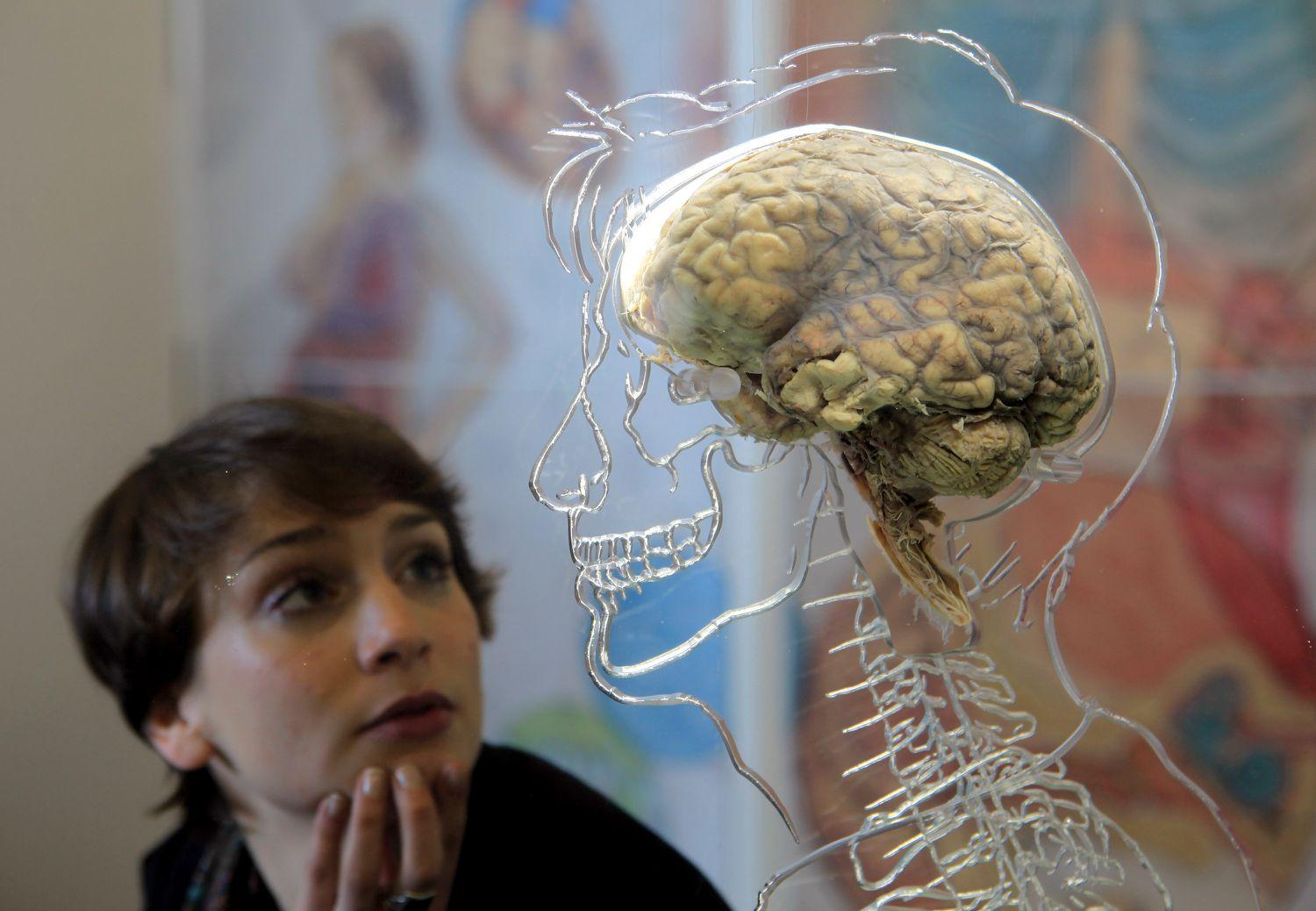
  • The human brain always wants to understand everything because it is naturally curious and full of questions. From childhood, people try to learn how things work, why events happen, and what lies beyond what they can see. This desire to understand leads to discoveries in science, inventions in technology, and progress in every field of life. The brain does not feel satisfied until it finds answers, and even then, it looks for new knowledge. This endless search for understanding is what makes humans different from other living beings and helps them grow, learn, and shape the future.’ -Life Unfold

    #life #brain #human #life #curious #questions #future #scrolllink #nature
    The human brain always wants to understand everything because it is naturally curious and full of questions. From childhood, people try to learn how things work, why events happen, and what lies beyond what they can see. This desire to understand leads to discoveries in science, inventions in technology, and progress in every field of life. The brain does not feel satisfied until it finds answers, and even then, it looks for new knowledge. This endless search for understanding is what makes humans different from other living beings and helps them grow, learn, and shape the future.’ -Life Unfold #life #brain #human #life #curious #questions #future #scrolllink #nature
    Love
    1
    0 Comments 0 Shares 2K Views 0 Reviews