• Majority Christian families in a Tamil Nadu village create chaos over a High Court order simply allowing Hindus to hold a one-day Bhandara on govt land.

    How does @the_Hindu report it?

    “Christian community expressed their disappointment…”

    #theHindu #leftist #antiHindu #media #scrolllink
    Majority Christian families in a Tamil Nadu village create chaos over a High Court order simply allowing Hindus to hold a one-day Bhandara on govt land. How does @the_Hindu report it? “Christian community expressed their disappointment…” #theHindu #leftist #antiHindu #media #scrolllink
    Angry
    1
    0 Comments 0 Shares 544 Views 0 Reviews
  • Express with retro songs ЁЯдМЁЯП╝ . .
    Song : Tumhi mere mandir
    Singer : Lata Mangeshkar
    Movie : Khandan
    Lyricist : Rajendra Krishan
    Music Composer : Ravi
    Starcast : Sunil Dutt & Nutan

    #oldsongs #oldisgold
    #oldhindisongs #latamangeshkar #latadidi #reels #explore #sadabahar #evergreen #retro #retrobollywood #relatable #90ssongs #80ssongs #70ssongs #oldmelodies #scrolllink
    Express with retro songs ЁЯдМЁЯП╝ . . Song : Tumhi mere mandir Singer : Lata Mangeshkar Movie : Khandan Lyricist : Rajendra Krishan Music Composer : Ravi Starcast : Sunil Dutt & Nutan #oldsongs #oldisgold #oldhindisongs #latamangeshkar #latadidi #reels #explore #sadabahar #evergreen #retro #retrobollywood #relatable #90ssongs #80ssongs #70ssongs #oldmelodies #scrolllink
    Like
    Love
    wow
    4
    0 Comments 0 Shares 987 Views 0 Reviews
  • рдЗрд╕реЗ рдХрд╣рддреЗ рд╣реИрдВ рд╡рд╛рдордкрдВрдереА рдПрдЬреЗрдВрдбрд╛ред

    #TheTajStory рдХреЛ рдПрдЬреЗрдВрдбрд╛ рдХрд╣рдХрд░ рдЦрд╛рд░рд┐рдЬ рдХрд┐рдпрд╛ рдЬрд╛ рд░рд╣рд╛ рд╣реИред рд░реЗрдЯрд┐рдВрдЧ рднреА рдбреЗрдв рд╕реНрдЯрд╛рд░ рд╣реИред

    рдЗрд╕реА @IndianExpress рдиреЗ #TheKeralaStory рдХреЛ рдкреНрд░реЛрдкрдЧреЗрдВрдбрд╛ рдлрд┐рд▓реНрдо рдХрд╣рдХрд░ рдПрдХ рд╕реНрдЯрд╛рд░ рджрд┐рдпрд╛ рдерд╛ рдФрд░ рдЙрд╕рдиреЗ 200 рдХрд░реЛреЗрдбрд╝ рдХрд╛ рдмрд┐рдЬрдиреЗрд╕ рдХрд┐рдпрд╛ рдерд╛ред

    рдЖрдкрдХреЛ рдлрд┐рд▓реНрдо рдХреА рд╕рдореАрдХреНрд╖рд╛ рдХрд░рдиреА рд╣реИ рдирд╛ рдХрд┐ рдЙрд╕рдХреЗ рдХрдВрдЯреЗрдВрдЯ рдХреА рддрд╣рдХреАрдХрдд

    #Movie #Film #leftist #scrolllink
    рдЗрд╕реЗ рдХрд╣рддреЗ рд╣реИрдВ рд╡рд╛рдордкрдВрдереА рдПрдЬреЗрдВрдбрд╛ред #TheTajStory рдХреЛ рдПрдЬреЗрдВрдбрд╛ рдХрд╣рдХрд░ рдЦрд╛рд░рд┐рдЬ рдХрд┐рдпрд╛ рдЬрд╛ рд░рд╣рд╛ рд╣реИред рд░реЗрдЯрд┐рдВрдЧ рднреА рдбреЗрдв рд╕реНрдЯрд╛рд░ рд╣реИред рдЗрд╕реА @IndianExpress рдиреЗ #TheKeralaStory рдХреЛ рдкреНрд░реЛрдкрдЧреЗрдВрдбрд╛ рдлрд┐рд▓реНрдо рдХрд╣рдХрд░ рдПрдХ рд╕реНрдЯрд╛рд░ рджрд┐рдпрд╛ рдерд╛ рдФрд░ рдЙрд╕рдиреЗ 200 рдХрд░реЛреЗрдбрд╝ рдХрд╛ рдмрд┐рдЬрдиреЗрд╕ рдХрд┐рдпрд╛ рдерд╛ред рдЖрдкрдХреЛ рдлрд┐рд▓реНрдо рдХреА рд╕рдореАрдХреНрд╖рд╛ рдХрд░рдиреА рд╣реИ рдирд╛ рдХрд┐ рдЙрд╕рдХреЗ рдХрдВрдЯреЗрдВрдЯ рдХреА рддрд╣рдХреАрдХрдд #Movie #Film #leftist #scrolllink
    0 Comments 0 Shares 468 Views 0 Reviews
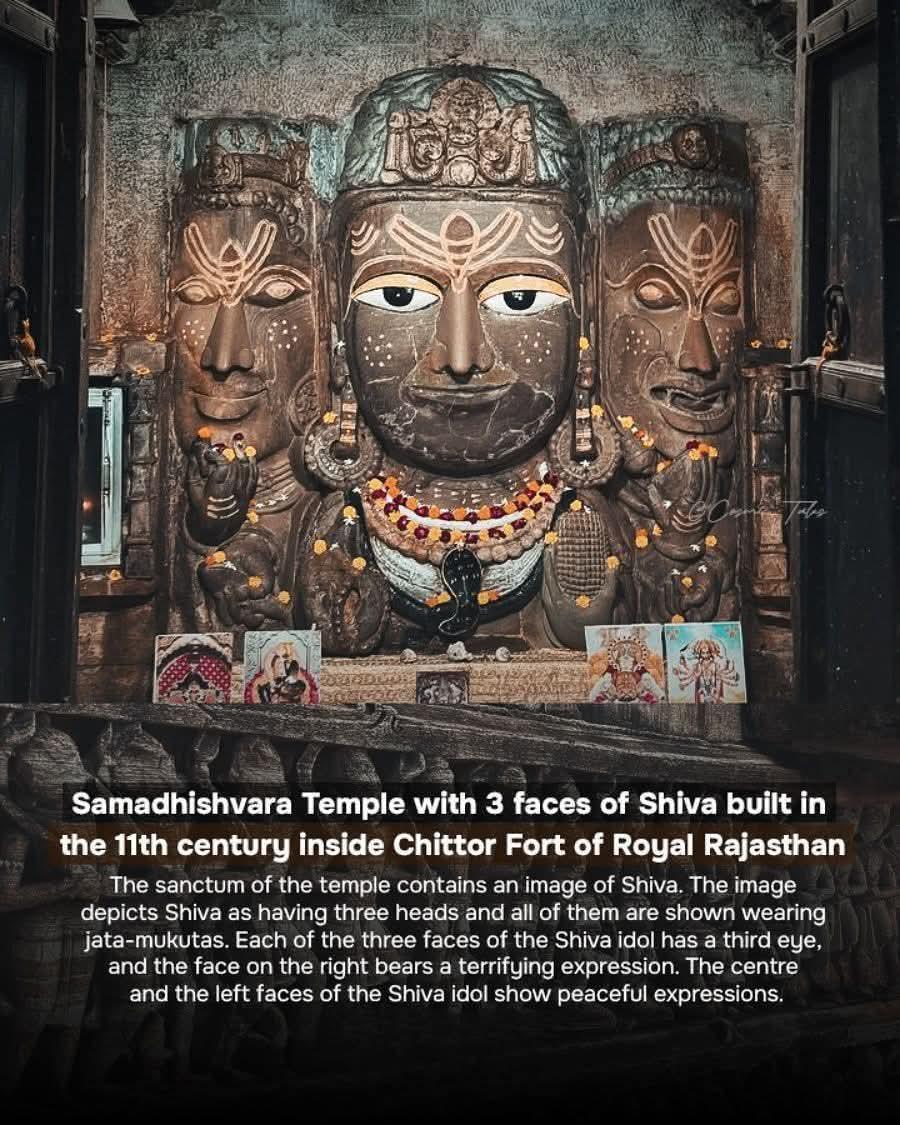
  • In the heart of Chittorgarh, Rajasthan, the Samadhishvara Temple rises as a timeless symbol of faith and artistry.

    Dedicated to Lord Shiva, the sanctum enshrines a striking three-headed idol that reflects his many dimensions. Each face tells its own story – one fierce and commanding, another calm and serene, and the third carrying an enigmatic expression. Together, they embody the vastness of Shiva’s being.

    The temple’s origins trace back to the 11th century, when it is believed to have been commissioned by the Parmara king Bhoja. Some scholars suggest it may even predate him, but inscriptions from Chittor and beyond largely affirm that the shrine, originally known as Tri-Bhuvana, was established in this era. Over the following five centuries, it was restored and enriched multiple times, preserving its sacred legacy through the ages.

    #hindutemples #shivaform #rudra #templesofwonder #HindusOfTheWorld #hara #sadashiv #shivatemple #shivatemple #indiantemple #rajasthan #rajathantemple
    In the heart of Chittorgarh, Rajasthan, the Samadhishvara Temple rises as a timeless symbol of faith and artistry. Dedicated to Lord Shiva, the sanctum enshrines a striking three-headed idol that reflects his many dimensions. Each face tells its own story – one fierce and commanding, another calm and serene, and the third carrying an enigmatic expression. Together, they embody the vastness of Shiva’s being. The temple’s origins trace back to the 11th century, when it is believed to have been commissioned by the Parmara king Bhoja. Some scholars suggest it may even predate him, but inscriptions from Chittor and beyond largely affirm that the shrine, originally known as Tri-Bhuvana, was established in this era. Over the following five centuries, it was restored and enriched multiple times, preserving its sacred legacy through the ages. #hindutemples #shivaform #rudra #templesofwonder #HindusOfTheWorld #hara #sadashiv #shivatemple #shivatempleЁЯФ▒ #indiantemple #rajasthan #rajathantemple
    Love
    4
    1 Comments 0 Shares 1K Views 0 Reviews
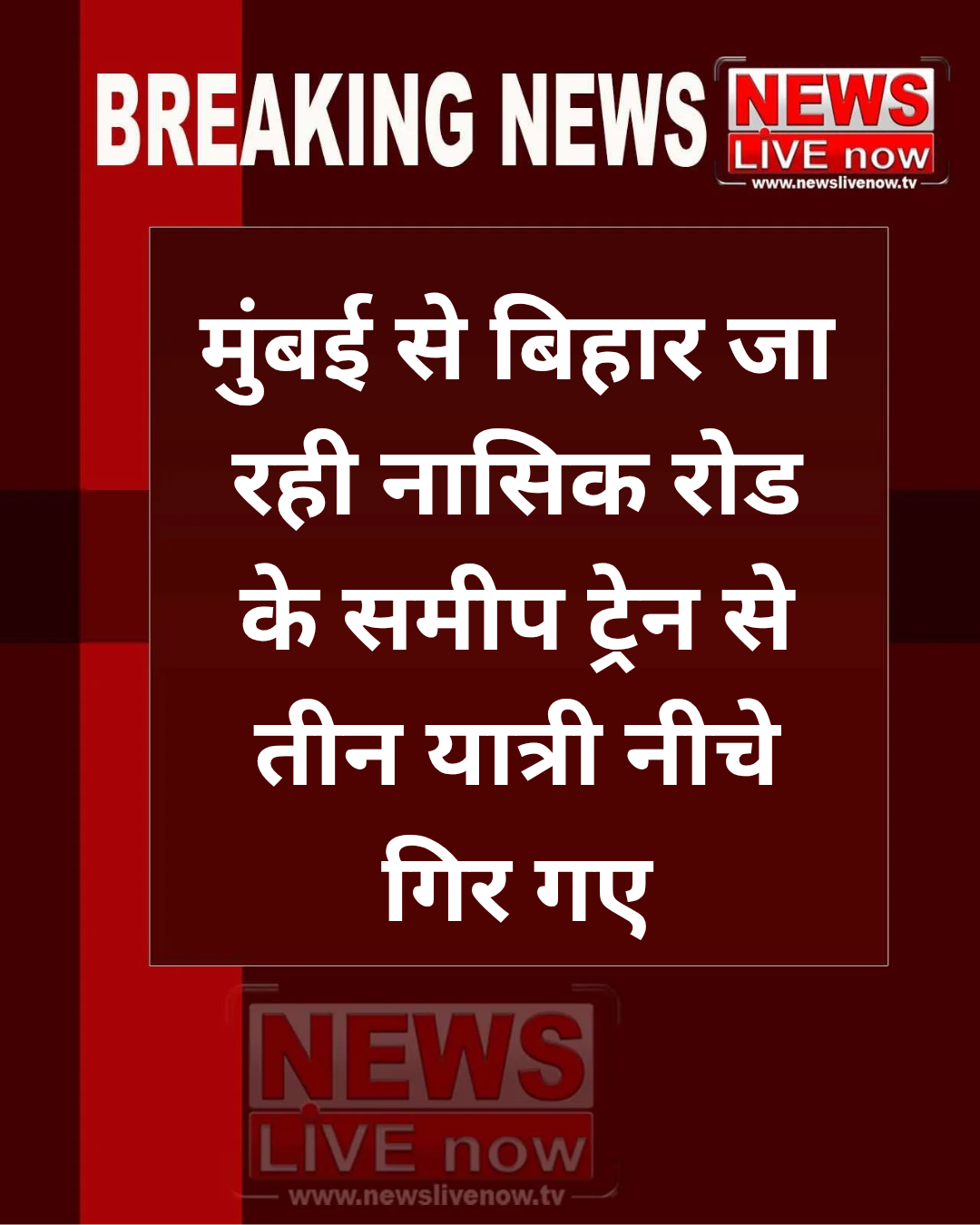
  • #NewsLiveNow рдореБрдВрдмрдИ рд╕реЗ рдмрд┐рд╣рд╛рд░ рдЬрд╛ рд░рд╣реА рдХрд░реНрдорднреВрдорд┐ рдПрдХреНрд╕рдкреНрд░реЗрд╕ рдореЗрдВ рдПрдХ рджрд░реНрджрдирд╛рдХ рд╣рд╛рджрд╕рд╛ рдШрдЯрд┐рдд рд╣реБрдЖред рдирд╛рд╕рд┐рдХ рд░реЛрдб рдХреЗ рд╕рдореАрдк рдЯреНрд░реЗрди рд╕реЗ рддреАрди рдпрд╛рддреНрд░реА рдиреАрдЪреЗ рдЧрд┐рд░ рдЧрдП, рдЬрд┐рдирдореЗрдВ рд╕реЗ рджреЛ рдпреБрд╡рдХреЛрдВ рдХреА рдореМрдХреЗ рдкрд░ рд╣реА рдореГрддреНрдпреБ рд╣реЛ рдЧрдИ, рдЬрдмрдХрд┐ рддреАрд╕рд░рд╛ рд╡реНрдпрдХреНрддрд┐ рдЧрдВрднреАрд░ рд░реВрдк рд╕реЗ рдЬрдЦреНрдореА рд╣реИред рдЕрдзрд┐рдХрд╛рд░рд┐рдпреЛрдВ рдХрд╛ рдХрд╣рдирд╛ рд╣реИ рдХрд┐ рдЯреНрд░реЗрди рдореЗрдВ рдЕрддреНрдпрдзрд┐рдХ рднреАрдбрд╝ рд╣реЛрдиреЗ рдХреЗ рдЪрд▓рддреЗ рдпрд╣ рдШрдЯрдирд╛ рд╣реБрдИред


    #KarmbhumiExpress #MumbaiToBihar #TrainAccident #NashikRoad #RailwaySafety #AccidentNews


    #NewsLiveNow рдореБрдВрдмрдИ рд╕реЗ рдмрд┐рд╣рд╛рд░ рдЬрд╛ рд░рд╣реА рдХрд░реНрдорднреВрдорд┐ рдПрдХреНрд╕рдкреНрд░реЗрд╕ рдореЗрдВ рдПрдХ рджрд░реНрджрдирд╛рдХ рд╣рд╛рджрд╕рд╛ рдШрдЯрд┐рдд рд╣реБрдЖред рдирд╛рд╕рд┐рдХ рд░реЛрдб рдХреЗ рд╕рдореАрдк рдЯреНрд░реЗрди рд╕реЗ рддреАрди рдпрд╛рддреНрд░реА рдиреАрдЪреЗ рдЧрд┐рд░ рдЧрдП, рдЬрд┐рдирдореЗрдВ рд╕реЗ рджреЛ рдпреБрд╡рдХреЛрдВ рдХреА рдореМрдХреЗ рдкрд░ рд╣реА рдореГрддреНрдпреБ рд╣реЛ рдЧрдИ, рдЬрдмрдХрд┐ рддреАрд╕рд░рд╛ рд╡реНрдпрдХреНрддрд┐ рдЧрдВрднреАрд░ рд░реВрдк рд╕реЗ рдЬрдЦреНрдореА рд╣реИред рдЕрдзрд┐рдХрд╛рд░рд┐рдпреЛрдВ рдХрд╛ рдХрд╣рдирд╛ рд╣реИ рдХрд┐ рдЯреНрд░реЗрди рдореЗрдВ рдЕрддреНрдпрдзрд┐рдХ рднреАрдбрд╝ рд╣реЛрдиреЗ рдХреЗ рдЪрд▓рддреЗ рдпрд╣ рдШрдЯрдирд╛ рд╣реБрдИред #KarmbhumiExpress #MumbaiToBihar #TrainAccident #NashikRoad #RailwaySafety #AccidentNews
    Like
    Sad
    2
    0 Comments 0 Shares 862 Views 0 Reviews
  • #NewsLiveNow рд▓реЛрдХреЛ рдкрд╛рдпрд▓рдЯ рдХреА рд╕реВрдЭрдмреВрдЭ рд╕реЗ рдЯрд▓рд╛ рдмрдбрд╝рд╛ рд╣рд╛рджрд╕рд╛ — рдЙрдиреНрд╣реЛрдВрдиреЗ рддреБрд░рдВрдд рдЗрдорд░рдЬреЗрдВрд╕реА рдмреНрд░реЗрдХ рд▓рдЧрд╛рдХрд░ рдЯреНрд░реЗрди рд░реЛрдХ рджреА, рдЬрд┐рд╕рдХреЗ рдмрд╛рдж рдпрд╛рддреНрд░реА рдЕрдкрдирд╛ рд╕рд╛рдорд╛рди рд▓реЗрдХрд░ рдиреАрдЪреЗ рдХреВрджрдиреЗ рд▓рдЧреЗред рдЗрд╕ рджреМрд░рд╛рди рднрдЧрджрдбрд╝ рдореЗрдВ рдХрдИ рд▓реЛрдЧ рдШрд╛рдпрд▓ рд╣реЛ рдЧрдПредрдзрдирддреЗрд░рд╕ рдХреА рд╕реБрдмрд╣ рд▓реБрдзрд┐рдпрд╛рдирд╛ рд╕реЗ рджрд┐рд▓реНрд▓реА рдХреА рдУрд░ рдЬрд╛ рд░рд╣реА рдЧрд░реАрдм рд░рде рдПрдХреНрд╕рдкреНрд░реЗрд╕ рдореЗрдВ рднреАрд╖рдг рд╣рд╛рджрд╕рд╛ рд╣реЛ рдЧрдпрд╛ред

    #newsinhindi #garibrathexpress #punjab #ludhiana #delhi
    #NewsLiveNow рд▓реЛрдХреЛ рдкрд╛рдпрд▓рдЯ рдХреА рд╕реВрдЭрдмреВрдЭ рд╕реЗ рдЯрд▓рд╛ рдмрдбрд╝рд╛ рд╣рд╛рджрд╕рд╛ — рдЙрдиреНрд╣реЛрдВрдиреЗ рддреБрд░рдВрдд рдЗрдорд░рдЬреЗрдВрд╕реА рдмреНрд░реЗрдХ рд▓рдЧрд╛рдХрд░ рдЯреНрд░реЗрди рд░реЛрдХ рджреА, рдЬрд┐рд╕рдХреЗ рдмрд╛рдж рдпрд╛рддреНрд░реА рдЕрдкрдирд╛ рд╕рд╛рдорд╛рди рд▓реЗрдХрд░ рдиреАрдЪреЗ рдХреВрджрдиреЗ рд▓рдЧреЗред рдЗрд╕ рджреМрд░рд╛рди рднрдЧрджрдбрд╝ рдореЗрдВ рдХрдИ рд▓реЛрдЧ рдШрд╛рдпрд▓ рд╣реЛ рдЧрдПредрдзрдирддреЗрд░рд╕ рдХреА рд╕реБрдмрд╣ рд▓реБрдзрд┐рдпрд╛рдирд╛ рд╕реЗ рджрд┐рд▓реНрд▓реА рдХреА рдУрд░ рдЬрд╛ рд░рд╣реА рдЧрд░реАрдм рд░рде рдПрдХреНрд╕рдкреНрд░реЗрд╕ рдореЗрдВ рднреАрд╖рдг рд╣рд╛рджрд╕рд╛ рд╣реЛ рдЧрдпрд╛ред #newsinhindi #garibrathexpress #punjab #ludhiana #delhi
    NEWSLIVENOW.COM
    рд▓реБрдзрд┐рдпрд╛рдирд╛ рд╕реЗ рджрд┐рд▓реНрд▓реА рдЖ рд░рд╣реА рдЧрд░реАрдм рд░рде рдЯреНрд░реЗрди рдореЗрдВ рднрдпрдВрдХрд░ рдЖрдЧ, рдзреБрдПрдВ рдореЗрдВ рдШрд┐рд░реАрдВ рдмреЛрдЧрд┐рдпрд╛рдВ, рдордЪреА рдЕрдлрд░рд╛рддрдлрд░реА
    (рдиреНрдпреВрдЬрд╝рд▓рд╛рдЗрд╡рдирд╛рдЙ-Punjab) рд▓реЛрдХреЛ рдкрд╛рдпрд▓рдЯ рдХреА рд╕реВрдЭрдмреВрдЭ рд╕реЗ рдЯрд▓рд╛ рдмрдбрд╝рд╛ рд╣рд╛рджрд╕рд╛ — рдЙрдиреНрд╣реЛрдВрдиреЗ рддреБрд░рдВрдд рдЗрдорд░рдЬреЗрдВрд╕реА рдмреНрд░реЗрдХ рд▓рдЧрд╛рдХрд░ рдЯреНрд░реЗрди рд░реЛрдХ рджреА, рдЬрд┐рд╕рдХреЗ рдмрд╛рдж рдпрд╛рддреНрд░реА рдЕрдкрдирд╛ рд╕рд╛рдорд╛рди рд▓реЗрдХрд░ рдиреАрдЪреЗ рдХреВрджрдиреЗ
    Like
    1
    0 Comments 0 Shares 565 Views 0 Reviews
  • Iksvp is honoured to share sacred glimpses from the second day of the Purnabhishek Sadhana Course.
    The day began with the regular Yoga Kram, an essential part of Siddha Dharm, which helps align the body, mind, and pranic energies in preparation for higher spiritual practices. This was followed by the Kaulachar Kram—a deeply reverential ritual performed as an act of kshama (seeking forgiveness) from the Devi-Devtas. Through this process, the sadhaks humbly express repentance for any known or unknown mistakes committed during their spiritual practices, thereby purifying their intentions before moving into deeper sadhanas.
    Later in the day, Kaulantak Peeth─Бdheeshwar Mah─Бsiddha Ishaputra graced the gathering with his divine presence to guide and empower the ongoing sadhana. Under his direction, several sacred rituals were performed, setting the stage for the main process of Purnabhishek Deeksha.
    The sequence included Shreevats Pooja, Yantra Pooja, and Tantra Pooja—each performed meticulously to invoke divine energies and sanctify the spiritual environment. As the night deepened, around midnight, the central and most profound ritual of Abhishek commenced. This sacred ceremony marked the culmination of the Deeksha Kram, symbolizing spiritual purification, divine initiation, and the awakening of higher consciousness within every participant.
    After the completion of the rituals, Mah─Бsiddha Ishaputra addressed all the Bhairavs and Bhairavis, answering their questions and providing invaluable spiritual guidance. His words illuminated the deeper meanings behind the practices, enriching the understanding of every seeker present.
    The Shivir concluded on a divine note, with each Bhairav and Bhairavi receiving one of the greatest spiritual gifts of their lives—the Purnabhishek Deeksha, a transformative initiation that marks a new dawn on their path of Siddha Dharm.
    #poornabhishek #purnabhishek #abhishek #sadhana #himalayantantra
    #himalayandevaparamapara #SiddhaDharma #SiddhaTradition #lordshiva #bhagwanshiv #mahadev #SwachhandBhairav #kurukulla #AncientWisdom #siddhapedia #KaulantakPeeth #KulantPeeth #Ishaputra #mahasiddhaishaputra #MahayogiSatyendraNath #meditation #sanatandharma #tantrikhealing #hiddendeities #transformation #spiritualjourney #HimalayanSiddhas #hindu #adhyaatma #himalayangod #scrolllink
    Iksvp is honoured to share sacred glimpses from the second day of the Purnabhishek Sadhana Course. The day began with the regular Yoga Kram, an essential part of Siddha Dharm, which helps align the body, mind, and pranic energies in preparation for higher spiritual practices. This was followed by the Kaulachar Kram—a deeply reverential ritual performed as an act of kshama (seeking forgiveness) from the Devi-Devtas. Through this process, the sadhaks humbly express repentance for any known or unknown mistakes committed during their spiritual practices, thereby purifying their intentions before moving into deeper sadhanas. Later in the day, Kaulantak Peeth─Бdheeshwar Mah─Бsiddha Ishaputra graced the gathering with his divine presence to guide and empower the ongoing sadhana. Under his direction, several sacred rituals were performed, setting the stage for the main process of Purnabhishek Deeksha. The sequence included Shreevats Pooja, Yantra Pooja, and Tantra Pooja—each performed meticulously to invoke divine energies and sanctify the spiritual environment. As the night deepened, around midnight, the central and most profound ritual of Abhishek commenced. This sacred ceremony marked the culmination of the Deeksha Kram, symbolizing spiritual purification, divine initiation, and the awakening of higher consciousness within every participant. After the completion of the rituals, Mah─Бsiddha Ishaputra addressed all the Bhairavs and Bhairavis, answering their questions and providing invaluable spiritual guidance. His words illuminated the deeper meanings behind the practices, enriching the understanding of every seeker present. The Shivir concluded on a divine note, with each Bhairav and Bhairavi receiving one of the greatest spiritual gifts of their lives—the Purnabhishek Deeksha, a transformative initiation that marks a new dawn on their path of Siddha Dharm. #poornabhishek #purnabhishek #abhishek #sadhana #himalayantantra #himalayandevaparamapara #SiddhaDharma #SiddhaTradition #lordshiva #bhagwanshiv #mahadev #SwachhandBhairav #kurukulla #AncientWisdom #siddhapedia #KaulantakPeeth #KulantPeeth #Ishaputra #mahasiddhaishaputra #MahayogiSatyendraNath #meditation #sanatandharma #tantrikhealing #hiddendeities #transformation #spiritualjourney #HimalayanSiddhas #hindu #adhyaatma #himalayangod #scrolllink
    Love
    wow
    Like
    7
    0 Comments 1 Shares 4K Views 0 Reviews
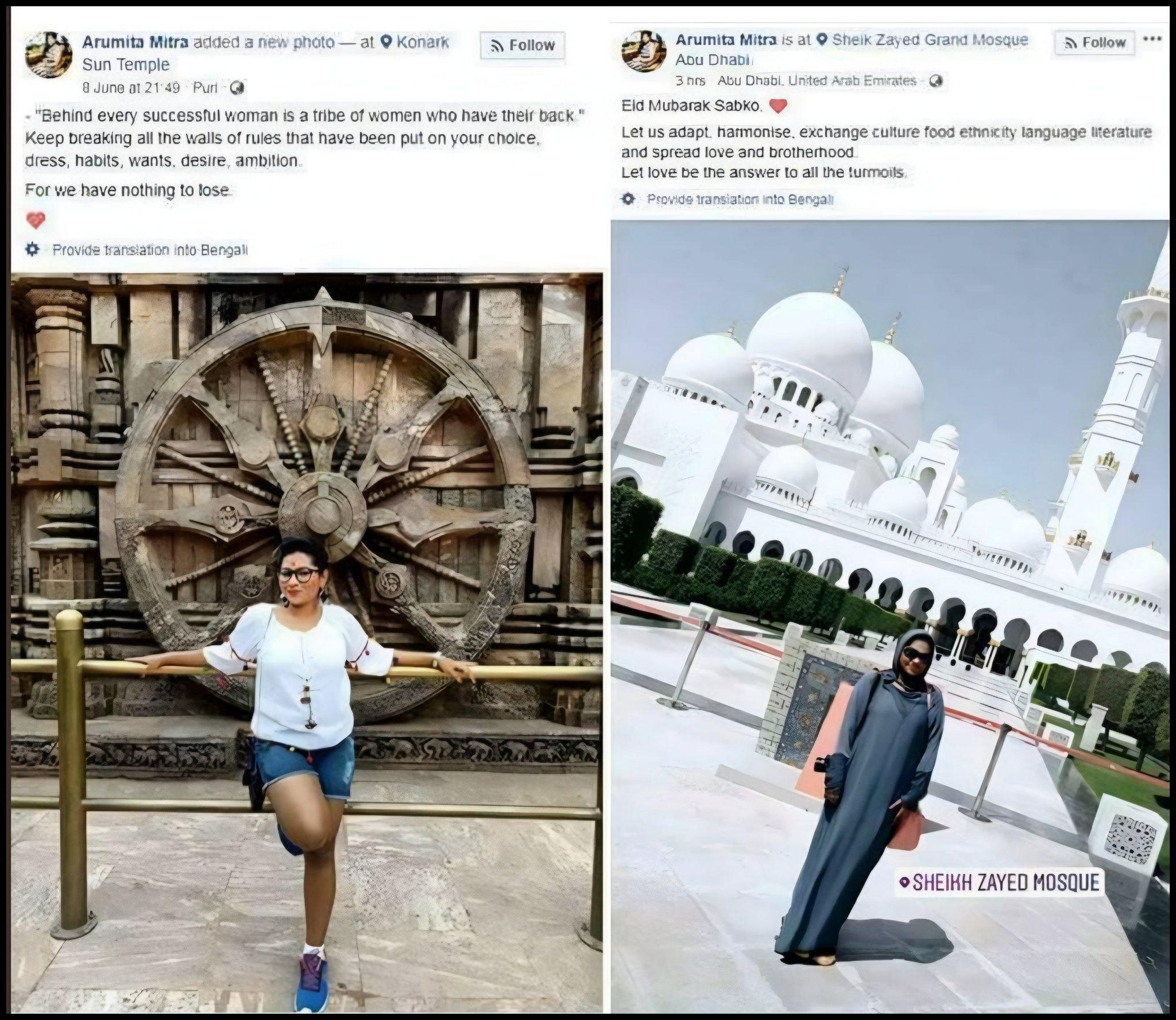
  • The irony is that she can be herself & express herself with her choices, with her clothes in a Hindu temple but she knows that she can’t do that in a mosque because she will be whipped & put in the jail.

    #jail #express #cloths #mosque #temple #scrolllink
    The irony is that she can be herself & express herself with her choices, with her clothes in a Hindu temple but she knows that she can’t do that in a mosque because she will be whipped & put in the jail. #jail #express #cloths #mosque #temple #scrolllink
    0 Comments 0 Shares 528 Views 0 Reviews
  • Rani Ki Vav at Patan, Gujarat also known as Queen's Stepwell
    Rani Ki Vav, Patan
    Queen's Stepwell, A UNESCO World Heritage Site

    Patan is a district in the state of Gujarat, located at 125kms distance from Ahmedabad. Patan was once the capital of the state in historic times located on the banks of the (lost) Saraswati River. Nestled in the hustle and bustle of the city Patan, lies an “Architectural Wonder” – Rani Ki Vav. It is also known as “Rani Ni Vav” in Gujarati local dialect. This is a 7 storeyed Magnificent Stepwell, which is built using scientific principles for storing water.

    Back in 11th century, Udaymati, Queen of the King Bhimadev I from Solanki(Chalukya) Dynasty, expressed her desire to build a stepwell. This stepwell, she ordered to build is in the memory of her beloved husband.

    Rani ki Vav is one of the UNESCO World Heritage sites in India.
    The new тВ╣100 rupee currency note has a picture of this stepwell.

    Let’s have a visual tour of Stepwell
    As you walk towards this site, it doesn’t appeal very much. Just a compound wall and some—Well Kept—landscaping work is done around it. The more you approach it, the more it starts appealing. When you reach the main entrance, the Jaw-Dropping view absorbs you in it. Perspective steps going deep down towards the well-shaft are accompanied by intricately carved idols of gods and goddesses. Each idol is as magnificent as if they are living things. The far end is of this stepwell—which is a well-shaft—is not even clearly visible from the first step.

    Constructional Aspects

    Rani ki Vav was constructed as a religious as well as a functional structure. The expanse of this stepwell is roughly 1610 sq.m. and 70m length from the base of Toran—Sacred Gateway—to the inner edge of well-shaft. Its 23m in width and 28m in depth. Rani Ki Vav is constructed like an inverted temple highlighting the sanctity of water. It is built on the East-West axis, “Step-Corridor” being in the east and “Well” on the west.

    Ceremonial Entrance (Toran Dwaar)
    The first architectural object you see as you step down, is the remains of a pillar base. This evidently confirms the presence of Toran Dwaar – A Ceremonial Entrance. In 19th century, a survey was conducted for Rani Ki Vav. James Burgess and Henry Cousens were two archeologists who had mentioned about these pillars in the survey.

    The Toran was comprised of 2 freely standing pillars, which were connected by an ornate arch at their upper sections. Towards the west side from this entrance, downward leading steps make a way to the edge of the well.

    Ceremonial Entrance (Toran Dwaar)Ceremonial Entrance (Toran Dwaar)
    Architecture and Decorative Work
    Rani ki vav is a seven storeyed and inverted temple like structure. It has 4 pavilions downwards from east to west and then lastly a Well Shaft. Below is a picture taken from first pavellion. You can see other 3 Pavilions as well. Rani ki Vav is a Maru-Gurjara style architecture. A style of “temple architecure” which is originated from the Gujarat & Rajasthan in historic times.

    All the 7 levels were open for public and tourists were able to go down to the well. Then there was a powerful earthquake in Bhuj which rocked the state of Gujarat in 2001. After this earchquake, out of 7 levels, only 4 levels are left open for public to ensure the safety & security.

    There is a great diversity of themes:
    Divine Figures: Devi or Goddess, Brahma, Vishnu, Shiva, Ganesha in their respective incarnations and form

    Sacred & Mythical Representation Figures: Dikpalas, Sacred flora and fauna, Apsara, Nagkanya, Vasus and scenes from epics
    Reflection of Contemporary Society
    Buddha, Kalki and Mahishasurmardini sculptureFrom left Buddha, Kalki and Mahishasurmardini Sculpture
    Mahishasurmardini is one of the forms of a goddess “Durga” who is killing a demon called Mahishasur.

    MahishasurmardiniMahishasurmardini
    Sculptures in Rani ki Vav are displayed in a pattern, where main deities are displayed in niches. These main deities are flanked by semi divine figures like Apsaras, Nagkanya, Dikpalas and Yogini.&
    Sheshshayi Vishnu Sculpture

    During medieval times in Gujarat, there was a tradition of installing “A Sheshshayi Vishnu” sculpture inside the Stepwell, Kunda or Temples. Which you can see in Modhera Sun Temple as well. Sheshshayi Vishnu is represented in 3 successive niches in 3 levels on the rear wall of the Well Shaft. One between the first and second pavillion on the niche of the north wall.

    In addition to this, out of 24 forms of the lord Vishnu, following forms are present in Rani ki Vav:

    Keshava, Narayana, Govinda, Vishnu, Trivikrama, Vamana, Sridhara, Padmanabha, Damodar, Samkarsana, Aniruddha, Purusottama, Narsimha, Hari. Moreover 10 famous incarnations are also represented. But among those 10 incarnations; Varah, Narsimha, Vaman, Parshuram, Ram, Balram, Buddha and Kalki (future incarnation at the end of Kaliyug) are clearly identified in Rani ki Vav. Buddha is shown as an incarnation of the lord Vishnu here.

    A Bhairav—fierce form of the lord Shiv—is represented in a dancing pose here. If you take a closer look down on his right side, the dog is snatching a piece from the decapitated corpse. Licking the blood oozing from the freshly cut head that Bhairava is holding in his hand.

    Vishnu On Left and Bhairav on rightVishnu On the Left and Bhairav on the Right
    Brahma, Mahesh & Vishnu With Their Consort
    When you reach near the well (at 4th pavillion) you can see the panel of “Brahma, Mahesh & Vishnu with Their Consort”. The Top left side of front wall is decorated with the idols of Tridev(Ttriple deity of Supreme Divinity in Hinduism). Their Vahan is also present near each of them, Swan, Bull and Garuda respectively.

    Front wall sculptures from bottom levelFront wall sculptures at base level
    Brahma Mahesh and Vishnu with their consortsBrahma Mahesh & Vishnu With Their Consort

    On the Top-Right side of the front wall, you can see Ganesh with his Consort and then Maha-Lakshmi and Kuber idols are also present. These three are considered as Gods of Luck.

    Other Sculptures in Rani ki Vav

    Dikpals (Guardians of Eight Directions) also appear on the walls of Rani ki Vav.

    8 Vasus are present on the walls with human body and Cow head in folded hands (Namaskar position).

    Nav graha are represented in a complete set, over Sheshshayi Vishnu on the Well Shaft. Sun (Surya), Moon (Chandra), Mercury (Budha also known as Grahpati), Venus (Shukra), Mars (Mangal), Jupiter (Brihaspati), Saturn (Shani), Rahu and Ketu constitute Nine Planets called Nav Graha.
    Dikpal - Guardian of directionDikpal – Guardian of A Direction

    A Marble sculpture of 48cm height was recovered while de-silting in 1987-88. This sculpture has an inscription in devnagari(indian script) “Maharajani Shri Udayamati”. Due to time constraints, we did not get a chance to see this sculpture. Hence, have no idea where it is kept (May be in museum).

    Rani Ki Vav is built using burnt bricks, lime mortar, and locally available “Dhrangadhra” stone. Larger blocks of stones were joined by Rosewood Dowels and placed on the ground, forming the floor of the steps and terraces.

    Interlocking system with woodInterlocking System With Wood

    A small glass plate was attached at several places where cracks are visible. These cracks were developed after Bhuj’s Earthquake. Upon asking about the purpose of these glass plates, our guide told us they are attached to keep the track of changes in such sections. When the stress on such sections will be increased, these glass plates will break and give an indication for safety.

    #thehinduheritage #CulturalHeritage
    #thehindugodsandgoddesses #scrolllink #bharat

    Rani Ki Vav at Patan, Gujarat also known as Queen's Stepwell Rani Ki Vav, Patan Queen's Stepwell, A UNESCO World Heritage Site Patan is a district in the state of Gujarat, located at 125kms distance from Ahmedabad. Patan was once the capital of the state in historic times located on the banks of the (lost) Saraswati River. Nestled in the hustle and bustle of the city Patan, lies an “Architectural Wonder” – Rani Ki Vav. It is also known as “Rani Ni Vav” in Gujarati local dialect. This is a 7 storeyed Magnificent Stepwell, which is built using scientific principles for storing water. Back in 11th century, Udaymati, Queen of the King Bhimadev I from Solanki(Chalukya) Dynasty, expressed her desire to build a stepwell. This stepwell, she ordered to build is in the memory of her beloved husband. Rani ki Vav is one of the UNESCO World Heritage sites in India. The new тВ╣100 rupee currency note has a picture of this stepwell. Let’s have a visual tour of Stepwell As you walk towards this site, it doesn’t appeal very much. Just a compound wall and some—Well Kept—landscaping work is done around it. The more you approach it, the more it starts appealing. When you reach the main entrance, the Jaw-Dropping view absorbs you in it. Perspective steps going deep down towards the well-shaft are accompanied by intricately carved idols of gods and goddesses. Each idol is as magnificent as if they are living things. The far end is of this stepwell—which is a well-shaft—is not even clearly visible from the first step. Constructional Aspects Rani ki Vav was constructed as a religious as well as a functional structure. The expanse of this stepwell is roughly 1610 sq.m. and 70m length from the base of Toran—Sacred Gateway—to the inner edge of well-shaft. Its 23m in width and 28m in depth. Rani Ki Vav is constructed like an inverted temple highlighting the sanctity of water. It is built on the East-West axis, “Step-Corridor” being in the east and “Well” on the west. Ceremonial Entrance (Toran Dwaar) The first architectural object you see as you step down, is the remains of a pillar base. This evidently confirms the presence of Toran Dwaar – A Ceremonial Entrance. In 19th century, a survey was conducted for Rani Ki Vav. James Burgess and Henry Cousens were two archeologists who had mentioned about these pillars in the survey. The Toran was comprised of 2 freely standing pillars, which were connected by an ornate arch at their upper sections. Towards the west side from this entrance, downward leading steps make a way to the edge of the well. Ceremonial Entrance (Toran Dwaar)Ceremonial Entrance (Toran Dwaar) Architecture and Decorative Work Rani ki vav is a seven storeyed and inverted temple like structure. It has 4 pavilions downwards from east to west and then lastly a Well Shaft. Below is a picture taken from first pavellion. You can see other 3 Pavilions as well. Rani ki Vav is a Maru-Gurjara style architecture. A style of “temple architecure” which is originated from the Gujarat & Rajasthan in historic times. All the 7 levels were open for public and tourists were able to go down to the well. Then there was a powerful earthquake in Bhuj which rocked the state of Gujarat in 2001. After this earchquake, out of 7 levels, only 4 levels are left open for public to ensure the safety & security. There is a great diversity of themes: Divine Figures: Devi or Goddess, Brahma, Vishnu, Shiva, Ganesha in their respective incarnations and form Sacred & Mythical Representation Figures: Dikpalas, Sacred flora and fauna, Apsara, Nagkanya, Vasus and scenes from epics Reflection of Contemporary Society Buddha, Kalki and Mahishasurmardini sculptureFrom left Buddha, Kalki and Mahishasurmardini Sculpture Mahishasurmardini is one of the forms of a goddess “Durga” who is killing a demon called Mahishasur. MahishasurmardiniMahishasurmardini Sculptures in Rani ki Vav are displayed in a pattern, where main deities are displayed in niches. These main deities are flanked by semi divine figures like Apsaras, Nagkanya, Dikpalas and Yogini.& Sheshshayi Vishnu Sculpture During medieval times in Gujarat, there was a tradition of installing “A Sheshshayi Vishnu” sculpture inside the Stepwell, Kunda or Temples. Which you can see in Modhera Sun Temple as well. Sheshshayi Vishnu is represented in 3 successive niches in 3 levels on the rear wall of the Well Shaft. One between the first and second pavillion on the niche of the north wall. In addition to this, out of 24 forms of the lord Vishnu, following forms are present in Rani ki Vav: Keshava, Narayana, Govinda, Vishnu, Trivikrama, Vamana, Sridhara, Padmanabha, Damodar, Samkarsana, Aniruddha, Purusottama, Narsimha, Hari. Moreover 10 famous incarnations are also represented. But among those 10 incarnations; Varah, Narsimha, Vaman, Parshuram, Ram, Balram, Buddha and Kalki (future incarnation at the end of Kaliyug) are clearly identified in Rani ki Vav. Buddha is shown as an incarnation of the lord Vishnu here. A Bhairav—fierce form of the lord Shiv—is represented in a dancing pose here. If you take a closer look down on his right side, the dog is snatching a piece from the decapitated corpse. Licking the blood oozing from the freshly cut head that Bhairava is holding in his hand. Vishnu On Left and Bhairav on rightVishnu On the Left and Bhairav on the Right Brahma, Mahesh & Vishnu With Their Consort When you reach near the well (at 4th pavillion) you can see the panel of “Brahma, Mahesh & Vishnu with Their Consort”. The Top left side of front wall is decorated with the idols of Tridev(Ttriple deity of Supreme Divinity in Hinduism). Their Vahan is also present near each of them, Swan, Bull and Garuda respectively. Front wall sculptures from bottom levelFront wall sculptures at base level Brahma Mahesh and Vishnu with their consortsBrahma Mahesh & Vishnu With Their Consort On the Top-Right side of the front wall, you can see Ganesh with his Consort and then Maha-Lakshmi and Kuber idols are also present. These three are considered as Gods of Luck. Other Sculptures in Rani ki Vav Dikpals (Guardians of Eight Directions) also appear on the walls of Rani ki Vav. 8 Vasus are present on the walls with human body and Cow head in folded hands (Namaskar position). Nav graha are represented in a complete set, over Sheshshayi Vishnu on the Well Shaft. Sun (Surya), Moon (Chandra), Mercury (Budha also known as Grahpati), Venus (Shukra), Mars (Mangal), Jupiter (Brihaspati), Saturn (Shani), Rahu and Ketu constitute Nine Planets called Nav Graha. Dikpal - Guardian of directionDikpal – Guardian of A Direction A Marble sculpture of 48cm height was recovered while de-silting in 1987-88. This sculpture has an inscription in devnagari(indian script) “Maharajani Shri Udayamati”. Due to time constraints, we did not get a chance to see this sculpture. Hence, have no idea where it is kept (May be in museum). Rani Ki Vav is built using burnt bricks, lime mortar, and locally available “Dhrangadhra” stone. Larger blocks of stones were joined by Rosewood Dowels and placed on the ground, forming the floor of the steps and terraces. Interlocking system with woodInterlocking System With Wood A small glass plate was attached at several places where cracks are visible. These cracks were developed after Bhuj’s Earthquake. Upon asking about the purpose of these glass plates, our guide told us they are attached to keep the track of changes in such sections. When the stress on such sections will be increased, these glass plates will break and give an indication for safety. #thehinduheritage #CulturalHeritage #thehindugodsandgoddesses #scrolllink #bharat

    Like
    Love
    5
    0 Comments 0 Shares 2K Views 0 Reviews
  • "Kundalini Awakening is nothing but Self- Unfoldment or Awakening of Intuitive Intelligence"

    “Serpent Power”

    (also known as Kuс╣Зс╕Нalin─л ┼Ъakti) is among the deepest mystical concepts in the Indian spiritual tradition — uniting Tantra, Yoga, and Ved─Бnta.

    Below is a clear and poetic exposition — “The Serpent Power: The Inner Ascent of Consciousness”

    The Serpent Power — The Inner Ascent of Consciousness.

    1. The Sleeping Goddess at the Root

    At the base of the human spine, in the M┼лl─Бdh─Бra Chakra, lies a coiled, radiant energy known as Kuс╣Зс╕Нalin─л — the “Serpent Power.”
    She is depicted as a three and a half–coiled serpent, resting in deep sleep,
    her tail in her mouth — symbolizing eternal energy folded within itself.

    This is not a mythic serpent but the latent spiritual potential —
    the Divine Mother (─Аdi ┼Ъakti) asleep in matter, awaiting awakening.

    > “As fire lies hidden in wood,
    as fragrance rests in the flower,
    so Kuс╣Зс╕Нalin─л lies hidden within man.

    2. The Three and a Half Coils — The Mystic Symbol

    The three full coils represent the three guс╣Зas — Sattva, Rajas, Tamas —
    and the half coil represents the transcendent power beyond them,
    the unmanifest consciousness (Tur─лya).

    Thus, the serpent’s coiling signifies that divine power is bound by nature (Prakс╣Ыti),
    yet ready to uncoil upward toward liberation (Mokс╣гa).

    3. The Subtle Path — The Sushumn─Б

    When awakened through Yoga, Mantra, or Grace,
    Kuс╣Зс╕Нalin─л rises through the central subtle channel (Sushumn─Б N─Бс╕Нi),
    piercing the six Chakras, each a lotus of consciousness:

    Chakra Location/ Element/ Function

    M┼лl─Бdh─Бra: Base of spine /Earth/ Stability, foundation
    Sv─Бdhiс╣гс╣нh─Бna : Pelvic region /Water /Emotion, desire
    Maс╣Зip┼лra : Navel /Fire / Will, power
    An─Бhata: Heart / Air / Love, compassion
    Vi┼Ыuddha:
    Throat /Ether/ Purity, expression
    ─Аjñ─Б : Between eyebrows / Mind/ Insight, intuition
    Sahasr─Бra; /Crown/- Beyond elements, Union with the Absolute

    At each chakra, her ascent transforms instinct into intuition,
    and energy into awareness.

    4. The Serpent and the Staff — Yogic Alchemy.
    In many cultures, the serpent entwined on a staff (like the Caduceus)
    symbolizes the same truth —
    the dual currents (Id─Б and Piс╣Еgal─Б N─Бс╕Н─лs) winding around the central axis (Sushumn─Б).

    When these two energies are balanced —
    solar and lunar, active and passive,
    mind and pr─Бс╣Зa —
    then the serpent awakens and ascends through the spine,
    joining the thousand-petalled lotus above the head — the seat of ┼Ъiva-consciousness.

    > The sleeping Mother rises to meet the silent Father.
    Their union births illumination.

    5. The Descent of Grace and the Ascent of Power.

    The yogic path is not only ascent of Kuс╣Зс╕Нalin─л (┼Ъakti),
    but also the descent of Grace (┼Ъiva).

    When the upward movement of energy (Urdhva Shakti)
    and the downward movement of divine grace (Anugraha Shakti)
    meet at the Heart center (An─Бhata),
    there arises Sam─Бdhi — the fusion of the finite and the infinite.

    > “When ┼Ъakti unites with ┼Ъiva,
    the body becomes a temple,
    the mind becomes the sky,
    and awareness blooms like a thousand-petalled lotus.”

    6. The Mystic Experience.

    When Kuс╣Зс╕Нalin─л pierces each chakra,
    it brings visions, sounds, lights, and bliss — but these are by-products.
    The true awakening is the dawning of silent awareness,
    the recognition —

    > “I am That.” ( Truth- Being- Existence- Consciousness and Bliss)

    At the summit, the Serpent Power dissolves in Pure Consciousness,
    and there remains no seeker, no path — only Chaitanya, the radiant Self-
    Truth - Being - Existence - Consciousness and Bliss or Brahma.

    7. The Esoteric Meaning of the Serpent

    The serpent has always symbolized:

    Wisdom — self-renewing, immortal, cyclical.

    Energy — coiled potential.

    Transformation — death of ego and rebirth in spirit.

    Thus, the Serpent Power is not to be feared but revered —
    it is the divine creative pulse within the human body,
    the living bridge between matter and spirit.

    8. The Quintessence

    > Kuс╣Зс╕Нalin─л is the Divine Mother, asleep in matter.

    Her awakening is the spiritual rebirth of the seeker.

    The chakras are stations of consciousness, not physical points.

    The union of ┼Ъiva and ┼Ъakti within is Self-realization.

    > The Serpent rises not to escape the earth, but to illumine it.

    Summary Table:

    Symbolic Meaning:

    Serpent: Dormant Divine Energy
    Chakras : Levels of Awareness
    Sushumn─Б : Central Channel of Spirit
    Awakening: Transformation of Consciousness.
    Union: Liberation – Sahasr─Бra Sam─Бdhi.


    In essence:
    The Serpent Power is the story of consciousness remembering itself.
    It is Shakti longing for Shiva, energy yearning for awareness,
    and when they unite — the universe shines within you as your own Self.

    Thus Kundalini Awakening is nothing but Self- Unfoldment or Awakening of Intuitive Intelligence.

    #kundalini #chakra #nagas #awakning #iksvp #siddhaDharma #tantra #yoga #scrolllink
    "Kundalini Awakening is nothing but Self- Unfoldment or Awakening of Intuitive Intelligence" “Serpent Power” (also known as Kuс╣Зс╕Нalin─л ┼Ъakti) is among the deepest mystical concepts in the Indian spiritual tradition — uniting Tantra, Yoga, and Ved─Бnta. Below is a clear and poetic exposition — “The Serpent Power: The Inner Ascent of Consciousness” ЁЯХЙя╕П The Serpent Power — The Inner Ascent of Consciousness. 1. The Sleeping Goddess at the Root At the base of the human spine, in the M┼лl─Бdh─Бra Chakra, lies a coiled, radiant energy known as Kuс╣Зс╕Нalin─л — the “Serpent Power.” She is depicted as a three and a half–coiled serpent, resting in deep sleep, her tail in her mouth — symbolizing eternal energy folded within itself. This is not a mythic serpent but the latent spiritual potential — the Divine Mother (─Аdi ┼Ъakti) asleep in matter, awaiting awakening. > “As fire lies hidden in wood, as fragrance rests in the flower, so Kuс╣Зс╕Нalin─л lies hidden within man. 2. The Three and a Half Coils — The Mystic Symbol The three full coils represent the three guс╣Зas — Sattva, Rajas, Tamas — and the half coil represents the transcendent power beyond them, the unmanifest consciousness (Tur─лya). Thus, the serpent’s coiling signifies that divine power is bound by nature (Prakс╣Ыti), yet ready to uncoil upward toward liberation (Mokс╣гa). 3. The Subtle Path — The Sushumn─Б When awakened through Yoga, Mantra, or Grace, Kuс╣Зс╕Нalin─л rises through the central subtle channel (Sushumn─Б N─Бс╕Нi), piercing the six Chakras, each a lotus of consciousness: Chakra Location/ Element/ Function M┼лl─Бdh─Бra: Base of spine /Earth/ Stability, foundation Sv─Бdhiс╣гс╣нh─Бna : Pelvic region /Water /Emotion, desire Maс╣Зip┼лra : Navel /Fire / Will, power An─Бhata: Heart / Air / Love, compassion Vi┼Ыuddha: Throat /Ether/ Purity, expression ─Аjñ─Б : Between eyebrows / Mind/ Insight, intuition Sahasr─Бra; /Crown/- Beyond elements, Union with the Absolute At each chakra, her ascent transforms instinct into intuition, and energy into awareness. 4. The Serpent and the Staff — Yogic Alchemy. In many cultures, the serpent entwined on a staff (like the Caduceus) symbolizes the same truth — the dual currents (Id─Б and Piс╣Еgal─Б N─Бс╕Н─лs) winding around the central axis (Sushumn─Б). When these two energies are balanced — solar and lunar, active and passive, mind and pr─Бс╣Зa — then the serpent awakens and ascends through the spine, joining the thousand-petalled lotus above the head — the seat of ┼Ъiva-consciousness. > The sleeping Mother rises to meet the silent Father. Their union births illumination. 5. The Descent of Grace and the Ascent of Power. The yogic path is not only ascent of Kuс╣Зс╕Нalin─л (┼Ъakti), but also the descent of Grace (┼Ъiva). When the upward movement of energy (Urdhva Shakti) and the downward movement of divine grace (Anugraha Shakti) meet at the Heart center (An─Бhata), there arises Sam─Бdhi — the fusion of the finite and the infinite. > “When ┼Ъakti unites with ┼Ъiva, the body becomes a temple, the mind becomes the sky, and awareness blooms like a thousand-petalled lotus.” 6. The Mystic Experience. When Kuс╣Зс╕Нalin─л pierces each chakra, it brings visions, sounds, lights, and bliss — but these are by-products. The true awakening is the dawning of silent awareness, the recognition — > “I am That.” ( Truth- Being- Existence- Consciousness and Bliss) At the summit, the Serpent Power dissolves in Pure Consciousness, and there remains no seeker, no path — only Chaitanya, the radiant Self- Truth - Being - Existence - Consciousness and Bliss or Brahma. 7. The Esoteric Meaning of the Serpent The serpent has always symbolized: Wisdom — self-renewing, immortal, cyclical. Energy — coiled potential. Transformation — death of ego and rebirth in spirit. Thus, the Serpent Power is not to be feared but revered — it is the divine creative pulse within the human body, the living bridge between matter and spirit. 8. The Quintessence > Kuс╣Зс╕Нalin─л is the Divine Mother, asleep in matter. Her awakening is the spiritual rebirth of the seeker. The chakras are stations of consciousness, not physical points. The union of ┼Ъiva and ┼Ъakti within is Self-realization. > The Serpent rises not to escape the earth, but to illumine it. Summary Table: Symbolic Meaning: Serpent: Dormant Divine Energy Chakras : Levels of Awareness Sushumn─Б : Central Channel of Spirit Awakening: Transformation of Consciousness. Union: Liberation – Sahasr─Бra Sam─Бdhi. ЁЯМ║ In essence: The Serpent Power is the story of consciousness remembering itself. It is Shakti longing for Shiva, energy yearning for awareness, and when they unite — the universe shines within you as your own Self. Thus Kundalini Awakening is nothing but Self- Unfoldment or Awakening of Intuitive Intelligence. #kundalini #chakra #nagas #awakning #iksvp #siddhaDharma #tantra #yoga #scrolllink
    Love
    3
    1 Comments 0 Shares 2K Views 0 Reviews
  • Hatho ki bhasha, devtaon ka sparsh Asamyukta Hasta Mudra ЁЯЩПЁЯП╗

    #AsamyuktaHastaMudra #HastaMudra #IndianClassicalDance #Bharatanatyam #SpiritualArt #DivineGesture #Nritya #MudraMagic #IndianCulture #SacredExpressions
    Hatho ki bhasha, devtaon ka sparsh Asamyukta Hasta Mudra ЁЯМ║ЁЯТУЁЯЩПЁЯП╗ #AsamyuktaHastaMudra #HastaMudra #IndianClassicalDance #Bharatanatyam #SpiritualArt #DivineGesture #Nritya #MudraMagic #IndianCulture #SacredExpressions
    Love
    1
    1 Comments 0 Shares 1K Views 0 Reviews
  • Sambhala Samrajya Diwas is celebrated every year on the auspicious occasion of Sharad Purnima, marking the divine appearance of Maa Kurukulla Bhagwati, a radiant and powerful form of Devi Parvati. According to the ancient Siddha Dharma tradition, there came a time when Devi Parvati expressed her wish to attain supreme knowledge. Lord Shiva, smiling compassionately, reminded her that all wisdom already resided within her, for she herself is the embodiment of divine knowledge. Yet, acknowledging her sacred play, Shiva agreed to impart the ultimate wisdom, saying that to truly receive and assimilate this profound knowledge, she must first manifest in her Kurukulla form—the aspect of the Goddess who governs knowledge, attraction, and siddhi (spiritual accomplishment). Thus, on the full moon night of Sharad Purnima, Devi Parvati manifested as Maa Kurukulla Bhagwati, glowing with divine brilliance.

    To bestow this sacred knowledge upon her, Lord Shiva manifested as Swachchhand Bhairava, the free and boundless aspect of Mahadeva, and created the divine realm of Sambhala Lok. Within this mystical and sacred domain, Lord Shiva transmitted the complete and eternal wisdom of Siddha Dharma to Maa Kurukulla. This sacred transmission marked the beginning of the Siddha Dharma Parampara, the lineage of enlightened knowledge that has since flowed unbroken through the ages. After receiving the wisdom, Maa Kurukulla created various Kulas (spiritual lineages), each embodying unique streams of knowledge. These teachings were received and preserved by the Mahasiddhas, ensuring the continuation and protection of Siddha Dharma through countless generations.

    Within the revered Kaulantak Peeth, Sambhala Samrajya Diwas is regarded as one of the most sacred and auspicious days of the year. On this day, all Bhairavas and Bhairavis, the dedicated disciples and followers of Kaulantak Nath, come together to perform special worship and rituals in honor of Maa Kurukulla Bhagwati. The celebrations culminate in the Kala Pradarshan, a sacred performance of art, dance, and music that symbolizes the creative expression of divine energy. The day is not merely a festival but a spiritual remembrance—an invocation of the moment when eternal wisdom descended into the universe and when the Goddess herself became the vessel of divine knowledge. Sambhala Samrajya Diwas thus stands as a celebration of the eternal unity of Shiva and Shakti, the harmony of knowledge and devotion, and the timeless flow of divine wisdom through the sacred Siddha tradition.

    Part -3

    #siddhadharma #sambhala #sambhalasamrajya #jaisambhalasamrajya #ishaputra #mahasiddha #kaulantakpeeth #kulantpeeth #kaulantaknath #MahayogiSatyendraNath #kurukulla #Shiva #himalayansiddhatradition
    Sambhala Samrajya Diwas is celebrated every year on the auspicious occasion of Sharad Purnima, marking the divine appearance of Maa Kurukulla Bhagwati, a radiant and powerful form of Devi Parvati. According to the ancient Siddha Dharma tradition, there came a time when Devi Parvati expressed her wish to attain supreme knowledge. Lord Shiva, smiling compassionately, reminded her that all wisdom already resided within her, for she herself is the embodiment of divine knowledge. Yet, acknowledging her sacred play, Shiva agreed to impart the ultimate wisdom, saying that to truly receive and assimilate this profound knowledge, she must first manifest in her Kurukulla form—the aspect of the Goddess who governs knowledge, attraction, and siddhi (spiritual accomplishment). Thus, on the full moon night of Sharad Purnima, Devi Parvati manifested as Maa Kurukulla Bhagwati, glowing with divine brilliance. To bestow this sacred knowledge upon her, Lord Shiva manifested as Swachchhand Bhairava, the free and boundless aspect of Mahadeva, and created the divine realm of Sambhala Lok. Within this mystical and sacred domain, Lord Shiva transmitted the complete and eternal wisdom of Siddha Dharma to Maa Kurukulla. This sacred transmission marked the beginning of the Siddha Dharma Parampara, the lineage of enlightened knowledge that has since flowed unbroken through the ages. After receiving the wisdom, Maa Kurukulla created various Kulas (spiritual lineages), each embodying unique streams of knowledge. These teachings were received and preserved by the Mahasiddhas, ensuring the continuation and protection of Siddha Dharma through countless generations. Within the revered Kaulantak Peeth, Sambhala Samrajya Diwas is regarded as one of the most sacred and auspicious days of the year. On this day, all Bhairavas and Bhairavis, the dedicated disciples and followers of Kaulantak Nath, come together to perform special worship and rituals in honor of Maa Kurukulla Bhagwati. The celebrations culminate in the Kala Pradarshan, a sacred performance of art, dance, and music that symbolizes the creative expression of divine energy. The day is not merely a festival but a spiritual remembrance—an invocation of the moment when eternal wisdom descended into the universe and when the Goddess herself became the vessel of divine knowledge. Sambhala Samrajya Diwas thus stands as a celebration of the eternal unity of Shiva and Shakti, the harmony of knowledge and devotion, and the timeless flow of divine wisdom through the sacred Siddha tradition. Part -3 #siddhadharma #sambhala #sambhalasamrajya #jaisambhalasamrajya #ishaputra #mahasiddha #kaulantakpeeth #kulantpeeth #kaulantaknath #MahayogiSatyendraNath #kurukulla #Shiva #himalayansiddhatradition
    Love
    Like
    wow
    22
    8 Comments 4 Shares 3K Views 0 Reviews
More Results