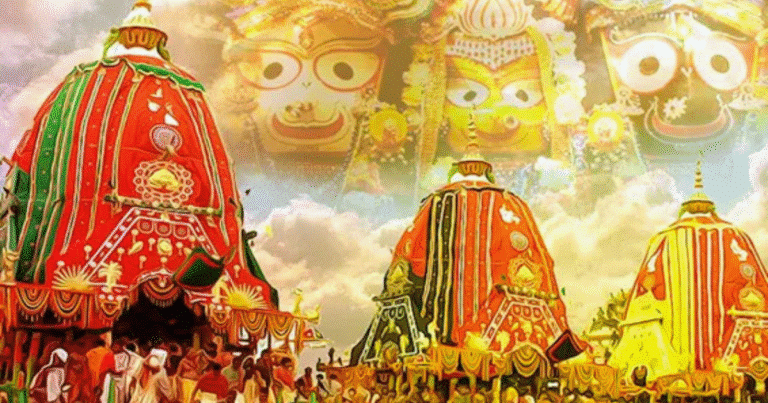
• #NewsLiveNow ओडिशा के पुरी में आयोजित होने वाली भगवान जगन्नाथ की विश्वप्रसिद्ध रथ यात्रा आज से शुरू हो रही है। यह केवल एक धार्मिक उत्सव नहीं, बल्कि भारतीय संस्कृति, आस्था और परंपरा का विराट प्रतीक माना जाता है।

    #HindiNews #LatestUpdates #jagannath #jagannathpuri #Odisha #purijagannath #puri #rathyatra
    #NewsLiveNow ओडिशा के पुरी में आयोजित होने वाली भगवान जगन्नाथ की विश्वप्रसिद्ध रथ यात्रा आज से शुरू हो रही है। यह केवल एक धार्मिक उत्सव नहीं, बल्कि भारतीय संस्कृति, आस्था और परंपरा का विराट प्रतीक माना जाता है। #HindiNews #LatestUpdates #jagannath #jagannathpuri #Odisha #purijagannath #puri #rathyatra
    NEWSLIVENOW.COM
    जगन्नाथ रथ यात्रा 2026: आस्था, परंपरा और भव्य आयोजन का अद्भुत संगम
    (न्यूज़लाइवनाउ-Odisha) ओडिशा के पुरी में आयोजित होने वाली भगवान जगन्नाथ की विश्वप्रसिद्ध रथ यात्रा आज से शुरू हो रही है। यह केवल एक धार्मिक उत्सव नहीं, बल्कि
    0 Kommentare 0 Geteilt 8 Ansichten 0 Bewertungen
  • International Kaulantak Siddha Vidya Peeth is delighted to share some powerful moments from the second day of Chanda Bhairav Sadhana Course, a sacred immersion into the timeless wisdom of the Siddha dharm tradition.

    The day unfolded with the practice of yoga, an essential pillar of Siddha dharm. Through disciplined yogic alignment, sadhaks harmonized body, breath, and awareness, creating a state of inner stillness and receptivity. This grounding phase gently prepared them for the deeper spiritual processes that lay ahead.

    Thereafter, the Kaulachar Kram was observed — a sacred rite aimed at inner purification. This ritual sanctified both the inner consciousness and the surrounding space, allowing the sadhana to progress with purity and focus.

    Subsequently, the Avaran Puja and the intricate karmkand of the sadhana commenced. These sacred observances continued throughout the day, reaching their culmination around midnight with the completion of the Yagya.

    In the profound hours that followed, Kaulantak Peethadhishwar Mahasiddha Ishaputra graced the gathering, and the Deeksha process began. This extended and deeply significant initiation unfolded with great spiritual intensity. The day concluded with the enlightening guidance and blessings of Mahasiddha Ishaputra, offered to all Bhairavs and Bhairavis present.

    #Chandabhairava #ashtabhairava #Bhairava #tantra #yoga #HimalayanDevaParamapara #SiddhaDharma #Siddhatradition #LordShiva #BhagwanShiv #Mahadev #SwachhandBhairav #kurukulla #Siddhapedia #kaulantakpeeth #kulantpeeth #Ishaputra #MahasiddhaIshaputra #MahayogiSatyendraNath #Meditation #sanatandharma #HimalayanSiddhas #Hindu #Adhyaatma #himalayangod #iksvp #scrolllink #kurukullatemple #goddesskurukulla
    International Kaulantak Siddha Vidya Peeth is delighted to share some powerful moments from the second day of Chanda Bhairav Sadhana Course, a sacred immersion into the timeless wisdom of the Siddha dharm tradition. The day unfolded with the practice of yoga, an essential pillar of Siddha dharm. Through disciplined yogic alignment, sadhaks harmonized body, breath, and awareness, creating a state of inner stillness and receptivity. This grounding phase gently prepared them for the deeper spiritual processes that lay ahead. Thereafter, the Kaulachar Kram was observed — a sacred rite aimed at inner purification. This ritual sanctified both the inner consciousness and the surrounding space, allowing the sadhana to progress with purity and focus. Subsequently, the Avaran Puja and the intricate karmkand of the sadhana commenced. These sacred observances continued throughout the day, reaching their culmination around midnight with the completion of the Yagya. In the profound hours that followed, Kaulantak Peethadhishwar Mahasiddha Ishaputra graced the gathering, and the Deeksha process began. This extended and deeply significant initiation unfolded with great spiritual intensity. The day concluded with the enlightening guidance and blessings of Mahasiddha Ishaputra, offered to all Bhairavs and Bhairavis present. #Chandabhairava #ashtabhairava #Bhairava #tantra #yoga #HimalayanDevaParamapara #SiddhaDharma #Siddhatradition #LordShiva #BhagwanShiv #Mahadev #SwachhandBhairav #kurukulla #Siddhapedia #kaulantakpeeth #kulantpeeth #Ishaputra #MahasiddhaIshaputra #MahayogiSatyendraNath #Meditation #sanatandharma #HimalayanSiddhas #Hindu #Adhyaatma #himalayangod #iksvp #scrolllink #kurukullatemple #goddesskurukulla
    Love
    Yay
    6
    1 Kommentare 0 Geteilt 19KB Ansichten 0 Bewertungen
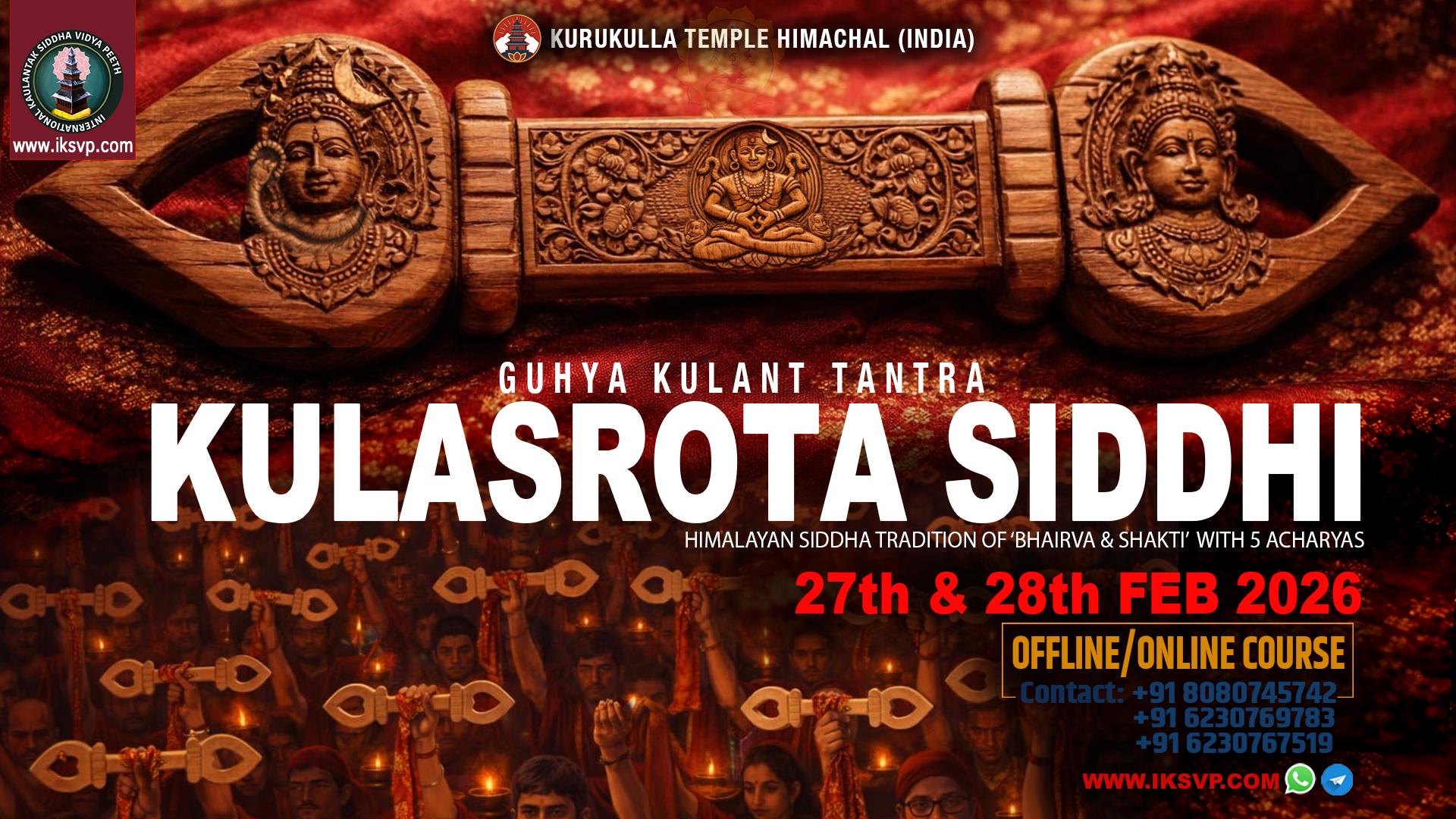
  • 'International Kaulantak Siddha Vidya Peeth' (iksvp) is privileged to announce that we are going to conduct a 2 day sadhana course on Kulasrota Siddhi on 27–28 Feb 2026.

    'Kulasrota Siddhi Sadhana' is considered one of the most unique and exceptional sadhana of the 'Himalayan Siddha tradition'. The entire Himalayan Siddha lineage has preserved and advanced this sadhana as a central spiritual practice. It is a living tradition that carries within it the essence of Siddha Dharma, Kaula wisdom, and ancient shamanic knowledge. Because of its depth and universality, Kulasrota is revered as a primary source from which many Siddha and tantric paths emerge.

    From a philosophical perspective, Kulasrota Siddhi represents the harmonious integration of material life and spiritual liberation. This sadhana is grounded in a profound philosophical framework that teaches the practitioner to balance worldly experience with higher realization. Rather than rejecting life or renouncing responsibility, the practice trains the sadhaka to remain centered, aware, and unattached while engaging fully with existence. In this way, Kulasrota Siddhi becomes a complete spiritual path rather than a limited technique.
    The symbol of Kulasrota holds exceptional importance within Siddha Dharma. It appears consistently in sacred diagrams, ritual instruments, icons, and spiritual representations, especially within Kulantak Peeth, where its presence signifies authority and continuity of the lineage. This symbol acts as a conduit between different levels of consciousness, spiritual traditions, and subtle dimensions, which is why it occupies a central place in advanced Siddha practices.

    Kulasrota Siddhi Sadhana functions simultaneously as a tantric and shamanic discipline and is traditionally regarded as a decisive spiritual instrument of the Siddhas. Through this sadhana, the practitioner gains the ability to purify environments, neutralize disruptive energies, and maintain stability in unfamiliar or challenging surroundings. It is also used to establish a protective energetic field that allows uninterrupted spiritual practice. For Himalayan Siddhas, these applications are practical realities rather than symbolic concepts.
    Traditionally, Kulasrota has been employed by Siddhas and advanced practitioners to enter heightened states of awareness, deep meditative absorption, and direct communion with subtle spiritual realms.

    Through this upcoming 2 day Kulasrota Siddhi Sadhana course, 'International Kaulantak Siddha Vidya Peeth' (iksvp) aims to transmit this rare and powerful knowledge in an authentic, lineage-based manner. The course is designed not merely to educate, but to initiate sincere practitioners into the living current of Kulasrota, offering a direct connection to a timeless Siddha tradition grounded in discipline, responsibility, and higher awareness.

    #Kulasrota #siddhi #sadhana #tantra #HimalayanDevaParamapara #SiddhaDharma #Siddhatradition #LordShiva #BhagwanShiv #Mahadev #SwachhandBhairav #kurukulla #Siddhapedia #kaulantakpeeth #kulantpeeth #Ishaputra #MahasiddhaIshaputra #MahayogiSatyendraNath #Meditation #sanatandharma #HimalayanSiddhas #Hindu #Adhyaatma #himalayangod #iksvp #scrolllink #kurukullatemple #goddesskurukulla
    'International Kaulantak Siddha Vidya Peeth' (iksvp) is privileged to announce that we are going to conduct a 2 day sadhana course on Kulasrota Siddhi on 27–28 Feb 2026. 'Kulasrota Siddhi Sadhana' is considered one of the most unique and exceptional sadhana of the 'Himalayan Siddha tradition'. The entire Himalayan Siddha lineage has preserved and advanced this sadhana as a central spiritual practice. It is a living tradition that carries within it the essence of Siddha Dharma, Kaula wisdom, and ancient shamanic knowledge. Because of its depth and universality, Kulasrota is revered as a primary source from which many Siddha and tantric paths emerge. From a philosophical perspective, Kulasrota Siddhi represents the harmonious integration of material life and spiritual liberation. This sadhana is grounded in a profound philosophical framework that teaches the practitioner to balance worldly experience with higher realization. Rather than rejecting life or renouncing responsibility, the practice trains the sadhaka to remain centered, aware, and unattached while engaging fully with existence. In this way, Kulasrota Siddhi becomes a complete spiritual path rather than a limited technique. The symbol of Kulasrota holds exceptional importance within Siddha Dharma. It appears consistently in sacred diagrams, ritual instruments, icons, and spiritual representations, especially within Kulantak Peeth, where its presence signifies authority and continuity of the lineage. This symbol acts as a conduit between different levels of consciousness, spiritual traditions, and subtle dimensions, which is why it occupies a central place in advanced Siddha practices. Kulasrota Siddhi Sadhana functions simultaneously as a tantric and shamanic discipline and is traditionally regarded as a decisive spiritual instrument of the Siddhas. Through this sadhana, the practitioner gains the ability to purify environments, neutralize disruptive energies, and maintain stability in unfamiliar or challenging surroundings. It is also used to establish a protective energetic field that allows uninterrupted spiritual practice. For Himalayan Siddhas, these applications are practical realities rather than symbolic concepts. Traditionally, Kulasrota has been employed by Siddhas and advanced practitioners to enter heightened states of awareness, deep meditative absorption, and direct communion with subtle spiritual realms. Through this upcoming 2 day Kulasrota Siddhi Sadhana course, 'International Kaulantak Siddha Vidya Peeth' (iksvp) aims to transmit this rare and powerful knowledge in an authentic, lineage-based manner. The course is designed not merely to educate, but to initiate sincere practitioners into the living current of Kulasrota, offering a direct connection to a timeless Siddha tradition grounded in discipline, responsibility, and higher awareness. #Kulasrota #siddhi #sadhana #tantra #HimalayanDevaParamapara #SiddhaDharma #Siddhatradition #LordShiva #BhagwanShiv #Mahadev #SwachhandBhairav #kurukulla #Siddhapedia #kaulantakpeeth #kulantpeeth #Ishaputra #MahasiddhaIshaputra #MahayogiSatyendraNath #Meditation #sanatandharma #HimalayanSiddhas #Hindu #Adhyaatma #himalayangod #iksvp #scrolllink #kurukullatemple #goddesskurukulla
    Love
    Like
    8
    0 Kommentare 2 Geteilt 20KB Ansichten 0 Bewertungen
  • International Kaulantak Siddha Vidya Peeth is honored to share profound and inspiring glimpses from the Chanda Bhairav Sadhana Course, a deeply transformative spiritual journey rooted in the ancient Siddha dharm tradition.
    The sadhana commenced with the disciplined practice of yoga, which forms an integral foundation of Siddha dharm. Through yogic practices, participants aligned their body, breath, and mind, preparing themselves to receive higher spiritual energies. This initial phase helped establish inner balance and readiness for the sacred practices that followed.
    Following the yoga session, the practitioners entered the Kaulachar Kram, a vital ritual performed to purify one’s inner consciousness. This process involved seeking forgiveness from the Devi and Devtas, releasing past karmic impurities, and humbly requesting worthiness to undertake the Chanda Bhairav sadhana. The Kaulachar Kram created a sanctified inner and outer space, essential for progressing deeper on the spiritual path.
    The day then unfolded with insightful lectures conducted by the learned acharyas of the Peeth. These sessions offered a comprehensive understanding of all aspects of Chanda Bhairav—his tattva, symbolism, spiritual significance, and the deeper philosophy behind the sadhana. The acharyas patiently guided the sadhaks, ensuring clarity of both theory and intent.
    After the completion of the theoretical teachings, the most awaited and spiritually charged moment arrived. Mahasiddha Ishaputra graced the gathering with his divine presence, instantly elevating the atmosphere with profound spiritual energy. His words carried deep wisdom as he shared advanced insights into Chanda Bhairav sadhana, illuminating subtle dimensions that can only be understood through direct experience and grace.
    Under his direct guidance, sacred rituals were then performed, allowing the sadhaks to put the teachings into practice with precision and devotion. These rituals marked a powerful turning point in the sadhana, strengthening the bond between the seeker and the divine.
    The first day concluded with Mahasiddha Ishaputra offering blessings to all the Bhairavs and Bhairavis present. He compassionately addressed and cleared doubts, answered questions, and infused confidence and spiritual clarity among the participants

    #Chandabhairava #ashtabhairava #Bhairava #tantra #yoga #HimalayanDevaParamapara #SiddhaDharma #Siddhatradition #LordShiva #BhagwanShiv #Mahadev #SwachhandBhairav #kurukulla #Siddhapedia #kaulantakpeeth #kulantpeeth #Ishaputra #MahasiddhaIshaputra #MahayogiSatyendraNath #Meditation #sanatandharma #HimalayanSiddhas #Hindu #Adhyaatma #himalayangod #iksvp #scrolllink #kurukullatemple #goddesskurukulla
    International Kaulantak Siddha Vidya Peeth is honored to share profound and inspiring glimpses from the Chanda Bhairav Sadhana Course, a deeply transformative spiritual journey rooted in the ancient Siddha dharm tradition. The sadhana commenced with the disciplined practice of yoga, which forms an integral foundation of Siddha dharm. Through yogic practices, participants aligned their body, breath, and mind, preparing themselves to receive higher spiritual energies. This initial phase helped establish inner balance and readiness for the sacred practices that followed. Following the yoga session, the practitioners entered the Kaulachar Kram, a vital ritual performed to purify one’s inner consciousness. This process involved seeking forgiveness from the Devi and Devtas, releasing past karmic impurities, and humbly requesting worthiness to undertake the Chanda Bhairav sadhana. The Kaulachar Kram created a sanctified inner and outer space, essential for progressing deeper on the spiritual path. The day then unfolded with insightful lectures conducted by the learned acharyas of the Peeth. These sessions offered a comprehensive understanding of all aspects of Chanda Bhairav—his tattva, symbolism, spiritual significance, and the deeper philosophy behind the sadhana. The acharyas patiently guided the sadhaks, ensuring clarity of both theory and intent. After the completion of the theoretical teachings, the most awaited and spiritually charged moment arrived. Mahasiddha Ishaputra graced the gathering with his divine presence, instantly elevating the atmosphere with profound spiritual energy. His words carried deep wisdom as he shared advanced insights into Chanda Bhairav sadhana, illuminating subtle dimensions that can only be understood through direct experience and grace. Under his direct guidance, sacred rituals were then performed, allowing the sadhaks to put the teachings into practice with precision and devotion. These rituals marked a powerful turning point in the sadhana, strengthening the bond between the seeker and the divine. The first day concluded with Mahasiddha Ishaputra offering blessings to all the Bhairavs and Bhairavis present. He compassionately addressed and cleared doubts, answered questions, and infused confidence and spiritual clarity among the participants #Chandabhairava #ashtabhairava #Bhairava #tantra #yoga #HimalayanDevaParamapara #SiddhaDharma #Siddhatradition #LordShiva #BhagwanShiv #Mahadev #SwachhandBhairav #kurukulla #Siddhapedia #kaulantakpeeth #kulantpeeth #Ishaputra #MahasiddhaIshaputra #MahayogiSatyendraNath #Meditation #sanatandharma #HimalayanSiddhas #Hindu #Adhyaatma #himalayangod #iksvp #scrolllink #kurukullatemple #goddesskurukulla
    Love
    Like
    Yay
    7
    1 Kommentare 0 Geteilt 21KB Ansichten 0 Bewertungen
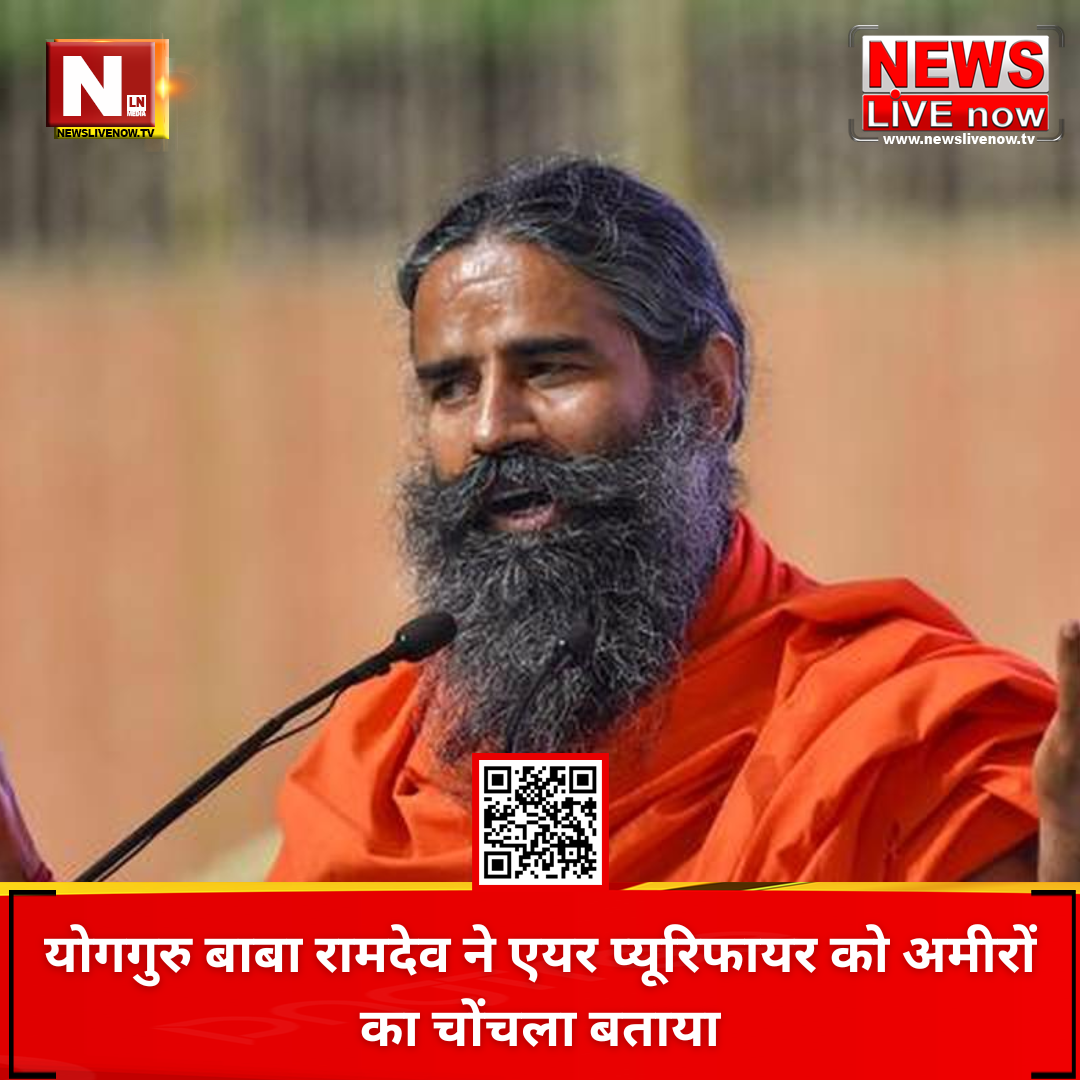
  • #NewsLiveNow योगगुरु बाबा रामदेव का AQI पे बयान, "अगर AQI ज्यादा हो तो अपने घर पर पर्दे लगाकर योग कीजिए. हर 15 दिनों में पर्दे साफ कर लीजिए, मास्क लगा लीजिए कुछ देर के लिए. एयर प्यूरिफाइयर तो अमीर लोगों का चोंचला है"

    #newsinhindi #babaramdevji #airpurifier #AQI #delhi #scrolllink
    #NewsLiveNow योगगुरु बाबा रामदेव का AQI पे बयान, "अगर AQI ज्यादा हो तो अपने घर पर पर्दे लगाकर योग कीजिए. हर 15 दिनों में पर्दे साफ कर लीजिए, मास्क लगा लीजिए कुछ देर के लिए. एयर प्यूरिफाइयर तो अमीर लोगों का चोंचला है" #newsinhindi #babaramdevji #airpurifier #AQI #delhi #scrolllink
    Like
    2
    0 Kommentare 0 Geteilt 1KB Ansichten 0 Bewertungen
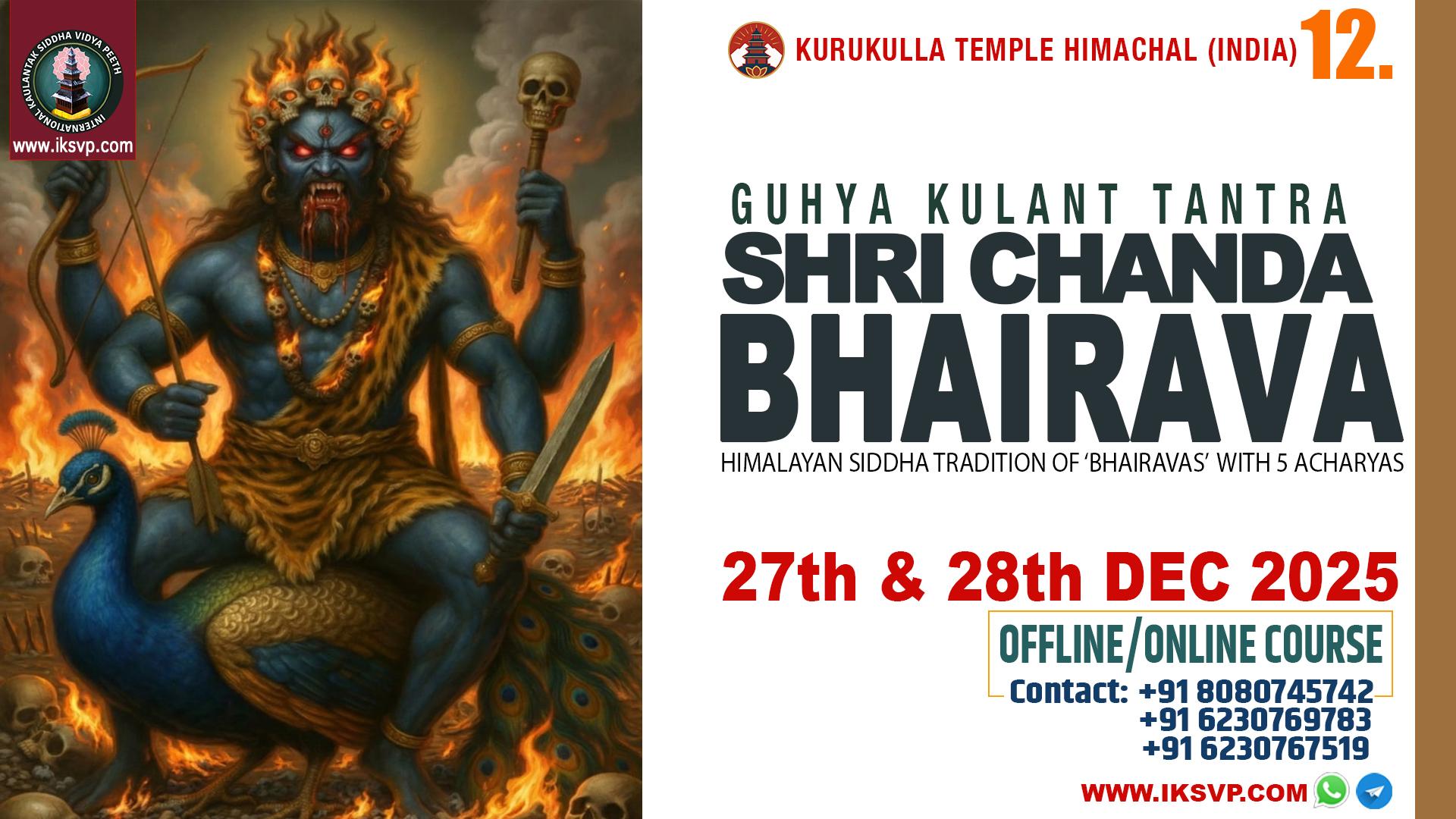
  • 'International Kaulantak Siddha Vidya Peeth' (IKSVP) is proud to announce that we are going to conduct a two day sadhana course on Chanda Bhairava on 27 and 28th of December 2025.

    Chanda Bhairava, one of the eight powerful manifestations of Bhairava known as the Ashta Bhairavas, represents the fierce, transformative, and unstoppable aspect of Swacchanda Bhairava Shiva. The name “Chanda” itself signifies a force that is intense, wrathful, and unconquerable—an energy that destroys fear, ignorance, and negative influences while fiercely guarding truth and cosmic order. Traditionally depicted with a deep blue or smoky-blue form, he embodies the vast, limitless expanse of Shiva’s consciousness. His wrathful expressions, blazing aura, and penetrating third eye symbolize the divine fire that burns away illusion, weakness, and inner shadows. His vahana, the peacock, reflects his ability to transmute toxic, destructive forces into spiritual clarity and strength, just as the peacock turns poison into iridescent beauty. Armed with weapons such as the bow, arrow, sword, and skull-topped staff, he serves simultaneously as destroyer and protector—shattering obstacles, repelling hostile energies, and empowering the seeker with unshakeable resolve.

    In the Siddha Dharma tradition, the worship and sadhana of Chanda Bhairava have been practiced since ancient times. This lineage describes him not only as a fierce guardian but as a liberator who frees the practitioner from all pashas—the binding limitations, attachments, fears, and mental knots that restrict spiritual evolution. By removing these internal fetters, Chanda Bhairava accelerates the seeker’s progress on the path of adhyatma (spiritual realization), granting them inner freedom, clarity, and fearlessness. Moreover, Siddha Dharma texts state that Chanda Bhairava destroys the "heat of Kali Yuga"—the mental burdens, confusion, restlessness, and psychological toxins characteristic of this age—purifying the mind and stabilizing the seeker’s consciousness. Thus, his sadhana becomes a powerful tool not only for protection but for deep inner transformation. For those who wish to explore his ancient practices, symbolic meanings, and esoteric dimensions in greater depth, it is advised to await the forthcoming article on Siddhapedia, which will elaborate further on his significance in the Siddha Dharma tradition.

    #ashtabhairava #chandabhairava #bhairava #bhairav #sadhana #himalayantantra #Tantra
    #HimalayanDevaParamapara #SiddhaDharma #Siddhatradition #LordShiva #BhagwanShiv #Mahadev #SwachhandBhairav #kurukulla #AncientWisdom #Siddhapedia #kaulantakpeeth #kulantpeeth #Ishaputra #MahasiddhaIshaputra #MahayogiSatyendraNath #Meditation #sanatandharma #Transformation #SpiritualJourney #HimalayanSiddhas #Hindu #Adhyaatma #himalayangod
    'International Kaulantak Siddha Vidya Peeth' (IKSVP) is proud to announce that we are going to conduct a two day sadhana course on Chanda Bhairava on 27 and 28th of December 2025. Chanda Bhairava, one of the eight powerful manifestations of Bhairava known as the Ashta Bhairavas, represents the fierce, transformative, and unstoppable aspect of Swacchanda Bhairava Shiva. The name “Chanda” itself signifies a force that is intense, wrathful, and unconquerable—an energy that destroys fear, ignorance, and negative influences while fiercely guarding truth and cosmic order. Traditionally depicted with a deep blue or smoky-blue form, he embodies the vast, limitless expanse of Shiva’s consciousness. His wrathful expressions, blazing aura, and penetrating third eye symbolize the divine fire that burns away illusion, weakness, and inner shadows. His vahana, the peacock, reflects his ability to transmute toxic, destructive forces into spiritual clarity and strength, just as the peacock turns poison into iridescent beauty. Armed with weapons such as the bow, arrow, sword, and skull-topped staff, he serves simultaneously as destroyer and protector—shattering obstacles, repelling hostile energies, and empowering the seeker with unshakeable resolve. In the Siddha Dharma tradition, the worship and sadhana of Chanda Bhairava have been practiced since ancient times. This lineage describes him not only as a fierce guardian but as a liberator who frees the practitioner from all pashas—the binding limitations, attachments, fears, and mental knots that restrict spiritual evolution. By removing these internal fetters, Chanda Bhairava accelerates the seeker’s progress on the path of adhyatma (spiritual realization), granting them inner freedom, clarity, and fearlessness. Moreover, Siddha Dharma texts state that Chanda Bhairava destroys the "heat of Kali Yuga"—the mental burdens, confusion, restlessness, and psychological toxins characteristic of this age—purifying the mind and stabilizing the seeker’s consciousness. Thus, his sadhana becomes a powerful tool not only for protection but for deep inner transformation. For those who wish to explore his ancient practices, symbolic meanings, and esoteric dimensions in greater depth, it is advised to await the forthcoming article on Siddhapedia, which will elaborate further on his significance in the Siddha Dharma tradition. #ashtabhairava #chandabhairava #bhairava #bhairav #sadhana #himalayantantra #Tantra #HimalayanDevaParamapara #SiddhaDharma #Siddhatradition #LordShiva #BhagwanShiv #Mahadev #SwachhandBhairav #kurukulla #AncientWisdom #Siddhapedia #kaulantakpeeth #kulantpeeth #Ishaputra #MahasiddhaIshaputra #MahayogiSatyendraNath #Meditation #sanatandharma #Transformation #SpiritualJourney #HimalayanSiddhas #Hindu #Adhyaatma #himalayangod
    Love
    Yay
    14
    4 Kommentare 3 Geteilt 18KB Ansichten 0 Bewertungen
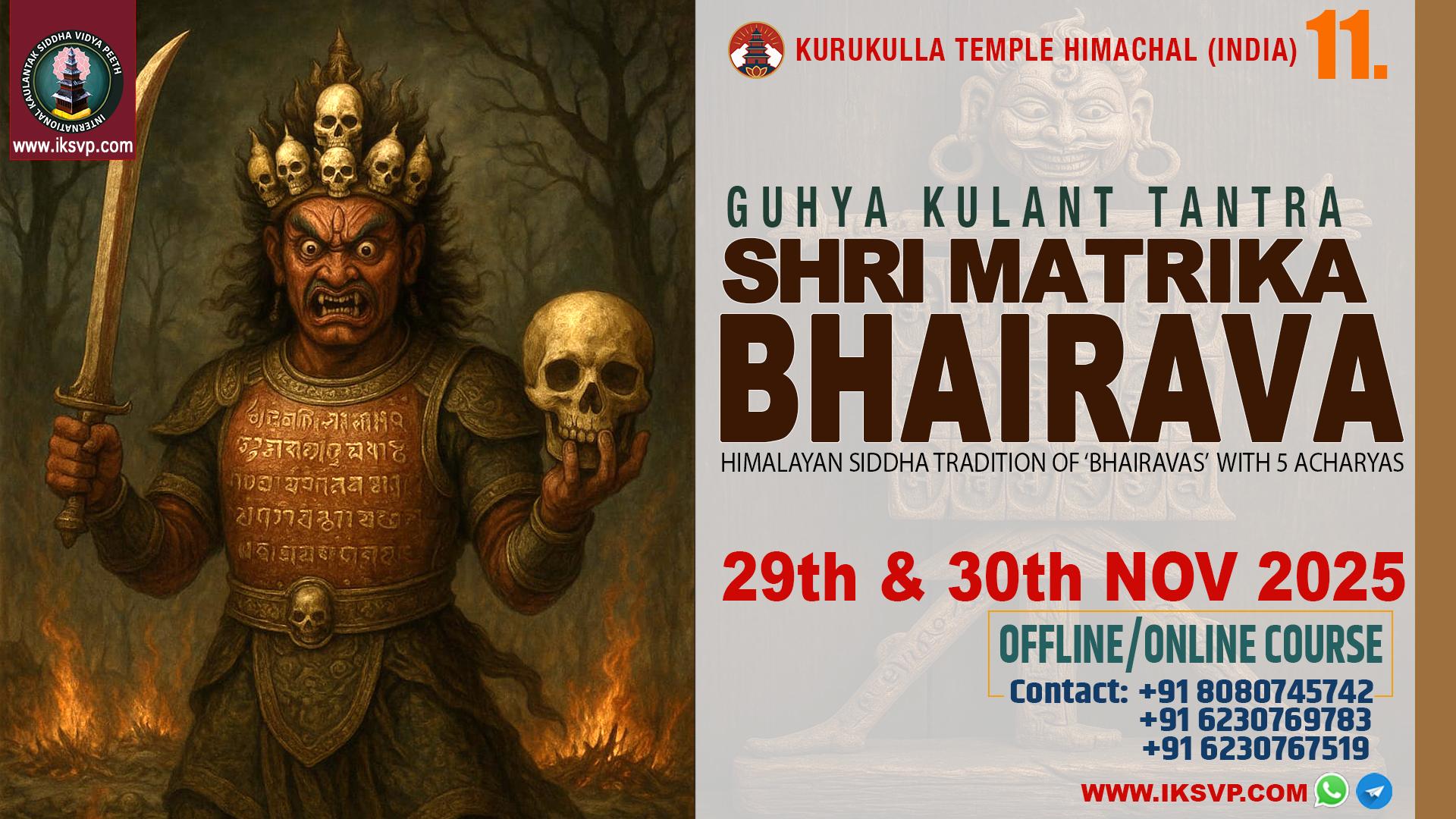
  • International Kaulantak Siddha Vidya Peeth is proud to announce a two-day advanced spiritual sādhana dedicated to Matrika Bhairav, to be conducted on 29th and 30th November 2025.

    Matrika Bhairav is one of the most revered deities in the Tantrik tradition of Himalayan Siddha Dharma. Within the vast Himalayan spiritual lineage, Matrika Bhairav is worshipped as a powerful form of Bhagwan Swacchanda Bhairav Shiva.

    He is the embodiment of all mantras and varṇa-mātrikās, the subtle seed sounds (need mantras) that constitute the cosmic vibrations of creation. These divine energies are said to reside in his vaksha sthal (chest region) — making him the divine repository and bestower of all mantra-siddhis.

    Thus, Matrika Bhairav grants mastery and realization of all mantras — whether they belong to the Aghora, Vāma, Dakṣiṇa, Vaidika, or Avaidika traditions. His worship is essential for those who seek mantra perfection, spiritual strength, and divine realization.

    In the ancient Kopokhoja tradition, the sacred origin of Himalayan Siddha Dharma, Matrika Bhairav has always been honored as the chief deity of Himalayan Shamanism. Himalayan shamans have performed this sādhana for countless generations to attain spiritual and shamanic powers, including the ability to heal, protect, and communicate with the forces of nature and the spirit realms.

    Matrika Bhairav is worshipped in a unique wooden yantra form, symbolizing his cosmic presence. This yantra, resting on three legs, bears all the bīja mantras engraved upon his vaksha sthal (chest region), with the head placed at the top. This sacred form is revered as “Sarva Loka Rakṣaka Swaroop” — the Protector of All the Worlds.

    As part of this sādhana, practitioners will not only worship Matrika Bhairav but also create and consecrate this powerful yantra, invoking his divine presence into the sacred geometry of the form.

    Another highly revered aspect of Matrika Bhairav is the Paap Mochak Swaroop, the divine form that liberates a being from even the gravest sins of existence — including Brahmahatyā. Through deep devotion and correct performance of the sādhana, the practitioner attains purification, liberation, and divine grace.

    This Matrika Bhairav Sādhana is a highly advanced and profound Tantrik spiritual practice, traditionally kept secret and accessible only to initiates of the Himalayan Siddha lineage. It grants the practitioner the siddhis (spiritual powers) associated with the most esoteric and potent vidyās (spiritual sciences) of the universe — which are otherwise nearly impossible to attain.

    Performing this sādhana under proper guidance accelerates the sādhak’s spiritual evolution, enhances inner strength, and deepens the connection with the divine forces of mantra and shakti. It is an opportunity for sincere practitioners to transcend limitations and experience the higher states of consciousness that lead to ultimate realization.

    For every spiritual aspirant walking the path of mantra, tantra, or shamanic sādhanā, Matrika Bhairav is the key to unlocking the infinite power of sound and vibration. By embodying the essence of all mantras, he is the source from which all divine energies emerge.
    To worship him is to worship the very foundation of spiritual creation.

    Hence, this two-day course becomes a rare and precious opportunity for practitioners to strengthen their spiritual practice, gain clarity, and awaken latent siddhis under the guidance of the Himalayan Siddha lineage.

    To obtain in depth knowledge about Matrika bhairava, the siddhapedia article is a must read which will be uploaded in a few days.

    #matrikabhairava #Matrika #ashtamatrika #bhairav #HimalayanDevaParamapara #SiddhaDharma #Siddhatradition #LordShiva #BhagwanShiv #Mahadev #SwachhandBhairav #kurukulla #Siddhapedia #kaulantakpeeth #kulantpeeth #Ishaputra #MahasiddhaIshaputra #MahayogiSatyendraNath #Meditation #sanatandharma #HimalayanSiddhas #Hindu #Adhyaatma #himalayangod #iksvp #scrolllink
    International Kaulantak Siddha Vidya Peeth is proud to announce a two-day advanced spiritual sādhana dedicated to Matrika Bhairav, to be conducted on 29th and 30th November 2025. Matrika Bhairav is one of the most revered deities in the Tantrik tradition of Himalayan Siddha Dharma. Within the vast Himalayan spiritual lineage, Matrika Bhairav is worshipped as a powerful form of Bhagwan Swacchanda Bhairav Shiva. He is the embodiment of all mantras and varṇa-mātrikās, the subtle seed sounds (need mantras) that constitute the cosmic vibrations of creation. These divine energies are said to reside in his vaksha sthal (chest region) — making him the divine repository and bestower of all mantra-siddhis. Thus, Matrika Bhairav grants mastery and realization of all mantras — whether they belong to the Aghora, Vāma, Dakṣiṇa, Vaidika, or Avaidika traditions. His worship is essential for those who seek mantra perfection, spiritual strength, and divine realization. In the ancient Kopokhoja tradition, the sacred origin of Himalayan Siddha Dharma, Matrika Bhairav has always been honored as the chief deity of Himalayan Shamanism. Himalayan shamans have performed this sādhana for countless generations to attain spiritual and shamanic powers, including the ability to heal, protect, and communicate with the forces of nature and the spirit realms. Matrika Bhairav is worshipped in a unique wooden yantra form, symbolizing his cosmic presence. This yantra, resting on three legs, bears all the bīja mantras engraved upon his vaksha sthal (chest region), with the head placed at the top. This sacred form is revered as “Sarva Loka Rakṣaka Swaroop” — the Protector of All the Worlds. As part of this sādhana, practitioners will not only worship Matrika Bhairav but also create and consecrate this powerful yantra, invoking his divine presence into the sacred geometry of the form. Another highly revered aspect of Matrika Bhairav is the Paap Mochak Swaroop, the divine form that liberates a being from even the gravest sins of existence — including Brahmahatyā. Through deep devotion and correct performance of the sādhana, the practitioner attains purification, liberation, and divine grace. This Matrika Bhairav Sādhana is a highly advanced and profound Tantrik spiritual practice, traditionally kept secret and accessible only to initiates of the Himalayan Siddha lineage. It grants the practitioner the siddhis (spiritual powers) associated with the most esoteric and potent vidyās (spiritual sciences) of the universe — which are otherwise nearly impossible to attain. Performing this sādhana under proper guidance accelerates the sādhak’s spiritual evolution, enhances inner strength, and deepens the connection with the divine forces of mantra and shakti. It is an opportunity for sincere practitioners to transcend limitations and experience the higher states of consciousness that lead to ultimate realization. For every spiritual aspirant walking the path of mantra, tantra, or shamanic sādhanā, Matrika Bhairav is the key to unlocking the infinite power of sound and vibration. By embodying the essence of all mantras, he is the source from which all divine energies emerge. To worship him is to worship the very foundation of spiritual creation. Hence, this two-day course becomes a rare and precious opportunity for practitioners to strengthen their spiritual practice, gain clarity, and awaken latent siddhis under the guidance of the Himalayan Siddha lineage. To obtain in depth knowledge about Matrika bhairava, the siddhapedia article is a must read which will be uploaded in a few days. #matrikabhairava #Matrika #ashtamatrika #bhairav #HimalayanDevaParamapara #SiddhaDharma #Siddhatradition #LordShiva #BhagwanShiv #Mahadev #SwachhandBhairav #kurukulla #Siddhapedia #kaulantakpeeth #kulantpeeth #Ishaputra #MahasiddhaIshaputra #MahayogiSatyendraNath #Meditation #sanatandharma #HimalayanSiddhas #Hindu #Adhyaatma #himalayangod #iksvp #scrolllink
    Love
    Like
    wow
    17
    7 Kommentare 4 Geteilt 12KB Ansichten 3 Bewertungen
  • According to AQI.in, Delhi’s real-time Air Quality Index (AQI) hit a hazardous level of 327 on November 1, 2025, following post-Diwali fireworks and continued stubble burning across Punjab and Haryana. Environmental experts have raised serious concerns, warning that such extreme PM2.5 concentrations can trigger respiratory issues, asthma, and even cardiovascular diseases. India, they note, accounts for nearly 21% of global pollution-related deaths. A viral post by Kapil Dhama on X further highlighted the gravity of the situation his video showed an air purifier’s AQI reading soaring to nearly 500 within seconds of opening a door, despite four purifiers running inside the room. The clip has reignited public outrage over Delhi-NCR’s worsening air quality and the urgent need for stronger pollution control measures. Source: X/kapildhama
    According to AQI.in, Delhi’s real-time Air Quality Index (AQI) hit a hazardous level of 327 on November 1, 2025, following post-Diwali fireworks and continued stubble burning across Punjab and Haryana. Environmental experts have raised serious concerns, warning that such extreme PM2.5 concentrations can trigger respiratory issues, asthma, and even cardiovascular diseases. India, they note, accounts for nearly 21% of global pollution-related deaths. A viral post by Kapil Dhama on X further highlighted the gravity of the situation his video showed an air purifier’s AQI reading soaring to nearly 500 within seconds of opening a door, despite four purifiers running inside the room. The clip has reignited public outrage over Delhi-NCR’s worsening air quality and the urgent need for stronger pollution control measures. Source: X/kapildhama
    Sad
    1
    0 Kommentare 0 Geteilt 4KB Ansichten 0 Bewertungen
  • Within the vast expanse of the Siddha Dharma and Shakta Tantra systems, Purnabhishek Sadhana stands as one of the most advanced, rare, and spiritually elevated practices. It is regarded not merely as a ritual, but as a profound inner transformation that marks a decisive turning point in the journey of a sadhak (spiritual practitioner).
    The term Purnabhishek literally means “complete consecration” or “total anointment.” It symbolizes the total purification and empowerment of a disciple, where the guru confers the highest form of initiation (deeksha) upon one who has demonstrated unwavering dedication, discipline, and mastery over a series of preparatory sadhanas.
    In the Siddha Dharma lineage, Purnabhishek Sadhana is not open to all aspirants. Only those who have already traversed a series of advanced spiritual practices—often involving Kundalini sadhanas, Bhairava or Bhairavi upasanas, mantra siddhis, and internal tantric kriyas—are considered eligible.
    Such aspirants are addressed as Bhairavas and Bhairavis, beings who have awakened the divine power of transformation within. These practitioners have already transcended the gross layers of material attachment and ego. Thus, Purnabhishek is conferred only when the guru determines that the sadhak has achieved sufficient spiritual maturity and stability to handle the intense divine energy (shakti pravesh) that this initiation invokes.
    In essence, Purnabhisheka Sadhana represents the merging of the individual consciousness (jivatma) with the universal consciousness (paramatma). It is not a mere ritualistic bathing or ceremonial consecration but a deeply symbolic spiritual rebirth.
    To know more about the Purnabhisheka ritual this article on siddhapedia provided by International Kaulantak Siddha Vidya Peeth a must read !
    https://siddhapedia.com/purnabhishek
    #Poornabhishek #Purnabhisheka #Abhishek #sadhana #himalayantantra #HimalayanDevaParamapara #SiddhaDharma #Siddhatradition #LordShiva #BhagwanShiv #Mahadev #SwachhandBhairav #kurukulla #AncientWisdom #Siddhapedia #kaulantakpeeth #kulantpeeth #Ishaputra #MahasiddhaIshaputra #MahayogiSatyendraNath #Meditation #sanatandharma #tantrikhealing #hiddendeities #Transformation #SpiritualJourney #HimalayanSiddhas #Hindu #Adhyaatma #himalayangod
    Within the vast expanse of the Siddha Dharma and Shakta Tantra systems, Purnabhishek Sadhana stands as one of the most advanced, rare, and spiritually elevated practices. It is regarded not merely as a ritual, but as a profound inner transformation that marks a decisive turning point in the journey of a sadhak (spiritual practitioner). The term Purnabhishek literally means “complete consecration” or “total anointment.” It symbolizes the total purification and empowerment of a disciple, where the guru confers the highest form of initiation (deeksha) upon one who has demonstrated unwavering dedication, discipline, and mastery over a series of preparatory sadhanas. In the Siddha Dharma lineage, Purnabhishek Sadhana is not open to all aspirants. Only those who have already traversed a series of advanced spiritual practices—often involving Kundalini sadhanas, Bhairava or Bhairavi upasanas, mantra siddhis, and internal tantric kriyas—are considered eligible. Such aspirants are addressed as Bhairavas and Bhairavis, beings who have awakened the divine power of transformation within. These practitioners have already transcended the gross layers of material attachment and ego. Thus, Purnabhishek is conferred only when the guru determines that the sadhak has achieved sufficient spiritual maturity and stability to handle the intense divine energy (shakti pravesh) that this initiation invokes. In essence, Purnabhisheka Sadhana represents the merging of the individual consciousness (jivatma) with the universal consciousness (paramatma). It is not a mere ritualistic bathing or ceremonial consecration but a deeply symbolic spiritual rebirth. To know more about the Purnabhisheka ritual this article on siddhapedia provided by International Kaulantak Siddha Vidya Peeth a must read ! https://siddhapedia.com/purnabhishek #Poornabhishek #Purnabhisheka #Abhishek #sadhana #himalayantantra #HimalayanDevaParamapara #SiddhaDharma #Siddhatradition #LordShiva #BhagwanShiv #Mahadev #SwachhandBhairav #kurukulla #AncientWisdom #Siddhapedia #kaulantakpeeth #kulantpeeth #Ishaputra #MahasiddhaIshaputra #MahayogiSatyendraNath #Meditation #sanatandharma #tantrikhealing #hiddendeities #Transformation #SpiritualJourney #HimalayanSiddhas #Hindu #Adhyaatma #himalayangod
    SIDDHAPEDIA.COM
    Purnabhisheka
    The term Poornabhishekh is formed from union of two sanskrit words – Poorna ( sanskrit – पूर्ण ) that means complete or accomplishment and Abhishekh ( sanskrit – अभिषेक ) means the act of pouring holy water over the disciple along with the mantra chanting. Poornabhishekh is an exceptionally rare and sacred event in a
    Love
    wow
    4
    0 Kommentare 0 Geteilt 10KB Ansichten 0 Bewertungen
  • The Dawn of Liberation: The Profound Truth of Naraka Chaturdashi

    As the world rests in the pre dawn hush of Chaturdashi, a sacred tremor of anticipation stirs the soul. This is no ordinary darkness. This is the darkness that precedes the brilliant dawn of Diwali, a darkness pregnant with the promise of liberation. This is Naraka Chaturdashi, the day the soul conquers its inner hell.

    The ancient scriptures, the Puranas tell us of the Asura king, Narakasura, a being of immense power but twisted purpose. Born of Mother Earth, Bhudevi, and Varaha Swami, he was destined for greatness. Yet, intoxicated by his own might kidnapped 16,000 princesses, imprisoning them in his fortress. His reign was one of untold suffering, a literal naraka (hell) on Earth.

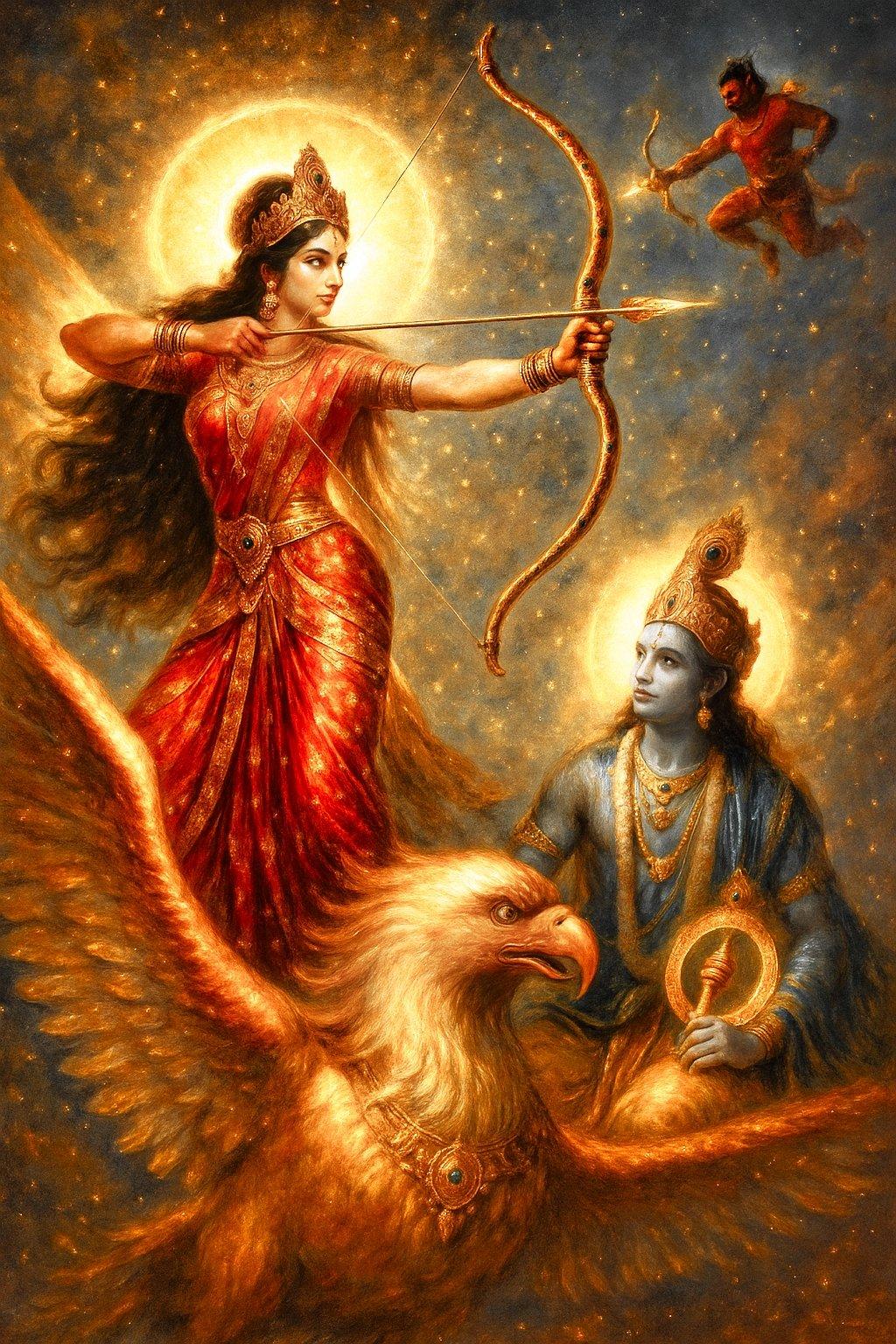
    But the Leela, is always one of balance. The prayers of the oppressed reached the heavens, and the preserver, Lord Sri Maha Vishnu, in his form as the mighty Sri Krishna, descended to Earth. Mounted on Garuda, with Satyabhama waged a cosmic war against the darkness.

    The Puranas reveal the profound symbolism hidden within this epic battle.

    The Vishnu Purana and the Bhagavata Purana do not merely narrate a historical event, they map the terrain of the human condition. Narakasura is not just an Asura, he is the embodiment of our own arrogance (ahankara), our boundless desires (kama), our attachment (moha), and our ignorance (avidya). The 16,000 princesses represent the countless divine energies and virtues of the soul that we hold captive through our own negative tendencies.

    The killing of Narakasura by the divine couple, Krishna and Satyabhama, signifies the essential partnership of divine grace and our own resolute will (Satyabhama represents the fierce, devoted aspect of the seeker). It teaches us that God's grace is ever ready, but we must actively participate in our own liberation.

    As the Skanda Purana beautifully elucidates, the pre dawn ablution on this day is not just a physical cleansing. It is a sacred ritual of washing away the impurities of the mind and spirit. The act of applying oil and uptan (herbal paste) before the bath is a symbolic gesture of anointing the body, the temple of the soul, preparing it for a profound transformation.

    This is the profound truth of Naraka Chaturdashi:

    Your inner Naraka is not your permanent address. It is a fortress you have the power to breach.

    The darkness of ignorance, the chains of past karmas, the prison of ego, all can be shattered. The lamp that is lit after the holy bath on this day is not just a physical flame. It is the Jnana Jyoti, the lamp of supreme knowledge that dispels the shadows of the soul.

    As the Garuda Purana affirms, observing the vows of this day with sincerity has the power to absolve one of sins and bestow blessings that lead to Moksha, final liberation. It is a day to remember.

    On Naraka Chaturdashi, Lord Krishna manifests not just on a battlefield, but within the heart of every devotee who seeks to conquer their own inner Narakasura.

    So, as you rise in the sacred Brahma Muhurta this Naraka Chaturdashi, let the cool water of your bath be a purity of the spirit. As the first rays of the sun touch the earth, feel the light of consciousness dawn within you.

    For today is not a remembrance of a battle fought long ago. It is a celebration of the victory you are destined to claim, the victory of your eternal, luminous Self over the transient, dark prison of the ego.

    May this Naraka Chaturdashi illuminate the deepest corners of your being and guide you from the darkness of Naraka to the everlasting light of Narayana.

    Om Namo Bhagavate Vasudevaya.🙏🏽

    #narakchaurdashi #chhotidiwali #narakasur #scrolllink
    The Dawn of Liberation: The Profound Truth of Naraka Chaturdashi As the world rests in the pre dawn hush of Chaturdashi, a sacred tremor of anticipation stirs the soul. This is no ordinary darkness. This is the darkness that precedes the brilliant dawn of Diwali, a darkness pregnant with the promise of liberation. This is Naraka Chaturdashi, the day the soul conquers its inner hell. The ancient scriptures, the Puranas tell us of the Asura king, Narakasura, a being of immense power but twisted purpose. Born of Mother Earth, Bhudevi, and Varaha Swami, he was destined for greatness. Yet, intoxicated by his own might kidnapped 16,000 princesses, imprisoning them in his fortress. His reign was one of untold suffering, a literal naraka (hell) on Earth. But the Leela, is always one of balance. The prayers of the oppressed reached the heavens, and the preserver, Lord Sri Maha Vishnu, in his form as the mighty Sri Krishna, descended to Earth. Mounted on Garuda, with Satyabhama waged a cosmic war against the darkness. The Puranas reveal the profound symbolism hidden within this epic battle. The Vishnu Purana and the Bhagavata Purana do not merely narrate a historical event, they map the terrain of the human condition. Narakasura is not just an Asura, he is the embodiment of our own arrogance (ahankara), our boundless desires (kama), our attachment (moha), and our ignorance (avidya). The 16,000 princesses represent the countless divine energies and virtues of the soul that we hold captive through our own negative tendencies. The killing of Narakasura by the divine couple, Krishna and Satyabhama, signifies the essential partnership of divine grace and our own resolute will (Satyabhama represents the fierce, devoted aspect of the seeker). It teaches us that God's grace is ever ready, but we must actively participate in our own liberation. As the Skanda Purana beautifully elucidates, the pre dawn ablution on this day is not just a physical cleansing. It is a sacred ritual of washing away the impurities of the mind and spirit. The act of applying oil and uptan (herbal paste) before the bath is a symbolic gesture of anointing the body, the temple of the soul, preparing it for a profound transformation. This is the profound truth of Naraka Chaturdashi: Your inner Naraka is not your permanent address. It is a fortress you have the power to breach. The darkness of ignorance, the chains of past karmas, the prison of ego, all can be shattered. The lamp that is lit after the holy bath on this day is not just a physical flame. It is the Jnana Jyoti, the lamp of supreme knowledge that dispels the shadows of the soul. As the Garuda Purana affirms, observing the vows of this day with sincerity has the power to absolve one of sins and bestow blessings that lead to Moksha, final liberation. It is a day to remember. On Naraka Chaturdashi, Lord Krishna manifests not just on a battlefield, but within the heart of every devotee who seeks to conquer their own inner Narakasura. So, as you rise in the sacred Brahma Muhurta this Naraka Chaturdashi, let the cool water of your bath be a purity of the spirit. As the first rays of the sun touch the earth, feel the light of consciousness dawn within you. For today is not a remembrance of a battle fought long ago. It is a celebration of the victory you are destined to claim, the victory of your eternal, luminous Self over the transient, dark prison of the ego. May this Naraka Chaturdashi illuminate the deepest corners of your being and guide you from the darkness of Naraka to the everlasting light of Narayana. Om Namo Bhagavate Vasudevaya.✨🙏🏽 #narakchaurdashi #chhotidiwali #narakasur #scrolllink

    Love
    2
    0 Kommentare 0 Geteilt 7KB Ansichten 0 Bewertungen
  • Before the Temples: The Panjurli Daiva of Tulunadu

    "Paatri povonji, Daiva barpi. Mana povonji, miru barpi." (The oracle departs, the Daiva arrives. The human departs, the wild arrives.)

    In the heart of Tulunadu, where the padi (ancient sacred grove) breathes with the spirits of the land, the air does not ask for devotion. It demands it. It is thick with the scent of wet bolpu (laterite soil) and the promise of the Kar (monsoon). Here, Bhakti is not a gentle prayer, it is a trembling surrender to a force as raw as the first thunderclap. Here, Bhakti is for Panjurli.

    They do not believe in this Daiva (spirit deity). They know it. They feel it in the shiver that runs through the areca grove, in the fierce protectiveness that guards their threshold. Panjurli Daiva was not crafted by dreamers, but unleashed from the very sweat of the Divine, a primal roar given form. To offer Bhakti to Panjurli is to offer respect to the storm.

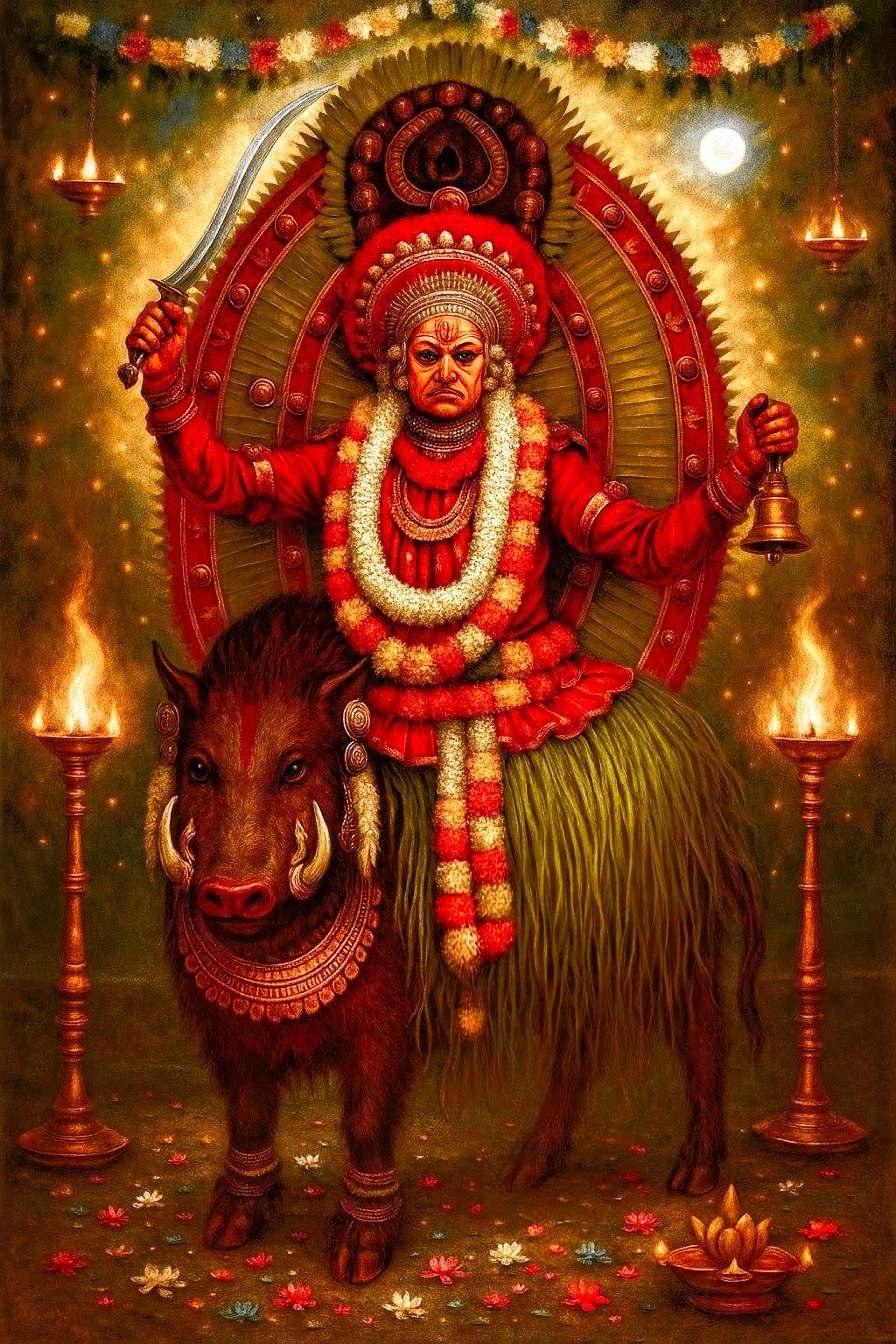
    The Murti (sacred mask/idol) is their focal point. It is not a face, but a convergence of power. Forged in silver and gold, its boar visage is a permanent challenge, the kodu (tusks) not mere metal but instruments of divine surgery, meant to gore out the infection of dosha (sin/impurity). When the devotees, the saris, gather, their gaze is not one of adoration, but of awe struck vigilance.

    When the drums (Dammamā) begin their frantic, heartbeat rhythm, it is not a call to prayer. It is a summons. The air thickens, heavy with the scent of crushed areca flowers and burning incense. The Paatri, the vessel, is no longer a man. He is a conduit. His body contorts, a puppet to a force that is anything but graceful. It is the brute, grounding shudder of the boar. His dance is not fluid, it is a powerful, stomping, a ritual of claiming territory, of shaking the very foundations of the human world to remind it of the wild one that lies beneath.

    Panjurli does not whisper sweet promises. It speaks in a voice that is a low, guttural grunt, a gravelly torrent of truth. It is the voice of the land itself, judge, jury, and protector. It roots out deceit, exposes hidden sins, and enforces the sacred codes of the community. Its justice is not nuanced, it is as direct and unforgiving as a charging boar. To stand before Panjurli is to stand naked before the raw conscience of nature, stripped of all pretense.

    This is not a god you love. This is a force you revere. A power you fear with a fear that is the beginning of wisdom. Panjurli is the spine chilling reminder that the land we build upon is alive, watching, and must be respected. It is the ancient, brute root that holds the community fast, lest it be washed away by the monsoon of its own transgressions.

    "Mana bhakti botji ayi. Mana baka didi ayi." (Our devotion is a raw offering. Our prayer is a naked truth.)"

    #pajurli #kantara #bhakti #scrolllink
    Before the Temples: The Panjurli Daiva of Tulunadu "Paatri povonji, Daiva barpi. Mana povonji, miru barpi." (The oracle departs, the Daiva arrives. The human departs, the wild arrives.) In the heart of Tulunadu, where the padi (ancient sacred grove) breathes with the spirits of the land, the air does not ask for devotion. It demands it. It is thick with the scent of wet bolpu (laterite soil) and the promise of the Kar (monsoon). Here, Bhakti is not a gentle prayer, it is a trembling surrender to a force as raw as the first thunderclap. Here, Bhakti is for Panjurli. They do not believe in this Daiva (spirit deity). They know it. They feel it in the shiver that runs through the areca grove, in the fierce protectiveness that guards their threshold. Panjurli Daiva was not crafted by dreamers, but unleashed from the very sweat of the Divine, a primal roar given form. To offer Bhakti to Panjurli is to offer respect to the storm. The Murti (sacred mask/idol) is their focal point. It is not a face, but a convergence of power. Forged in silver and gold, its boar visage is a permanent challenge, the kodu (tusks) not mere metal but instruments of divine surgery, meant to gore out the infection of dosha (sin/impurity). When the devotees, the saris, gather, their gaze is not one of adoration, but of awe struck vigilance. When the drums (Dammamā) begin their frantic, heartbeat rhythm, it is not a call to prayer. It is a summons. The air thickens, heavy with the scent of crushed areca flowers and burning incense. The Paatri, the vessel, is no longer a man. He is a conduit. His body contorts, a puppet to a force that is anything but graceful. It is the brute, grounding shudder of the boar. His dance is not fluid, it is a powerful, stomping, a ritual of claiming territory, of shaking the very foundations of the human world to remind it of the wild one that lies beneath. Panjurli does not whisper sweet promises. It speaks in a voice that is a low, guttural grunt, a gravelly torrent of truth. It is the voice of the land itself, judge, jury, and protector. It roots out deceit, exposes hidden sins, and enforces the sacred codes of the community. Its justice is not nuanced, it is as direct and unforgiving as a charging boar. To stand before Panjurli is to stand naked before the raw conscience of nature, stripped of all pretense. This is not a god you love. This is a force you revere. A power you fear with a fear that is the beginning of wisdom. Panjurli is the spine chilling reminder that the land we build upon is alive, watching, and must be respected. It is the ancient, brute root that holds the community fast, lest it be washed away by the monsoon of its own transgressions. "Mana bhakti botji ayi. Mana baka didi ayi." (Our devotion is a raw offering. Our prayer is a naked truth.)" #pajurli #kantara #bhakti #scrolllink
    Love
    2
    1 Kommentare 1 Geteilt 6KB Ansichten 0 Bewertungen
  • Iksvp is honoured to share sacred glimpses from the second day of the Purnabhishek Sadhana Course.
    The day began with the regular Yoga Kram, an essential part of Siddha Dharm, which helps align the body, mind, and pranic energies in preparation for higher spiritual practices. This was followed by the Kaulachar Kram—a deeply reverential ritual performed as an act of kshama (seeking forgiveness) from the Devi-Devtas. Through this process, the sadhaks humbly express repentance for any known or unknown mistakes committed during their spiritual practices, thereby purifying their intentions before moving into deeper sadhanas.
    Later in the day, Kaulantak Peethādheeshwar Mahāsiddha Ishaputra graced the gathering with his divine presence to guide and empower the ongoing sadhana. Under his direction, several sacred rituals were performed, setting the stage for the main process of Purnabhishek Deeksha.
    The sequence included Shreevats Pooja, Yantra Pooja, and Tantra Pooja—each performed meticulously to invoke divine energies and sanctify the spiritual environment. As the night deepened, around midnight, the central and most profound ritual of Abhishek commenced. This sacred ceremony marked the culmination of the Deeksha Kram, symbolizing spiritual purification, divine initiation, and the awakening of higher consciousness within every participant.
    After the completion of the rituals, Mahāsiddha Ishaputra addressed all the Bhairavs and Bhairavis, answering their questions and providing invaluable spiritual guidance. His words illuminated the deeper meanings behind the practices, enriching the understanding of every seeker present.
    The Shivir concluded on a divine note, with each Bhairav and Bhairavi receiving one of the greatest spiritual gifts of their lives—the Purnabhishek Deeksha, a transformative initiation that marks a new dawn on their path of Siddha Dharm.
    #poornabhishek #purnabhishek #abhishek #sadhana #himalayantantra
    #himalayandevaparamapara #SiddhaDharma #SiddhaTradition #lordshiva #bhagwanshiv #mahadev #SwachhandBhairav #kurukulla #AncientWisdom #siddhapedia #KaulantakPeeth #KulantPeeth #Ishaputra #mahasiddhaishaputra #MahayogiSatyendraNath #meditation #sanatandharma #tantrikhealing #hiddendeities #transformation #spiritualjourney #HimalayanSiddhas #hindu #adhyaatma #himalayangod #scrolllink
    Iksvp is honoured to share sacred glimpses from the second day of the Purnabhishek Sadhana Course. The day began with the regular Yoga Kram, an essential part of Siddha Dharm, which helps align the body, mind, and pranic energies in preparation for higher spiritual practices. This was followed by the Kaulachar Kram—a deeply reverential ritual performed as an act of kshama (seeking forgiveness) from the Devi-Devtas. Through this process, the sadhaks humbly express repentance for any known or unknown mistakes committed during their spiritual practices, thereby purifying their intentions before moving into deeper sadhanas. Later in the day, Kaulantak Peethādheeshwar Mahāsiddha Ishaputra graced the gathering with his divine presence to guide and empower the ongoing sadhana. Under his direction, several sacred rituals were performed, setting the stage for the main process of Purnabhishek Deeksha. The sequence included Shreevats Pooja, Yantra Pooja, and Tantra Pooja—each performed meticulously to invoke divine energies and sanctify the spiritual environment. As the night deepened, around midnight, the central and most profound ritual of Abhishek commenced. This sacred ceremony marked the culmination of the Deeksha Kram, symbolizing spiritual purification, divine initiation, and the awakening of higher consciousness within every participant. After the completion of the rituals, Mahāsiddha Ishaputra addressed all the Bhairavs and Bhairavis, answering their questions and providing invaluable spiritual guidance. His words illuminated the deeper meanings behind the practices, enriching the understanding of every seeker present. The Shivir concluded on a divine note, with each Bhairav and Bhairavi receiving one of the greatest spiritual gifts of their lives—the Purnabhishek Deeksha, a transformative initiation that marks a new dawn on their path of Siddha Dharm. #poornabhishek #purnabhishek #abhishek #sadhana #himalayantantra #himalayandevaparamapara #SiddhaDharma #SiddhaTradition #lordshiva #bhagwanshiv #mahadev #SwachhandBhairav #kurukulla #AncientWisdom #siddhapedia #KaulantakPeeth #KulantPeeth #Ishaputra #mahasiddhaishaputra #MahayogiSatyendraNath #meditation #sanatandharma #tantrikhealing #hiddendeities #transformation #spiritualjourney #HimalayanSiddhas #hindu #adhyaatma #himalayangod #scrolllink
    Love
    wow
    Like
    8
    0 Kommentare 1 Geteilt 9KB Ansichten 0 Bewertungen
Weitere Ergebnisse