


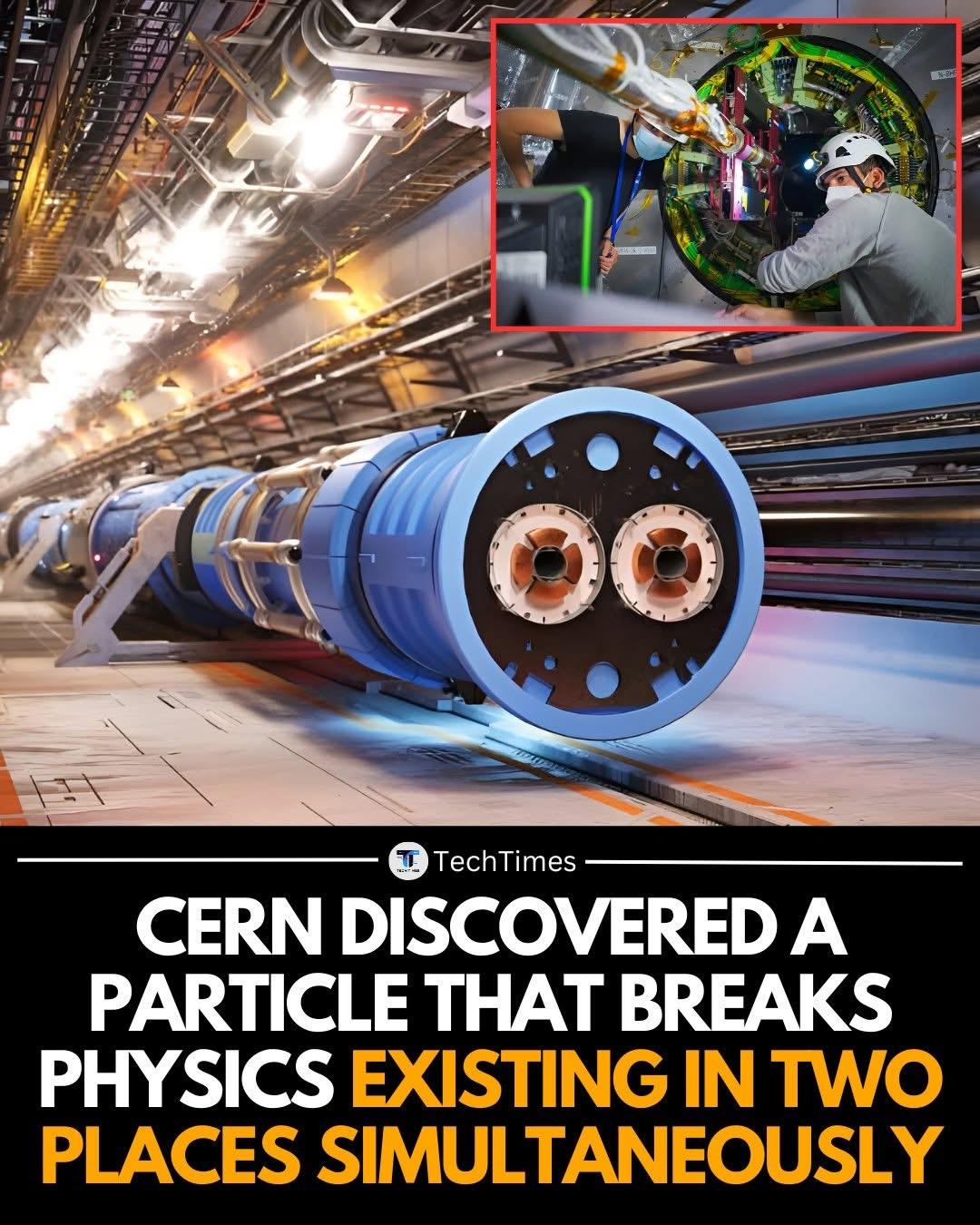
• Physicists at CERN’s Large Hadron Collider have observed what may be one of the strangest quantum events ever recorded — a new tetraquark particle that appeared to exist in two separate detector locations simultaneously. The discovery hints at a bridge between quantum mechanics and classical physics, shaking the foundations of modern science.

    Unlike protons and neutrons, which are made of three quarks, tetraquarks contain four, forming exotic states of matter rarely seen in nature. During experiments, researchers noticed something unprecedented: the same tetraquark seemed to register 1.4 meters apart at the exact same moment — suggesting quantum superposition on a much larger scale than previously thought possible.

    This finding challenges the long-held idea that superposition only applies to microscopic particles. If confirmed, it could revolutionize how we understand space, time, and causality — even paving the way for quantum computers that operate at room temperature and unhackable communication systems based on entangled states.

    The particle itself existed for only 10⁻²³ seconds, but in that brief instant, it may have rewritten the rules of reality. CERN’s follow-up experiments aim to verify whether this was a measurement anomaly or the first glimpse of a quantum-classical overlap — a discovery Einstein himself once thought impossible.

    #CERN #QuantumPhysics #Tetraquark #Superposition #QuantumMechanics #Scrolllink
    Physicists at CERN’s Large Hadron Collider have observed what may be one of the strangest quantum events ever recorded — a new tetraquark particle that appeared to exist in two separate detector locations simultaneously. The discovery hints at a bridge between quantum mechanics and classical physics, shaking the foundations of modern science. Unlike protons and neutrons, which are made of three quarks, tetraquarks contain four, forming exotic states of matter rarely seen in nature. During experiments, researchers noticed something unprecedented: the same tetraquark seemed to register 1.4 meters apart at the exact same moment — suggesting quantum superposition on a much larger scale than previously thought possible. This finding challenges the long-held idea that superposition only applies to microscopic particles. If confirmed, it could revolutionize how we understand space, time, and causality — even paving the way for quantum computers that operate at room temperature and unhackable communication systems based on entangled states. The particle itself existed for only 10⁻²³ seconds, but in that brief instant, it may have rewritten the rules of reality. CERN’s follow-up experiments aim to verify whether this was a measurement anomaly or the first glimpse of a quantum-classical overlap — a discovery Einstein himself once thought impossible. #CERN #QuantumPhysics #Tetraquark #Superposition #QuantumMechanics #Scrolllink
    Like
    Love
    3
    0 Commentarios 0 Acciones 1K Views 0 Vista previa
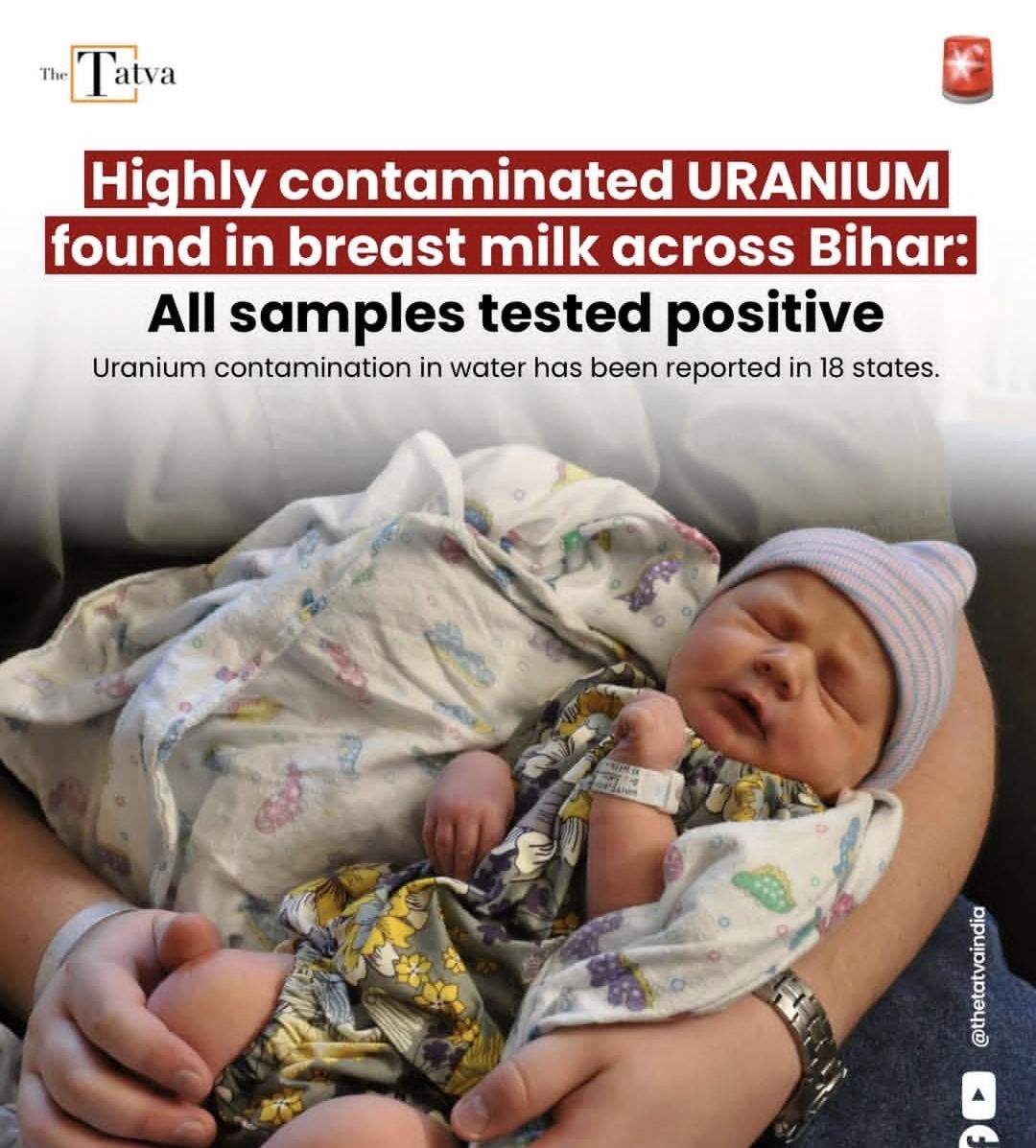
  • A new scientific study has raised red flags over the presence of uranium in the breastmilk of lactating mothers across six districts of Bihar, indicating potential health risks for infants who rely exclusively on breastmilk during their early months of life.

    The research, published in Scientific Reports, is the first assessment of uranium contamination in breastmilk in the Gangetic plains of Bihar — a region already known for toxic exposure to heavy metals like arsenic, lead, and mercury.

    The researchers analysed breastmilk samples from 40 lactating mothers between 17 and 35 years of age, selected from Bhojpur, Samastipur, Begusarai, Khagaria, Katihar, and Nalanda.

    Every participant provided informed consent, and detailed interviews were conducted to understand breastfeeding practices, child growth, and residential history.

    The study was conducted by teams from Mahavir Cancer Sansthan & Research Centre (Patna), Lovely Professional University, NIPER-Hajipur, and other collaborating institutions.

    One of the most striking findings is stated clearly in the paper:
    “The present study reports 100% lactating mothers having their breastmilk highly contaminated with uranium.”

    #news #science #scrolllink
    A new scientific study has raised red flags over the presence of uranium in the breastmilk of lactating mothers across six districts of Bihar, indicating potential health risks for infants who rely exclusively on breastmilk during their early months of life. The research, published in Scientific Reports, is the first assessment of uranium contamination in breastmilk in the Gangetic plains of Bihar — a region already known for toxic exposure to heavy metals like arsenic, lead, and mercury. The researchers analysed breastmilk samples from 40 lactating mothers between 17 and 35 years of age, selected from Bhojpur, Samastipur, Begusarai, Khagaria, Katihar, and Nalanda. Every participant provided informed consent, and detailed interviews were conducted to understand breastfeeding practices, child growth, and residential history. The study was conducted by teams from Mahavir Cancer Sansthan & Research Centre (Patna), Lovely Professional University, NIPER-Hajipur, and other collaborating institutions. One of the most striking findings is stated clearly in the paper: “The present study reports 100% lactating mothers having their breastmilk highly contaminated with uranium.” #news #science #scrolllink
    wow
    Like
    Sad
    4
    0 Commentarios 0 Acciones 1K Views 0 Vista previa

  • #science #future #tesla #elonmusk #scrolllink
    #science #future #tesla #elonmusk #scrolllink
    Like
    Love
    4
    0 Commentarios 0 Acciones 937 Views 0 Vista previa
  • #science #future #robotics #scrolllink
    #science #future #robotics #scrolllink
    Like
    Yay
    3
    0 Commentarios 0 Acciones 802 Views 0 Vista previa
  • Thing to think about!

    #curios #knowledge #science #discovery #scrolllink
    Thing to think about! #curios #knowledge #science #discovery #scrolllink
    Like
    Sad
    2
    0 Commentarios 0 Acciones 580 Views 0 Vista previa
  • #medicine #science #scrolllink
    #medicine #science #scrolllink
    Like
    3
    0 Commentarios 0 Acciones 784 Views 0 Vista previa
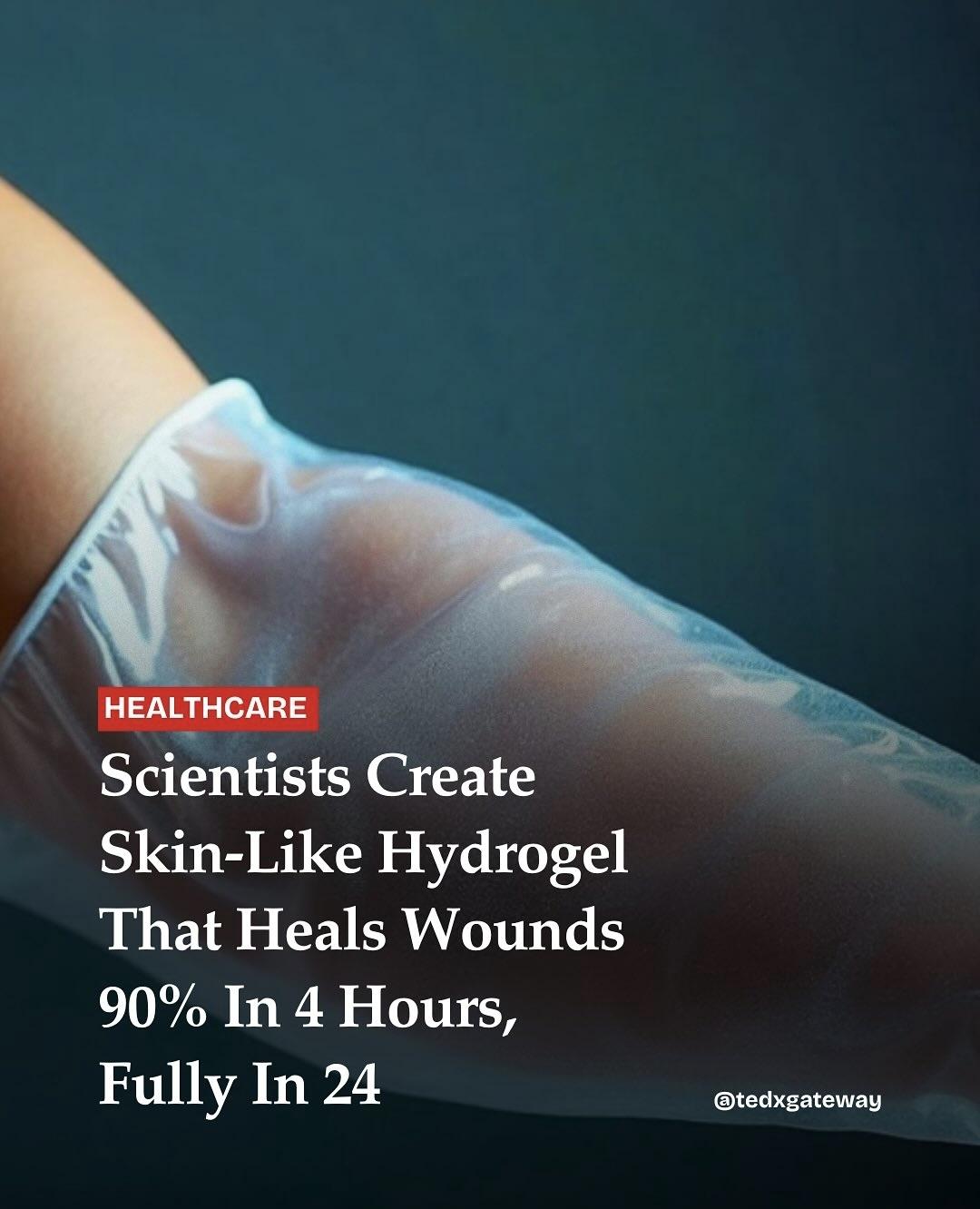
  • Scientists have engineered a powerful new hydrogel that’s as tough as it is self-repairing—able to recover on its own within hours. This breakthrough could change the future of medicine, robotics, and wearable tech. The secret lies in how it mimics life itself.
    #science #discovery #innovation #scrolllink
    Scientists have engineered a powerful new hydrogel that’s as tough as it is self-repairing—able to recover on its own within hours. This breakthrough could change the future of medicine, robotics, and wearable tech. The secret lies in how it mimics life itself. #science #discovery #innovation #scrolllink
    Like
    Love
    Yay
    3
    1 Commentarios 0 Acciones 950 Views 0 Vista previa
  • #curiosity #reels #science #scrolllink
    #curiosity #reels #science #scrolllink
    Like
    Love
    2
    0 Commentarios 0 Acciones 695 Views 0 Vista previa
  • This is what a broken heart xoes to your body
    #curiosity #science #biology #scrolllink
    This is what a broken heart xoes to your body #curiosity #science #biology #scrolllink
    Like
    Haha
    2
    1 Commentarios 0 Acciones 834 Views 0 Vista previa
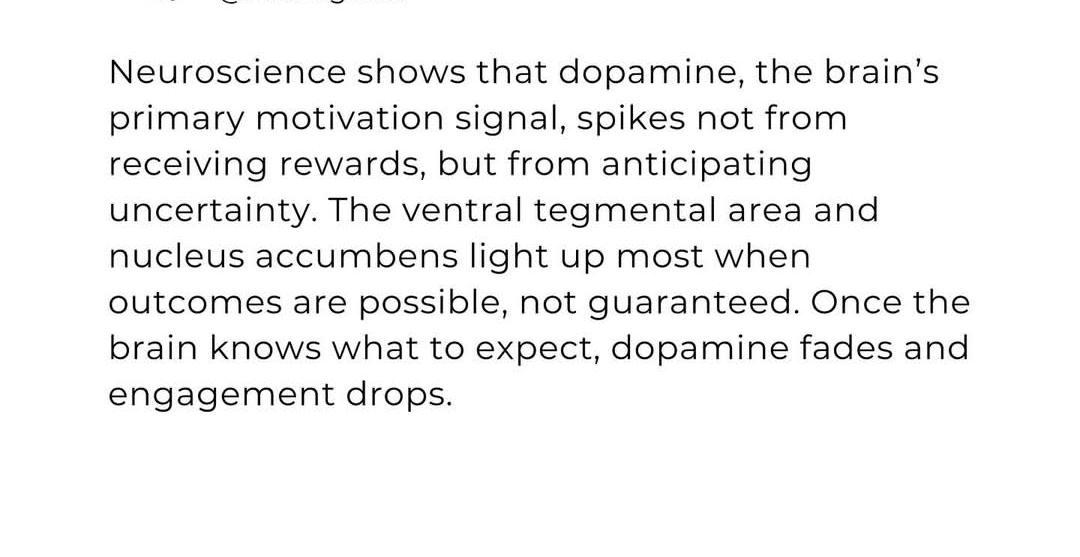
  • Predictability kills motivation

    #science #neurology #neuroscience #quantum #scrolllink
    Predictability kills motivation #science #neurology #neuroscience #quantum #scrolllink
    Like
    Love
    3
    0 Commentarios 0 Acciones 613 Views 0 Vista previa
  • Neurotransmition

    #Neurotransmition #sciences #biology #scrolllink
    Neurotransmition #Neurotransmition #sciences #biology #scrolllink
    Like
    Yay
    3
    0 Commentarios 0 Acciones 591 Views 0 Vista previa
  • #quantumphysics #science #paradox #scrolllink
    #quantumphysics #science #paradox #scrolllink
    Like
    2
    0 Commentarios 0 Acciones 574 Views 0 Vista previa
Resultados de la búsqueda