


• A routine ride home for a young couple and their child turned into a terrifying ordeal near MS Ramaiah Hospital in Bengaluru, after a speeding car allegedly slammed into their scooter and hurled them over a road divider.

    The driver, who fled immediately after the crash, has now been arrested, NDTV reported.

    According to police, the incident took place last month when the family was travelling on a two-wheeler along the busy stretch. Investigators said the car, reportedly driven by 23-year-old Sukruth, approached at high speed before crashing directly into the scooter, the report further added.

    The impact sent the vehicle flying across the median, leaving all three passengers injured.

    Bystanders rushed to help and shifted the family to a nearby hospital. The woman suffered injuries to her head, hand and shoulder, while the man sustained rib fractures. The child escaped with minor injuries, police said.

    A detailed scan of CCTV cameras installed along the route helped police trace the car and identify the driver.

    According to NDTV, officers said Sukruth was picked up soon after and booked for rash and negligent driving, causing injuries, and escaping the scene without offering assistance.

    #news #scrolllink

    A routine ride home for a young couple and their child turned into a terrifying ordeal near MS Ramaiah Hospital in Bengaluru, after a speeding car allegedly slammed into their scooter and hurled them over a road divider. The driver, who fled immediately after the crash, has now been arrested, NDTV reported. According to police, the incident took place last month when the family was travelling on a two-wheeler along the busy stretch. Investigators said the car, reportedly driven by 23-year-old Sukruth, approached at high speed before crashing directly into the scooter, the report further added. The impact sent the vehicle flying across the median, leaving all three passengers injured. Bystanders rushed to help and shifted the family to a nearby hospital. The woman suffered injuries to her head, hand and shoulder, while the man sustained rib fractures. The child escaped with minor injuries, police said. A detailed scan of CCTV cameras installed along the route helped police trace the car and identify the driver. According to NDTV, officers said Sukruth was picked up soon after and booked for rash and negligent driving, causing injuries, and escaping the scene without offering assistance. #news #scrolllink

    Sad
    Angry
    2
    0 Yorumlar 0 hisse senetleri 734 Views 0 önizleme
  • #speed
    #speed
    Love
    1
    0 Yorumlar 0 hisse senetleri 312 Views 0 önizleme
  • #needforspeed
    #needforspeed
    Love
    1
    0 Yorumlar 0 hisse senetleri 269 Views 0 önizleme
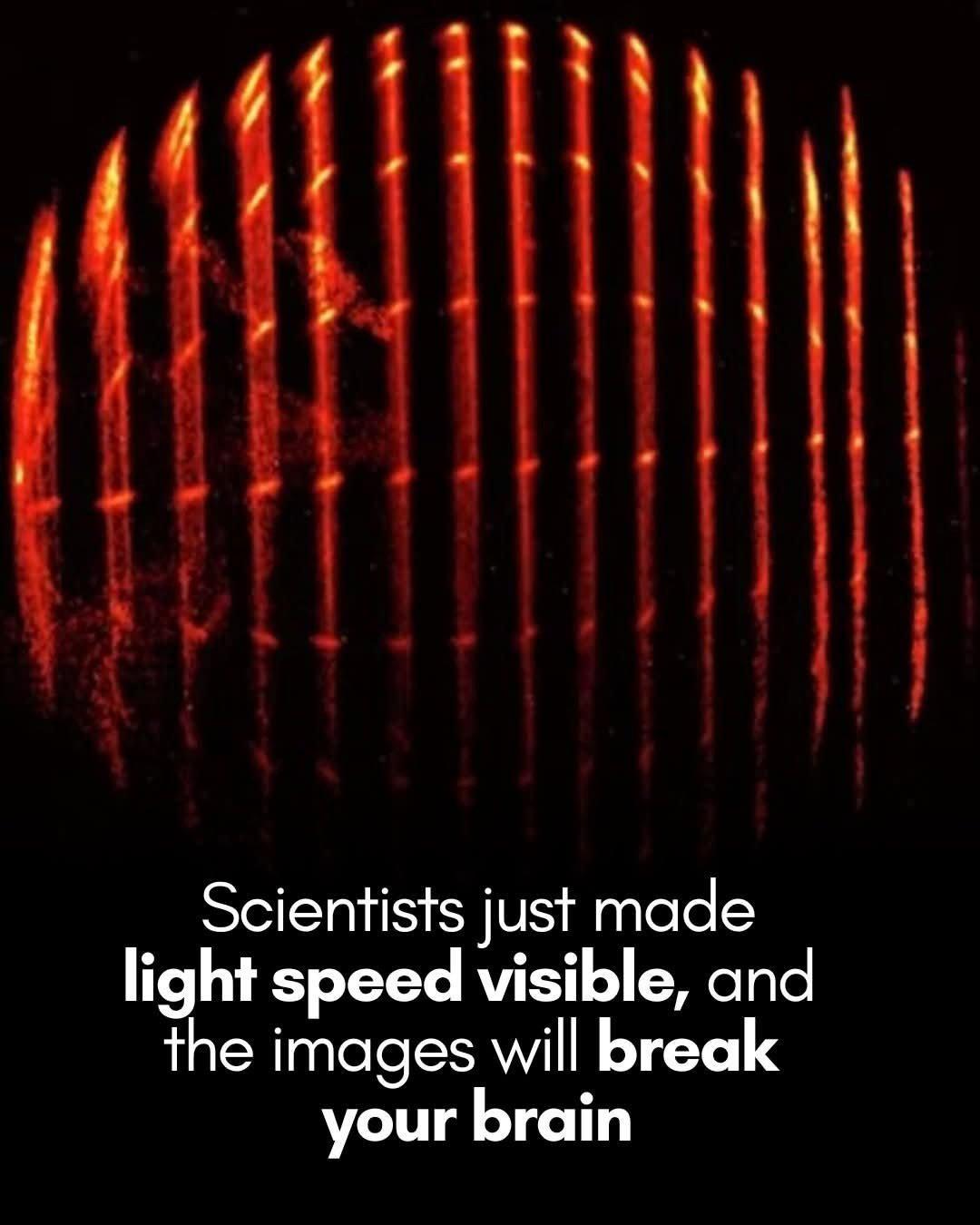
  • Scientists just made light-speed visible!

    And the images are something out of science fiction.For the first time, scientists have visually captured what an object would look like moving at the speed of light—turning a 100-year-old theory into stunning, real-world images.

    In a groundbreaking study, researchers at the Vienna Center for Quantum Science and Technology recreated the Terrell-Penrose effect, a phenomenon of special relativity that predicts how objects appear distorted—not compressed, but rotated—when moving at lightspeed.

    Using ultra-fast lasers and a high-speed photography setup, the team mimicked the visual experience by slicing and stitching light reflections into a composite, effectively slowing down the speed of light to just 2 meters per second.

    This slicing technique—akin to a hyper-precise panoramic photo—allowed scientists to simulate how light from different parts of a fast-moving object reaches a camera at different times. The result: images of cubes appearing twisted and spheres whose poles shift positions. This experiment not only visualizes a concept once confined to equations and thought experiments but also opens new pathways for exploring the effects of relativity in a lab setting. It’s a vivid reminder that even light, when slowed and reassembled, can reshape our perception of the universe.

    #light #speedOfLight #science #scrolllink
    🚨 Scientists just made light-speed visible! And the images are something out of science fiction.For the first time, scientists have visually captured what an object would look like moving at the speed of light—turning a 100-year-old theory into stunning, real-world images. In a groundbreaking study, researchers at the Vienna Center for Quantum Science and Technology recreated the Terrell-Penrose effect, a phenomenon of special relativity that predicts how objects appear distorted—not compressed, but rotated—when moving at lightspeed. Using ultra-fast lasers and a high-speed photography setup, the team mimicked the visual experience by slicing and stitching light reflections into a composite, effectively slowing down the speed of light to just 2 meters per second. This slicing technique—akin to a hyper-precise panoramic photo—allowed scientists to simulate how light from different parts of a fast-moving object reaches a camera at different times. The result: images of cubes appearing twisted and spheres whose poles shift positions. This experiment not only visualizes a concept once confined to equations and thought experiments but also opens new pathways for exploring the effects of relativity in a lab setting. It’s a vivid reminder that even light, when slowed and reassembled, can reshape our perception of the universe. #light #speedOfLight #science #scrolllink
    0 Yorumlar 0 hisse senetleri 942 Views 0 önizleme
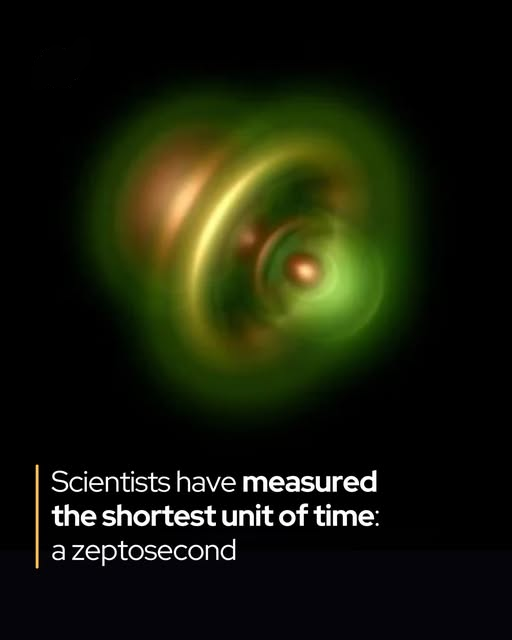
  • Researchers have recorded the briefest interval of time ever measured: 247 zeptoseconds—the duration for a photon of light to traverse a hydrogen molecule.

    That's 0.000000000000000000247 seconds.A zeptosecond equals one trillionth of a billionth of a second, a realm where light, the universe's speed champion, advances mere fractions of an atomic diameter. For scale, a single second contains as many zeptoseconds as there are seconds in 31.7 trillion years—vastly exceeding the age of the cosmos.

    Physicist Reinhard Dörner and colleagues at Goethe University Frankfurt achieved this using intense X-rays from Hamburg's PETRA III accelerator. They aimed at hydrogen molecules—the simplest in existence, comprising two protons and two electrons. An incoming photon struck both electrons in rapid sequence, akin to a stone skipping across water.

    To resolve this fleeting event, the team employed a COLTRIMS reaction microscope, an ultra-precise instrument that tracks particle positions and momenta. By examining the interference patterns from the two expelled electrons, they pinpointed the precise lag between the photon's impact on the first electron and the second.The finding: 247 zeptoseconds.

    This demonstrates that light does not illuminate a molecule instantaneously, even at this tiny scale; the delay stems from light's finite velocity of roughly 186,000 miles per second (300,000 km/s). It represents the first direct observation of light propagating inside a molecule.

    By contrast, chemical reactions unfold over femtoseconds—a thousandfold longer. Zeptosecond precision opens a window into quantum timescales, where electron and photon dynamics govern matter's core behaviors.

    #zeptosecond #chemiclas #quantum #timescale #scrolllink
    Researchers have recorded the briefest interval of time ever measured: 247 zeptoseconds—the duration for a photon of light to traverse a hydrogen molecule. That's 0.000000000000000000247 seconds.A zeptosecond equals one trillionth of a billionth of a second, a realm where light, the universe's speed champion, advances mere fractions of an atomic diameter. For scale, a single second contains as many zeptoseconds as there are seconds in 31.7 trillion years—vastly exceeding the age of the cosmos. Physicist Reinhard Dörner and colleagues at Goethe University Frankfurt achieved this using intense X-rays from Hamburg's PETRA III accelerator. They aimed at hydrogen molecules—the simplest in existence, comprising two protons and two electrons. An incoming photon struck both electrons in rapid sequence, akin to a stone skipping across water. To resolve this fleeting event, the team employed a COLTRIMS reaction microscope, an ultra-precise instrument that tracks particle positions and momenta. By examining the interference patterns from the two expelled electrons, they pinpointed the precise lag between the photon's impact on the first electron and the second.The finding: 247 zeptoseconds. This demonstrates that light does not illuminate a molecule instantaneously, even at this tiny scale; the delay stems from light's finite velocity of roughly 186,000 miles per second (300,000 km/s). It represents the first direct observation of light propagating inside a molecule. By contrast, chemical reactions unfold over femtoseconds—a thousandfold longer. Zeptosecond precision opens a window into quantum timescales, where electron and photon dynamics govern matter's core behaviors. #zeptosecond #chemiclas #quantum #timescale #scrolllink
    0 Yorumlar 0 hisse senetleri 878 Views 0 önizleme
  • Quantum entanglement is one of nature’s most haunting mysteries proof that the universe might be more unified than we can imagine. When two particles are created together, they share a single quantum state. No matter how far apart they drift, even light-years away, a change in one instantly affects the other. To Einstein, this was impossible yet experiments continue to confirm it’s real.

    This strange bond seems to ignore the speed limit of light, suggesting that at the deepest level, space and distance may be illusions. The universe behaves like one continuous fabric, not a collection of separate objects. Every flicker of energy and every act of observation is a thread tugging on that cosmic web.

    Entanglement blurs the line between “here” and “there,” “you” and “me.” It whispers that perhaps everything from atoms to galaxies is already connected, sharing one hidden heartbeat through the quantum field.

    Sources: NASA, CERN, Max Planck Institute for Quantum Optics

    #Quantum #entanglement #science #scrolllink
    Quantum entanglement is one of nature’s most haunting mysteries proof that the universe might be more unified than we can imagine. When two particles are created together, they share a single quantum state. No matter how far apart they drift, even light-years away, a change in one instantly affects the other. To Einstein, this was impossible yet experiments continue to confirm it’s real. This strange bond seems to ignore the speed limit of light, suggesting that at the deepest level, space and distance may be illusions. The universe behaves like one continuous fabric, not a collection of separate objects. Every flicker of energy and every act of observation is a thread tugging on that cosmic web. Entanglement blurs the line between “here” and “there,” “you” and “me.” It whispers that perhaps everything from atoms to galaxies is already connected, sharing one hidden heartbeat through the quantum field. Sources: NASA, CERN, Max Planck Institute for Quantum Optics #Quantum #entanglement #science #scrolllink
    Like
    Love
    3
    1 Yorumlar 0 hisse senetleri 986 Views 0 önizleme
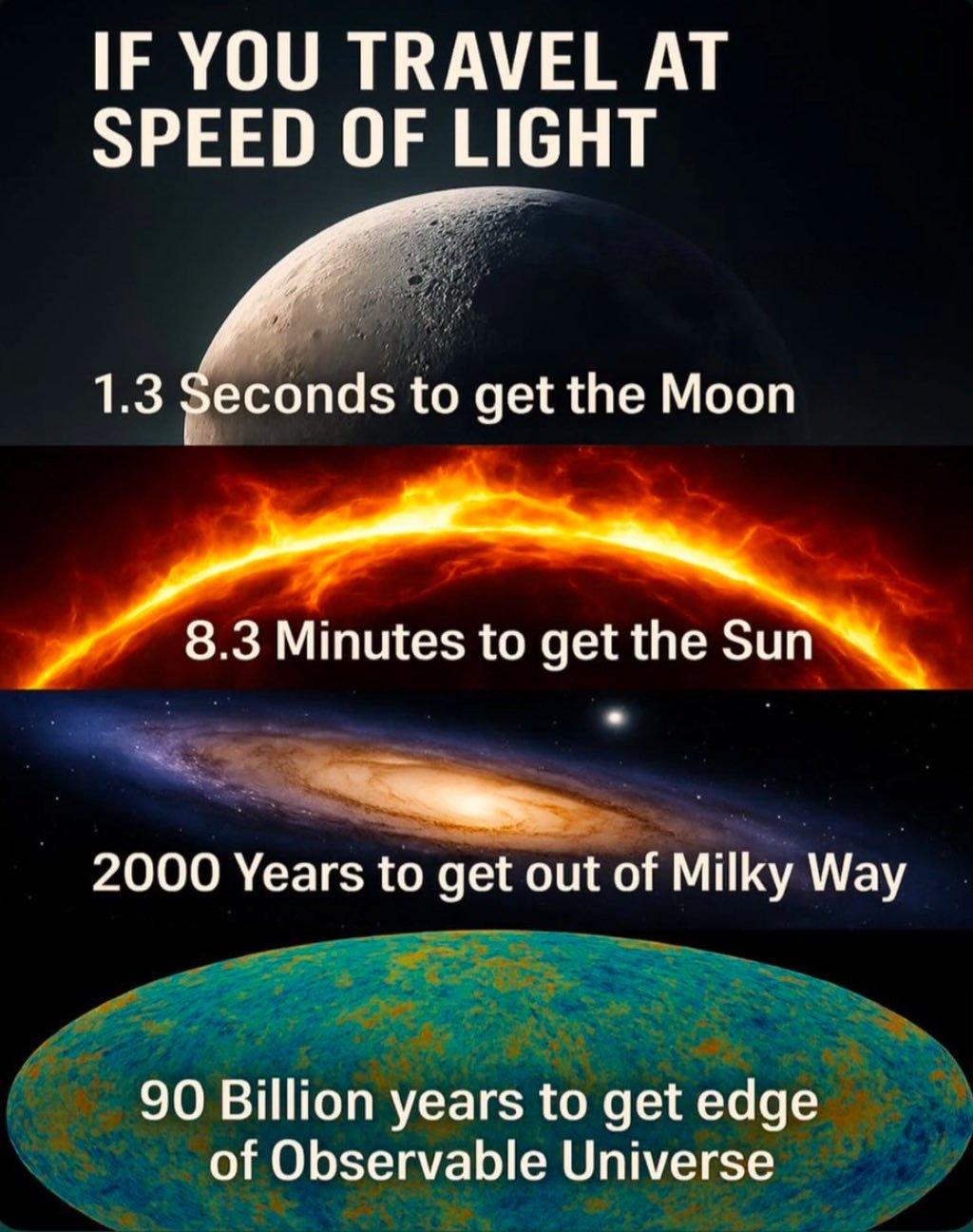
  • IF YOU TRAVEL AT SPEED OF LIGHT

    #SpeedOfLight #universe #scrolllink
    IF YOU TRAVEL AT SPEED OF LIGHT #SpeedOfLight #universe #scrolllink
    Like
    Love
    2
    0 Yorumlar 0 hisse senetleri 482 Views 0 önizleme
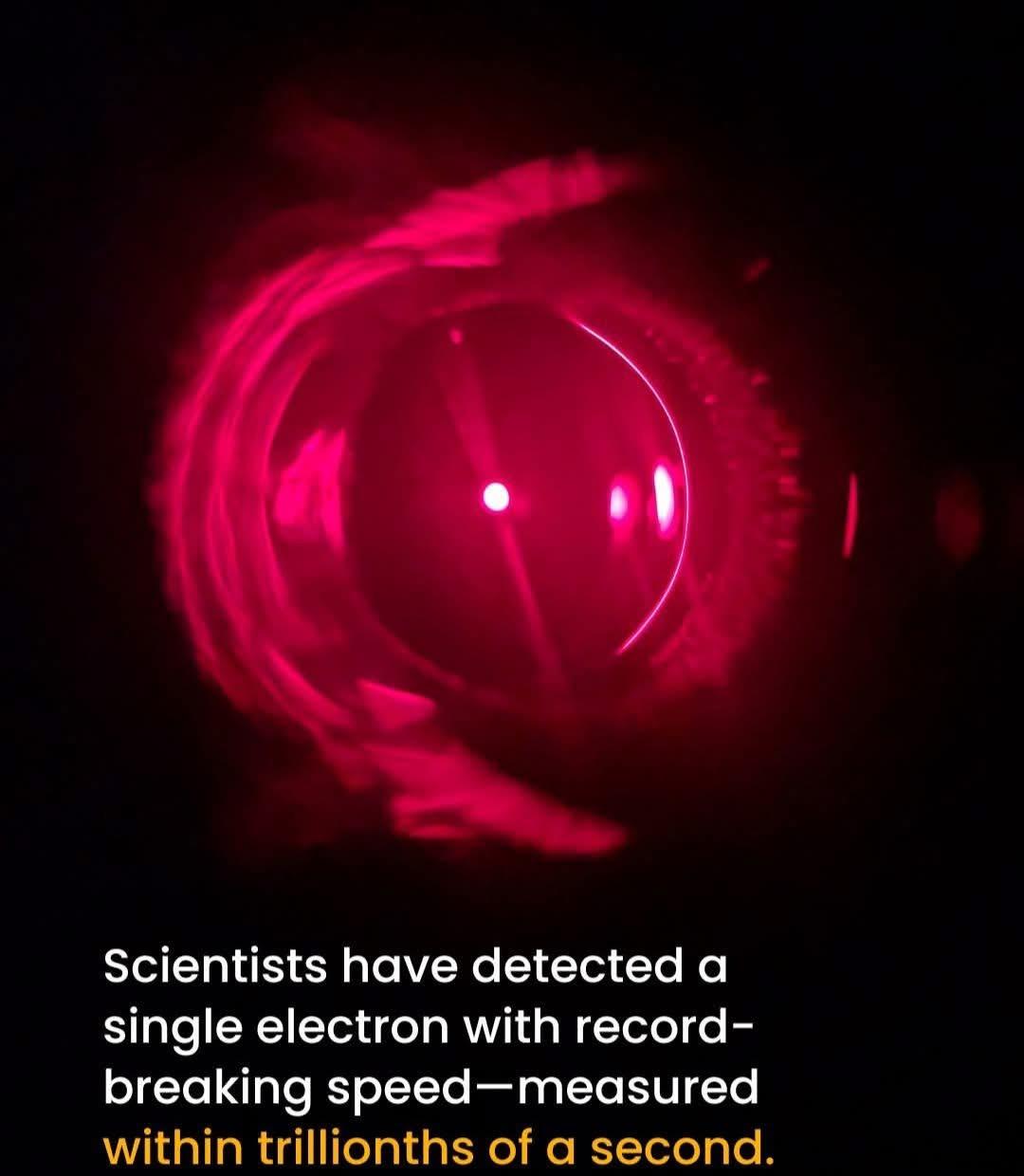
  • In a landmark experiment, researchers have achieved the fastest-ever detection of a single electron, capturing its presence within 6 trillionths of a second in a gallium arsenide semiconductor.

    By injecting two electrons from separate sites and monitoring their near-instantaneous electric repulsion as they approached, scientists at the UK’s National Physical Laboratory used one electron’s deflection to pinpoint the other. This exceptional temporal resolution is roughly 100 times quicker than previous methods, moving us closer to building devices that manipulate single electrons at the speed of quantum interactions.


    Conventional electronics rely on vast flows of many electrons, but controlling single-electron events in real time could make devices much faster, smaller, and more energy-efficient—while also directly tapping the quantum nature of electrons. The approach depends on exquisitely controlled electron pumps and sensors, hinting at the possibility of future quantum technologies as compact as a microchip. T


    he achievement provides an essential building block for advances in quantum communication and computing, and could even allow improvement in the fundamental definitions of electric current by employing quantum standards.


    What makes this finding unique is its ability to probe the fleeting, ultrafast interactions that underlie all electrical currents—a regime where quantum behavior dominates. Researchers now hope to use this capability to unlock deeper insights into the quantum world, accelerating progress toward devices and measurements unimaginable just a decade ago.


    RESEARCH PAPER


    Masaya Kataoka et al, "Single-electron detection on a picosecond timescale", Physical Review Letters (2025)

    — in New York, NY, United States.

    #science #scrolllink
    🔬 In a landmark experiment, researchers have achieved the fastest-ever detection of a single electron, capturing its presence within 6 trillionths of a second in a gallium arsenide semiconductor. By injecting two electrons from separate sites and monitoring their near-instantaneous electric repulsion as they approached, scientists at the UK’s National Physical Laboratory used one electron’s deflection to pinpoint the other. This exceptional temporal resolution is roughly 100 times quicker than previous methods, moving us closer to building devices that manipulate single electrons at the speed of quantum interactions. Conventional electronics rely on vast flows of many electrons, but controlling single-electron events in real time could make devices much faster, smaller, and more energy-efficient—while also directly tapping the quantum nature of electrons. The approach depends on exquisitely controlled electron pumps and sensors, hinting at the possibility of future quantum technologies as compact as a microchip. T he achievement provides an essential building block for advances in quantum communication and computing, and could even allow improvement in the fundamental definitions of electric current by employing quantum standards. What makes this finding unique is its ability to probe the fleeting, ultrafast interactions that underlie all electrical currents—a regime where quantum behavior dominates. Researchers now hope to use this capability to unlock deeper insights into the quantum world, accelerating progress toward devices and measurements unimaginable just a decade ago. 📄 RESEARCH PAPER 📌 Masaya Kataoka et al, "Single-electron detection on a picosecond timescale", Physical Review Letters (2025) — in New York, NY, United States. #science #scrolllink
    0 Yorumlar 0 hisse senetleri 978 Views 0 önizleme
  • In this era of Kaliyug, when distractions, negativity, and material desires dominate human life, sadhana (spiritual practice) holds immense significance. It serves as a guiding light that helps individuals rise above restlessness and ignorance, reconnecting them with inner peace and divine consciousness. While the external world promotes speed, competition, and attachment, sadhana cultivates patience, discipline, and self-awareness, allowing the soul to remain steady amidst chaos. By engaging in regular spiritual practice—be it meditation, mantra chanting, or devotion—one strengthens the inner self, purifies the mind, and moves closer to liberation, making sadhana not just relevant but essential in Kaliyug.

    #sadhana #tapasya #shiva #kurukulla #ishaputra #MahayogiSatyendraNath #kulantpeeth #kaulantakpeeth
    In this era of Kaliyug, when distractions, negativity, and material desires dominate human life, sadhana (spiritual practice) holds immense significance. It serves as a guiding light that helps individuals rise above restlessness and ignorance, reconnecting them with inner peace and divine consciousness. While the external world promotes speed, competition, and attachment, sadhana cultivates patience, discipline, and self-awareness, allowing the soul to remain steady amidst chaos. By engaging in regular spiritual practice—be it meditation, mantra chanting, or devotion—one strengthens the inner self, purifies the mind, and moves closer to liberation, making sadhana not just relevant but essential in Kaliyug. #sadhana #tapasya #shiva #kurukulla #ishaputra #MahayogiSatyendraNath #kulantpeeth #kaulantakpeeth
    Love
    4
    0 Yorumlar 0 hisse senetleri 2K Views 0 önizleme
  • A world first. New footage from Mars rendered in stunning 4K resolution. We also talk about the cameras on board the Martian rovers and how we made the video. The cameras on board the rovers were the height of technology when the respective missions launched.
    A question often asked is:
    ‘Why don’t we actually have live video from Mars?’
    Although the cameras are high quality, the rate at which the rovers can send data back to earth is the biggest challenge. Curiosity can only send data directly back to earth at 32 kilo-bits per second.
    Instead, when the rover can connect to the Mars Reconnaissance Orbiter, we get more favourable speeds of 2 Megabytes per second.
    As you would expect, sending HD video at these speeds would take a long long time. As nothing really moves on Mars, it makes more sense to take and send back images.

    #Marse #Planet #rovers #curiosity #orbiter #images #scrolllink #science
    A world first. New footage from Mars rendered in stunning 4K resolution. We also talk about the cameras on board the Martian rovers and how we made the video. The cameras on board the rovers were the height of technology when the respective missions launched. A question often asked is: ‘Why don’t we actually have live video from Mars?’ Although the cameras are high quality, the rate at which the rovers can send data back to earth is the biggest challenge. Curiosity can only send data directly back to earth at 32 kilo-bits per second. Instead, when the rover can connect to the Mars Reconnaissance Orbiter, we get more favourable speeds of 2 Megabytes per second. As you would expect, sending HD video at these speeds would take a long long time. As nothing really moves on Mars, it makes more sense to take and send back images. #Marse #Planet #rovers #curiosity #orbiter #images #scrolllink #science
    0 Yorumlar 0 hisse senetleri 1K Views 2 0 önizleme